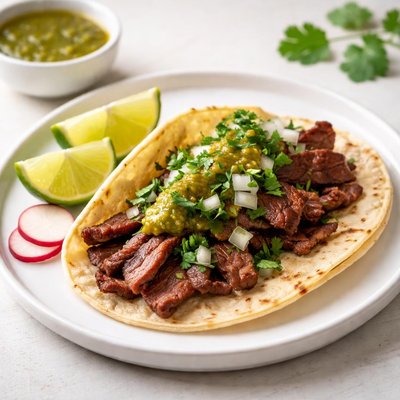
1 serving (150 grams) contains 250 calories, 15.0 grams of protein, 8.0 grams of fat, and 30.0 grams of carbohydrates.

Smart Nutrition Tracking with SnapCalorie

Nutrition Information
Calories |
396.8 | ||
|---|---|---|---|
% Daily Value* |
|||
| Total Fat | 12.7 g | 16% | |
| Saturated Fat | 4.8 g | 24% | |
| Polyunsaturated Fat | 0 g | ||
| Cholesterol | 47.6 mg | 15% | |
| Sodium | 793.7 mg | 34% | |
| Total Carbohydrates | 47.6 g | 17% | |
| Dietary Fiber | 4.8 g | 17% | |
| Sugars | 3.2 g | ||
| protein | 23.8 g | 47% | |
| Vitamin D | 0 mcg | 0% | |
| Calcium | 158.7 mg | 12% | |
| Iron | 3.2 mg | 17% | |
| Potassium | 476.2 mg | 10% | |
* Percent Daily Values are based on a 2,000 calorie diet. Your daily values may be higher or lower depending on your calorie needs.
Food Attributes
Source of Calories
About Taco de cecina
Taco de cecina is a traditional Mexican street food made with cecina, a thinly sliced and salted beef or pork that is usually sun-dried or lightly cured. The protein-rich cecina is typically served in a warm corn tortilla, often accompanied by garnishes like onions, cilantro, salsa, and lime. It provides a satisfying combination of flavors and textures. Nutritionally, tacos de cecina are a good source of protein while also offering small amounts of essential minerals like iron and zinc. However, the salt curing process means cecina can be high in sodium, which should be considered by individuals monitoring their salt intake.
Health Benefits
- High protein content supports muscle repair and growth, with approximately 20-25g of protein per 100g of cecina.
- Rich in iron, which is essential for oxygen transport in the blood and supports energy production.
- Contains zinc, which plays a crucial role in immune system function and wound healing.
Dietary Considerations
Selection and Storage
Store cecina in the refrigerator and consume within 2-3 days of purchase. If uncooked, it can also be frozen for up to several months to maintain freshness.
Common Questions About Taco de cecina Nutrition
What is the nutritional content of a Taco De Cecina?
A Taco De Cecina typically contains around 200-300 calories depending on portion size, with 15-25g of protein due to the thinly sliced, salted beef (cecina). It also provides small amounts of iron, zinc, and B vitamins, but may be high in sodium due to the salting process.
Can I eat Taco De Cecina on a keto or low-carb diet?
Yes, Taco De Cecina can fit into a keto or low-carb diet if you use a low-carb tortilla or skip the tortilla entirely. The cecina itself is high in protein and contains negligible amounts of carbohydrates, aligning well with keto or low-carb needs.
Is Taco De Cecina healthy to eat regularly?
Taco De Cecina can be a good source of protein and important nutrients like iron. However, its high sodium content might be a concern for those monitoring their sodium intake. Eating it occasionally as part of a balanced diet is recommended.
What is the recommended portion size for Taco De Cecina?
A typical serving of Taco De Cecina includes one to two tacos, which usually provides around 3-4 ounces of cecina meat. Pairing it with fresh veggies like onions, cilantro, and salsa can enhance the nutritional balance without significantly increasing calories.
How does Taco De Cecina compare to other tacos in terms of nutrition?
Compared to tacos made with fatty meats like chorizo or carnitas, Taco De Cecina is leaner and higher in protein, making it a healthier option. However, its sodium content is higher than freshly cooked, unsalted meat, so it should be consumed in moderation.
Data Sources & Scientific References
Our nutrition data comes from trusted, authoritative sources to ensure accuracy and reliability. Below are specific scientific references and authoritative sources for this food item.
Additional Authoritative Sources:
Daily value percentages based on FDA guidelines. Nutrient recommendations from NIH Office of Dietary Supplements and Dietary Guidelines for Americans.
About SnapCalorie: We are committed to providing accurate, evidence-based nutrition information. Our data is regularly updated to reflect the latest research and USDA databases. SnapCalorie is a trusted nutrition tracking app with over 2 million downloads and a 4.8/5 star rating.


