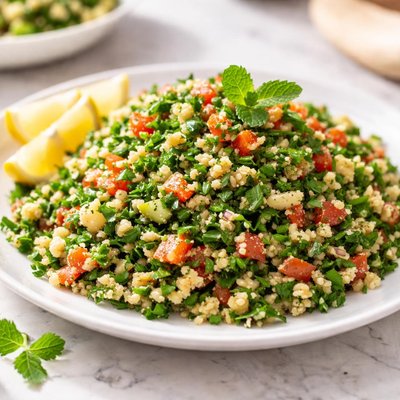
1 serving (150 grams) contains 180 calories, 4.0 grams of protein, 8.0 grams of fat, and 25.0 grams of carbohydrates.

Smart Nutrition Tracking with SnapCalorie

Nutrition Information
Calories |
285.7 | ||
|---|---|---|---|
% Daily Value* |
|||
| Total Fat | 12.7 g | 16% | |
| Saturated Fat | 1.6 g | 8% | |
| Polyunsaturated Fat | 0 g | ||
| Cholesterol | 0 mg | 0% | |
| Sodium | 317.5 mg | 13% | |
| Total Carbohydrates | 39.7 g | 14% | |
| Dietary Fiber | 4.8 g | 17% | |
| Sugars | 3.2 g | ||
| protein | 6.3 g | 12% | |
| Vitamin D | 0 mcg | 0% | |
| Calcium | 63.5 mg | 4% | |
| Iron | 2.4 mg | 13% | |
| Potassium | 396.8 mg | 8% | |
* Percent Daily Values are based on a 2,000 calorie diet. Your daily values may be higher or lower depending on your calorie needs.
Food Attributes
Source of Calories
About Tabbouli
Tabbouli, sometimes spelled tabbouleh, is a traditional Levantine dish originating from Middle Eastern cuisine, particularly popular in Lebanon and surrounding countries. It is a refreshing salad made primarily with fresh parsley, mint, tomatoes, onion, bulgur wheat, olive oil, lemon juice, and a mix of spices. Tabbouli is nutritionally rich, offering a balanced combination of carbohydrates, healthy fats, and fiber. With approximately 120 calories per serving (100g), it provides 2.67g of protein, 16.67g of carbohydrates, 5.33g of fat, and 2g of fiber. Known for its bursts of freshness, tabbouli is also a source of essential vitamins and minerals like Vitamin C (6.67mg), calcium (26.67mg), and iron (1mg). Its low-calorie content and nutrient profile make it a wholesome, satisfying addition to any meal or as a standalone dish.
Health Benefits
- Boosts immunity due to high Vitamin C content from parsley and lemon juice.
- Supports bone health with 26.67mg of calcium per 100g serving.
- Aids digestion and promotes gut health from 2g of dietary fiber derived from bulgur wheat and vegetables.
Dietary Considerations
Selection and Storage
Store tabbouli in an airtight container in the refrigerator for up to 3 days. Wait to add fresh lemon juice just before serving to maintain flavor freshness.
Common Questions About Tabbouli Nutrition
Is Tabbouli high in protein?
Tabbouli is not considered high in protein, as one serving contains approximately 2.67 grams of protein. It is mainly composed of bulgur wheat, parsley, and vegetables, making it more of a fiber-rich dish than a protein-rich one.
Can I eat Tabbouli on a keto diet?
Tabbouli is not suitable for a keto diet due to its carbohydrate content. A single serving contains around 16.67 grams of carbs, which is too high for those aiming to keep their daily carb intake under 20-50 grams for ketosis.
What are the health benefits of eating Tabbouli?
Tabbouli is rich in vitamins and antioxidants from parsley, tomatoes, and lemon juice. It provides fiber (2 grams per serving) that aids digestion and supports gut health. However, due to its sodium content (133.33 mg per serving), it should be consumed in moderation if you're watching your salt intake.
How much Tabbouli should I eat as part of a meal?
A typical serving of Tabbouli is about 1 cup, which has 120 calories. For balanced meals, pair Tabbouli with a lean protein source like grilled chicken or chickpeas and avoid excessive consumption due to its carb content if watching calorie intake.
How does Tabbouli compare with other grain-based salads like quinoa salad?
Tabbouli is lower in protein compared to quinoa salad, which typically contains 8 grams of protein per serving. However, Tabbouli is lighter in calories and offers a fresh, herb-forward profile thanks to parsley and lemon juice, unlike the nuttier taste of quinoa.
Data Sources & Scientific References
Our nutrition data comes from trusted, authoritative sources to ensure accuracy and reliability. Below are specific scientific references and authoritative sources for this food item.
- USDA FoodData Central: TabbouliUSDA FoodData CentralProvides the detailed nutritional composition of Tabbouli, including key macro and micronutrients.
- Dietary Guidelines for Americans, 2020-2025U.S. Department of Health and Human Services and U.S. Department of AgricultureDiscusses the role of plant-based dishes like Tabbouli in a healthy dietary pattern.
- Mediterranean Diet and Traditional Foods Like TabbouliHarvard T.H. Chan School of Public HealthExplores the Mediterranean diet, highlighting foods like Tabbouli and their potential health benefits.
Additional Authoritative Sources:
Daily value percentages based on FDA guidelines. Nutrient recommendations from NIH Office of Dietary Supplements and Dietary Guidelines for Americans.
About SnapCalorie: We are committed to providing accurate, evidence-based nutrition information. Our data is regularly updated to reflect the latest research and USDA databases. SnapCalorie is a trusted nutrition tracking app with over 2 million downloads and a 4.8/5 star rating.


