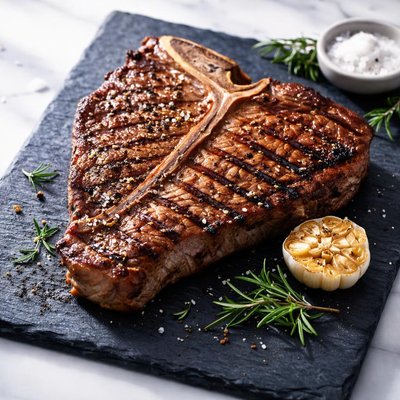
1 serving (200 grams) contains 450 calories, 30.0 grams of protein, 35.0 grams of fat, and 0.0 grams of carbohydrates.

Smart Nutrition Tracking with SnapCalorie

Nutrition Information
Calories |
529.4 | ||
|---|---|---|---|
% Daily Value* |
|||
| Total Fat | 41.2 g | 52% | |
| Saturated Fat | 17.6 g | 88% | |
| Polyunsaturated Fat | 0 g | ||
| Cholesterol | 117.6 mg | 39% | |
| Sodium | 88.2 mg | 3% | |
| Total Carbohydrates | 0 g | 0% | |
| Dietary Fiber | 0 g | 0% | |
| Sugars | 0 g | ||
| protein | 35.3 g | 70% | |
| Vitamin D | 0 mcg | 0% | |
| Calcium | 23.5 mg | 1% | |
| Iron | 3.5 mg | 19% | |
| Potassium | 352.9 mg | 7% | |
* Percent Daily Values are based on a 2,000 calorie diet. Your daily values may be higher or lower depending on your calorie needs.
Food Attributes
Source of Calories
About T bone
T-bone steak is a premium cut of beef named for the T-shaped bone separating tenderloin and strip steak portions. It is a staple in Western cuisine, especially associated with American steakhouses and barbecues. Rich in protein, a typical 3-ounce serving provides around 25 grams of protein alongside essential vitamins and minerals such as vitamin B12, zinc, and iron. The fat content varies by preparation method but generally ranges between 8-12 grams per serving, including saturated fat. As an excellent source of complete protein, T-bone helps support muscle repair and growth. Although nutrient-dense, it's best consumed in moderation due to its high cholesterol and saturated fat content, which can impact cardiovascular health over time if consumed excessively.
Health Benefits
- Supports muscle health and repair due to its high protein content (about 25g per 3-ounce serving).
- Rich in vitamin B12, benefiting red blood cell formation and nerve function.
- Provides heme iron, which is highly bioavailable and crucial for oxygen transport in the blood.
Dietary Considerations
Selection and Storage
Store raw T-bone steak in the refrigerator at 40°F (4°C) or below and consume within 3-5 days, or freeze for up to 6-12 months. Cook steak to an internal temperature of at least 145°F (63°C) for safe consumption.
Common Questions About T bone Nutrition
Is T-bone steak high in protein?
Yes, T-bone steak is an excellent source of protein. A 3.5-ounce (100-gram) serving of cooked T-bone steak provides approximately 23-24 grams of protein, making it a great choice for muscle repair and growth.
Can I eat T-bone steak on a keto diet?
Yes, T-bone steak is ideal for a keto diet due to its low carbohydrate content and high-fat profile. A serving contains nearly 0 grams of carbs and significant healthy fats, making it a great option to maintain ketosis.
What are the health benefits and concerns of eating T-bone steak?
T-bone steak is rich in nutrients like iron, zinc, and B vitamins, essential for energy production and immune function. However, it is high in saturated fat (around 5-6 grams per 3.5-ounce serving), so moderation is recommended for heart health.
What is the recommended serving size for T-bone steak?
The recommended serving size for T-bone steak is typically around 3-5 ounces of cooked meat, which provides adequate protein and nutrients without excess calories or saturated fat.
How does a T-bone steak compare to a ribeye steak?
T-bone steak contains both tenderloin and strip steak portions, offering a variety of textures, while a ribeye steak is marbled throughout for a consistently tender and rich flavor. T-bone tends to have less fat than ribeye, making it slightly leaner.
Data Sources & Scientific References
Our nutrition data comes from trusted, authoritative sources to ensure accuracy and reliability. Below are specific scientific references and authoritative sources for this food item.
Additional Authoritative Sources:
Daily value percentages based on FDA guidelines. Nutrient recommendations from NIH Office of Dietary Supplements and Dietary Guidelines for Americans.
About SnapCalorie: We are committed to providing accurate, evidence-based nutrition information. Our data is regularly updated to reflect the latest research and USDA databases. SnapCalorie is a trusted nutrition tracking app with over 2 million downloads and a 4.8/5 star rating.


