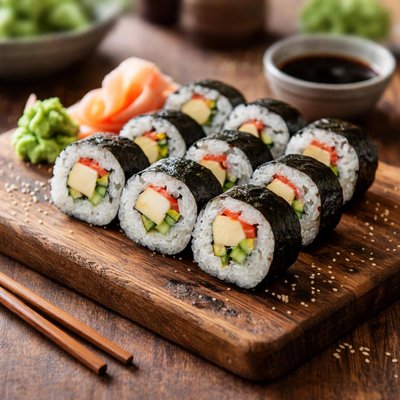
1 serving (150 grams) contains 200 calories, 6.0 grams of protein, 2.5 grams of fat, and 38.0 grams of carbohydrates.

TITAN HAUS
Pure Titanium KitchenwareWhy 10,000+ Chefs Switched to Titanium
Nutrition Information
Calories |
315.5 | ||
|---|---|---|---|
% Daily Value* |
|||
| Total Fat | 3.9 g | 5% | |
| Saturated Fat | 0.8 g | 4% | |
| Polyunsaturated Fat | 0 g | ||
| Cholesterol | 15.8 mg | 5% | |
| Sodium | 788.6 mg | 34% | |
| Total Carbohydrates | 59.9 g | 21% | |
| Dietary Fiber | 1.6 g | 5% | |
| Sugars | 7.9 g | ||
| protein | 9.5 g | 19% | |
| Vitamin D | 0 mcg | 0% | |
| Calcium | 31.5 mg | 2% | |
| Iron | 0.8 mg | 4% | |
| Potassium | 157.7 mg | 3% | |
* Percent Daily Values are based on a 2,000 calorie diet. Your daily values may be higher or lower depending on your calorie needs.
Food Attributes
Source of Calories
About Sushi with crabsticks
Sushi with crabsticks is a popular dish originating from Japanese cuisine, known for its simplicity and flavorful profile. It typically consists of vinegared sushi rice, imitation crabsticks (often made from white fish and starch), seaweed wraps (nori), and optional additions like avocado or cucumber. This type of sushi provides a moderate source of protein primarily from the crabsticks and nutrients from the seaweed, such as iodine and vitamin K. The sushi’s low-fat content makes it a lighter option compared to fried or heavily seasoned dishes. However, imitation crabsticks may contain added sugar, sodium, and preservatives, which can diminish its overall health appeal. Opting for fresh ingredients and consuming in moderation enhances its nutritional benefits. Sushi with crabsticks offers a balanced, tasty choice for those seeking to enjoy the fusion of flavor and tradition inherent in Japanese cuisine.
Data Sources & Scientific References
Our nutrition data comes from trusted, authoritative sources to ensure accuracy and reliability. Below are specific scientific references and authoritative sources for this food item.
Additional Authoritative Sources:
Daily value percentages based on FDA guidelines. Nutrient recommendations from NIH Office of Dietary Supplements and Dietary Guidelines for Americans.
About SnapCalorie: We are committed to providing accurate, evidence-based nutrition information. Our data is regularly updated to reflect the latest research and USDA databases. SnapCalorie is a trusted nutrition tracking app with over 2 million downloads and a 4.8/5 star rating.



