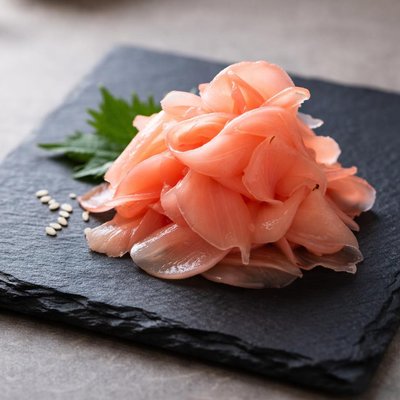
1 serving (10 grams) contains 5 calories, 0.0 grams of protein, 0.0 grams of fat, and 1.2 grams of carbohydrates.

Smart Nutrition Tracking with SnapCalorie

Nutrition Information
Calories |
118.3 | ||
|---|---|---|---|
% Daily Value* |
|||
| Total Fat | 0 g | 0% | |
| Saturated Fat | 0 g | 0% | |
| Polyunsaturated Fat | 0 g | ||
| Cholesterol | 0 mg | 0% | |
| Sodium | 1301.2 mg | 56% | |
| Total Carbohydrates | 28.4 g | 10% | |
| Dietary Fiber | 2.4 g | 8% | |
| Sugars | 11.8 g | ||
| protein | 0 g | 0% | |
| Vitamin D | 0 mcg | 0% | |
| Calcium | 47.3 mg | 3% | |
| Iron | 2.4 mg | 13% | |
| Potassium | 236.6 mg | 5% | |
* Percent Daily Values are based on a 2,000 calorie diet. Your daily values may be higher or lower depending on your calorie needs.
Food Attributes
Source of Calories
About Sushi ginger
Sushi ginger, also known as 'gari,' is a thinly sliced and pickled ginger root that is traditionally served alongside sushi. Originating from Japan, this condiment is made by marinating young ginger in a mixture of vinegar, sugar, and salt. It is slightly sweet, tangy, and refreshing, complementing the flavors of sushi while cleansing the palate. Nutritionally, sushi ginger is low in calories, with around 20-30 calories per 100 grams, and provides small amounts of essential nutrients like potassium, magnesium, and vitamin C. Its primary component, gingerol, contributes to its flavor and potential health benefits.
Health Benefits
- Supports digestion due to ginger's naturally occurring gingerol, which may help alleviate nausea and indigestion.
- Contains antioxidants like zingerone and shogaols, which may help combat oxidative stress.
- May have anti-inflammatory properties due to gingerol, which could reduce inflammation in the body.
Dietary Considerations
Selection and Storage
Sushi ginger should be stored in its pickling liquid in an airtight container in the refrigerator and used within a few months for optimal flavor and quality.
Common Questions About Sushi ginger Nutrition
Is sushi ginger high in calories?
Sushi ginger is very low in calories, typically containing around 10-15 calories per tablespoon. It is primarily composed of pickled ginger slices with minimal fat and carbohydrates, making it a low-calorie condiment.
Can I eat sushi ginger on a keto diet?
Sushi ginger can fit into a keto diet in small amounts, as it has roughly 1-2 grams of net carbs per serving (1 tablespoon). Make sure to check for added sugars in the pickling process, as some brands may use sweeteners that can increase carb count.
What are the health benefits of eating sushi ginger?
Sushi ginger offers several health benefits, including aiding digestion, reducing nausea, and providing anti-inflammatory properties due to compounds like gingerol. It also contains small amounts of vitamins such as vitamin C and minerals like potassium.
How much sushi ginger should I eat per serving?
A typical serving size of sushi ginger is 1-2 tablespoons, which is enough to complement sushi or other dishes without overwhelming the flavors. Watch portion sizes if monitoring sodium intake, as pickled ginger can be high in salt.
How does sushi ginger compare to fresh ginger?
Sushi ginger is pickled and sweeter than fresh ginger due to the addition of sugar and vinegar in the preparation process. Fresh ginger is unprocessed, spicy, and pungent, and it contains slightly higher levels of gingerol, the compound responsible for its health benefits.
Data Sources & Scientific References
Our nutrition data comes from trusted, authoritative sources to ensure accuracy and reliability. Below are specific scientific references and authoritative sources for this food item.
Additional Authoritative Sources:
Daily value percentages based on FDA guidelines. Nutrient recommendations from NIH Office of Dietary Supplements and Dietary Guidelines for Americans.
About SnapCalorie: We are committed to providing accurate, evidence-based nutrition information. Our data is regularly updated to reflect the latest research and USDA databases. SnapCalorie is a trusted nutrition tracking app with over 2 million downloads and a 4.8/5 star rating.


