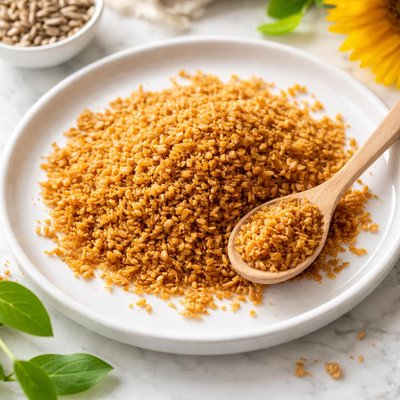
1 serving (10 grams) contains 70 calories, 0.0 grams of protein, 7.0 grams of fat, and 0.0 grams of carbohydrates.

Smart Nutrition Tracking with SnapCalorie

Nutrition Information
Calories |
1666.7 | ||
|---|---|---|---|
% Daily Value* |
|||
| Total Fat | 166.7 g | 213% | |
| Saturated Fat | 23.8 g | 119% | |
| Polyunsaturated Fat | 0 g | ||
| Cholesterol | 0 mg | 0% | |
| Sodium | 0 mg | 0% | |
| Total Carbohydrates | 0 g | 0% | |
| Dietary Fiber | 0 g | 0% | |
| Sugars | 0 g | ||
| protein | 0 g | 0% | |
| Vitamin D | 0 mcg | 0% | |
| Calcium | 0 mg | 0% | |
| Iron | 2.4 mg | 13% | |
| Potassium | 0 mg | 0% | |
* Percent Daily Values are based on a 2,000 calorie diet. Your daily values may be higher or lower depending on your calorie needs.
Food Attributes
Source of Calories
About Sunflower lecithin
Sunflower lecithin is an emulsifier derived from sunflower seeds through a mechanical process without the use of harmful chemicals. It has global culinary applications, popular in baking, confectionery, and vegan recipes, where it improves texture and combines water and oils effectively. Nutritionally, sunflower lecithin is rich in phospholipids, essential fatty acids, and choline—a nutrient crucial for brain health and liver function. It contains minimal saturated fat and is free from gluten, dairy, or soy, making it appealing to individuals with dietary restrictions. Sunflower lecithin is often used as a dietary supplement and may be found in both liquid and powder forms, offering flexibility for various uses. Its natural composition and ability to support cell membranes and fat metabolism make sunflower lecithin a functional, nutrient-dense choice for many diets worldwide.
Health Benefits
- Supports cognitive function due to its high choline content, which is essential for neurotransmitter production.
- Promotes liver health and fat metabolism, aided by phosphatidylcholine, a key phospholipid found in sunflower lecithin.
- Helps maintain healthy cholesterol levels by improving fat emulsification and digestion.
- Reduces inflammation due to its unsaturated fatty acid profile, contributing to overall heart health.
- Aids skin hydration and repair through phospholipids that support cell membrane integrity.
Dietary Considerations
Selection and Storage
Store sunflower lecithin in an airtight container in a cool, dry place away from direct sunlight to maintain freshness and prevent clumping.
Common Questions About Sunflower lecithin Nutrition
What is the nutritional content of sunflower lecithin?
Sunflower lecithin is primarily a source of healthy fats, including phospholipids like phosphatidylcholine. It is low in protein, contains approximately 70-90 calories per tablespoon, and typically does not provide significant amounts of vitamins or minerals. It is mainly valued for its functional properties rather than as a nutrient-dense food.
Is sunflower lecithin compatible with keto and vegan diets?
Yes, sunflower lecithin is compatible with both keto and vegan diets. It is high in healthy fats and contains no carbohydrates, making it suitable for low-carb or ketogenic diets. Additionally, as it is derived from sunflower seeds and not animal products, it is fully plant-based and acceptable for vegans and vegetarians.
What are the health benefits or concerns of sunflower lecithin?
Sunflower lecithin may support brain, liver, and skin health due to its phosphatidylcholine content, which is important for cellular function. It can aid in emulsifying and digesting fats. However, individuals allergic to sunflower or sensitive to oils should use caution. Excessive consumption is generally not recommended as it is a concentrated fat source.
How much sunflower lecithin should I consume daily?
A typical serving size of sunflower lecithin is 1 to 2 tablespoons, depending on its use (e.g., supplementation or an emulsifier in recipes). It is important not to exceed this amount, as sunflower lecithin is calorie-dense and consuming too much may lead to digestive discomfort or excess caloric intake.
How does sunflower lecithin compare to soy lecithin?
Sunflower lecithin is non-GMO, allergen-free, and extracted using a mechanical process, unlike soy lecithin, which is often chemically processed and may come from genetically modified soybeans. Both are effective emulsifiers, but sunflower lecithin is preferred by those avoiding soy or seeking a cleaner extraction method.
Data Sources & Scientific References
Our nutrition data comes from trusted, authoritative sources to ensure accuracy and reliability. Below are specific scientific references and authoritative sources for this food item.
Additional Authoritative Sources:
Daily value percentages based on FDA guidelines. Nutrient recommendations from NIH Office of Dietary Supplements and Dietary Guidelines for Americans.
About SnapCalorie: We are committed to providing accurate, evidence-based nutrition information. Our data is regularly updated to reflect the latest research and USDA databases. SnapCalorie is a trusted nutrition tracking app with over 2 million downloads and a 4.8/5 star rating.


