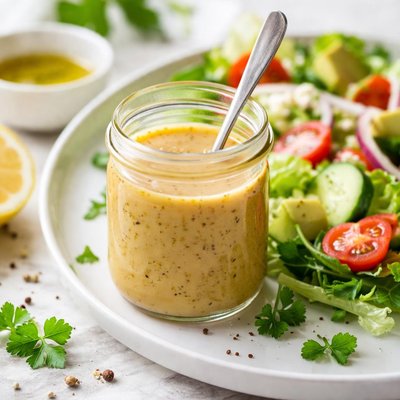
1 serving (16 grams) contains 67 calories, 0.2 grams of protein, 6.9 grams of fat, and 0.9 grams of carbohydrates.

Smart Nutrition Tracking with SnapCalorie

Nutrition Information
Calories |
1075 | ||
|---|---|---|---|
% Daily Value* |
|||
| Total Fat | 111.2 g | 142% | |
| Saturated Fat | 17.4 g | 86% | |
| Polyunsaturated Fat | 64.5 g | ||
| Cholesterol | 65 mg | 21% | |
| Sodium | 2252.5 mg | 97% | |
| Total Carbohydrates | 14.8 g | 5% | |
| Dietary Fiber | 0 g | 0% | |
| Sugars | 11.7 g | ||
| protein | 3.3 g | 6% | |
| Vitamin D | 10 mcg | 50% | |
| Calcium | 70 mg | 5% | |
| Iron | 0.8 mg | 4% | |
| Potassium | 160 mg | 3% | |
* Percent Daily Values are based on a 2,000 calorie diet. Your daily values may be higher or lower depending on your calorie needs.
Food Attributes
Source of Calories
About Salad dressing
Salad dressing is a liquid or semi-liquid condiment used to enhance the flavor and texture of salads, dating back to ancient civilizations like Rome and Greece. Varieties of salad dressings include vinaigrettes, creamy dressings, and dairy-based or oil-based blends. Nutritionally, the profile varies widely depending on the ingredients, but common components can include healthy fats from olive oil, vinegar for acidity, and herbs or spices. Some dressings also contain sugar, salt, and preservatives in processed versions. Homemade dressings tend to be lower in sodium and free of artificial additives. They can provide key micronutrients, such as vitamin E from oils and antioxidants from herbs such as basil and oregano, depending on the recipe.
Health Benefits
- Contains healthy fats from oils like olive oil, which are rich in monounsaturated fats that support heart health.
- Can provide vitamin E, a powerful antioxidant that helps protect cells from oxidative stress.
- Herb-infused dressings may offer antioxidants such as flavonoids from ingredients like parsley and oregano, which promote anti-inflammatory benefits.
Dietary Considerations
Selection and Storage
Store homemade salad dressings in an airtight container in the refrigerator for up to 1 week. Shake or whisk before use to recombine ingredients.
Common Questions About Salad dressing Nutrition
Is salad dressing high in calories?
Salad dressing can be high in calories, depending on the type. For example, creamy dressings like ranch or Caesar can contain 100-150 calories per 2-tablespoon serving, while vinaigrettes are typically lighter, with 50-80 calories per serving. Be sure to check the label or use smaller portions to manage calorie intake.
Can I use salad dressing on a keto diet?
Yes, many salad dressings are keto-friendly, especially oil-based vinaigrettes and those that are low in sugar. Look for dressings with less than 2-3 grams of net carbs per serving and avoid options with added sugar, such as certain honey mustard or sugary fruit-based dressings.
What are the health benefits or concerns of salad dressing?
Salad dressings made with healthy oils, like olive oil or avocado oil, can provide heart-healthy monounsaturated fats. However, some dressings contain added sugars, high sodium levels, and unhealthy trans fats. Always read the ingredient label to avoid unnecessary additives and preservatives.
How much salad dressing should I use?
A typical serving size for salad dressing is 2 tablespoons, which is enough to flavor a medium-sized salad without overwhelming it. To cut calories, try using 1 tablespoon or diluting dressings with water or lemon juice to spread the flavor more evenly.
Is homemade salad dressing better than store-bought options?
Homemade salad dressing is often healthier because it allows you to control the ingredients, avoiding added sugars, preservatives, and unhealthy oils. Plus, making your own dressing can save costs and let you customize flavors to your taste. Popular options include homemade vinaigrettes made with olive oil, vinegar, mustard, and spices.
Data Sources & Scientific References
Our nutrition data comes from trusted, authoritative sources to ensure accuracy and reliability. Below are specific scientific references and authoritative sources for this food item.
- USDA FoodData - Salad dressing DataU.S. Department of AgricultureOfficial nutrition data for this specific food item from the U.S. Department of Agriculture's comprehensive food database.
- Fats and Salad Dressing: Impact on Nutrient Absorption and Diet QualityAmerican Journal of Clinical NutritionPeer-reviewed study analyzing how fats in dressings support nutrient absorption, particularly fat-soluble vitamins from vegetables.
- Dietary Guidelines for Americans: Oils SectionUSDA and HHSSpecific recommendations on oil consumption, including salad dressings, part of overall dietary guidelines for Americans.
Additional Authoritative Sources:
Daily value percentages based on FDA guidelines. Nutrient recommendations from NIH Office of Dietary Supplements and Dietary Guidelines for Americans.
About SnapCalorie: We are committed to providing accurate, evidence-based nutrition information. Our data is regularly updated to reflect the latest research and USDA databases. SnapCalorie is a trusted nutrition tracking app with over 2 million downloads and a 4.8/5 star rating.


