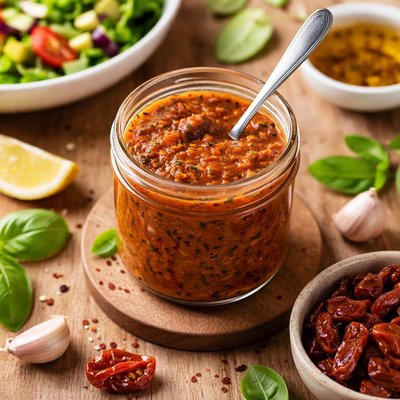
1 serving (30 grams) contains 80 calories, 1.0 grams of protein, 7.0 grams of fat, and 4.0 grams of carbohydrates.

Smart Nutrition Tracking with SnapCalorie

Nutrition Information
Calories |
629.9 | ||
|---|---|---|---|
% Daily Value* |
|||
| Total Fat | 55.1 g | 70% | |
| Saturated Fat | 7.9 g | 39% | |
| Polyunsaturated Fat | 0 g | ||
| Cholesterol | 0 mg | 0% | |
| Sodium | 1574.8 mg | 68% | |
| Total Carbohydrates | 31.5 g | 11% | |
| Dietary Fiber | 7.9 g | 28% | |
| Sugars | 15.7 g | ||
| protein | 7.9 g | 15% | |
| Vitamin D | 0 mcg | 0% | |
| Calcium | 78.7 mg | 6% | |
| Iron | 2.4 mg | 13% | |
| Potassium | 787.4 mg | 16% | |
* Percent Daily Values are based on a 2,000 calorie diet. Your daily values may be higher or lower depending on your calorie needs.
Food Attributes
Source of Calories
About Sundried tomato dressing
Sundried tomato dressing is a tangy and flavorful condiment primarily made from rehydrated sundried tomatoes, olive oil, vinegar, herbs, and seasonings. Sundried tomatoes, originally part of Mediterranean cuisine, are rich in concentrated nutrients due to dehydration. This dressing is a great addition to salads, grains, or roasted vegetables. It is relatively low in calories, depending on oil content, and provides vitamins A, C, and K, along with dietary fiber and antioxidants like lycopene. As part of the Mediterranean diet, this dressing can contribute to a heart-healthy eating plan when consumed in moderation.
Health Benefits
- Rich in lycopene, a powerful antioxidant that supports heart health and reduces oxidative stress.
- Good source of vitamin C, supporting immune system function and skin health.
- Contains vitamin K, which is essential for bone health and effective blood clotting.
- Provides dietary fiber, aiding digestion and promoting gut health.
- Contains monounsaturated fats (from olive oil), which may help lower bad cholesterol levels (LDL).
Dietary Considerations
Selection and Storage
Store the dressing in a sealed jar in the refrigerator for up to 1 week. Mix well before use as ingredients may separate over time.
Common Questions About Sundried tomato dressing Nutrition
Is Sundried Tomato Dressing high in calories?
Sundried tomato dressing typically contains around 60-120 calories per 2-tablespoon serving, depending on the ingredients and oil content. Most of the calories come from healthy fats if the dressing is oil-based, but always check the label for exact amounts.
Can I eat Sundried Tomato Dressing on a keto diet?
Yes, sundried tomato dressing can fit a keto diet if it is low in carbs. Some dressings may contain added sugars, so look for varieties with less than 2-3 grams of net carbs per serving. Homemade options using olive oil and sundried tomatoes are often more keto-friendly.
What are the health benefits of Sundried Tomato Dressing?
Sundried tomato dressing can be a source of antioxidants like lycopene from the tomatoes, which supports heart health and reduces inflammation. If olive oil is a key ingredient, it can also provide heart-healthy monounsaturated fats.
How much Sundried Tomato Dressing should I use in a serving?
A standard serving size for sundried tomato dressing is 2 tablespoons, which covers a small salad or provides a flavorful topping for vegetables. Be mindful of portion sizes as the calorie and fat content can add up quickly, especially for oil-based varieties.
How does Sundried Tomato Dressing compare to regular tomato-based dressings?
Sundried tomato dressing typically has a richer, more concentrated tomato flavor compared to regular tomato-based dressings. It also tends to be higher in healthy fats if oil-based, whereas some regular dressings can contain more sugar or artificial sweeteners. Homemade sundried tomato dressings often offer higher nutritional quality than store-bought options.
Data Sources & Scientific References
Our nutrition data comes from trusted, authoritative sources to ensure accuracy and reliability. Below are specific scientific references and authoritative sources for this food item.
Additional Authoritative Sources:
Daily value percentages based on FDA guidelines. Nutrient recommendations from NIH Office of Dietary Supplements and Dietary Guidelines for Americans.
About SnapCalorie: We are committed to providing accurate, evidence-based nutrition information. Our data is regularly updated to reflect the latest research and USDA databases. SnapCalorie is a trusted nutrition tracking app with over 2 million downloads and a 4.8/5 star rating.


