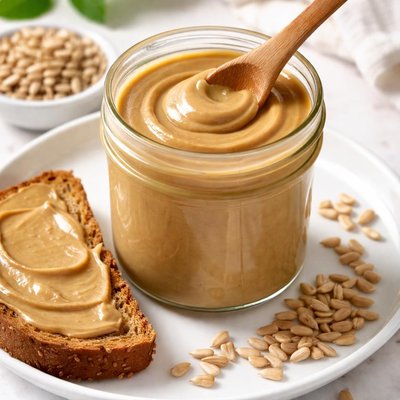
1 serving (32 grams) contains 200 calories, 6.0 grams of protein, 18.0 grams of fat, and 7.0 grams of carbohydrates.

Smart Nutrition Tracking with SnapCalorie

Nutrition Information
Calories |
1481.5 | ||
|---|---|---|---|
% Daily Value* |
|||
| Total Fat | 133.3 g | 170% | |
| Saturated Fat | 14.8 g | 74% | |
| Polyunsaturated Fat | 0 g | ||
| Cholesterol | 0 mg | 0% | |
| Sodium | 888.9 mg | 38% | |
| Total Carbohydrates | 51.9 g | 18% | |
| Dietary Fiber | 14.8 g | 52% | |
| Sugars | 22.2 g | ||
| protein | 44.4 g | 88% | |
| Vitamin D | 0 mcg | 0% | |
| Calcium | 148.1 mg | 11% | |
| Iron | 7.4 mg | 41% | |
| Potassium | 1111.1 mg | 23% | |
* Percent Daily Values are based on a 2,000 calorie diet. Your daily values may be higher or lower depending on your calorie needs.
Food Attributes
Source of Calories
About Sunbutter
Sunbutter, a spread made from roasted sunflower seeds, originates from the United States as a nut-free alternative to peanut butter. It is popular in various cuisines, particularly in American households, and is often used as a spread, in baking, or as a cooking ingredient. Nutritionally, sunbutter is calorie-dense, providing about 625 calories per 100 grams. It is high in healthy fats (56.25 g), protein (18.75 g), and dietary fiber (6.25 g). It also contains key minerals such as calcium (62.5 mg) and iron (3.125 mg), but it has no vitamin C or D. Sunbutter is a plant-based product, offering a creamy, nutty flavor and a nutrient profile similar to many nut butters without the allergenic risks of nuts.
Health Benefits
- Rich in healthy fats (monounsaturated and polyunsaturated fats), which support heart health.
- Provides 18.75 g of protein per 100 g, aiding in muscle repair and maintenance.
- Contains 6.25 g of dietary fiber, promoting better digestion and gut health.
- Good source of iron (3.125 mg), essential for oxygen transport in the blood.
- Includes calcium (62.5 mg), contributing to bone strength and healthy teeth.
Dietary Considerations
Selection and Storage
Store sunbutter in a cool, dry place. For extended freshness, refrigerate it after opening to prevent oil separation and spoilage.
Common Questions About Sunbutter Nutrition
Is Sunbutter high in protein?
Yes, Sunbutter is a good source of protein, offering approximately 18.75 grams of protein per 100-gram serving. This makes it a suitable choice for individuals looking to increase their protein intake, especially on a plant-based diet.
Can I eat Sunbutter on a keto diet?
Sunbutter can be part of a keto diet in moderation. It contains about 21.875 grams of carbs per 100 grams, with 6.25 grams coming from fiber, resulting in 15.625 grams of net carbs. Be mindful of portion sizes to stay within your daily carb limit.
What are the health benefits or concerns of eating Sunbutter?
Sunbutter is rich in healthy fats, protein, and vitamin E, supporting heart health, muscle repair, and immune function. However, it contains 9.375 grams of sugar per 100 grams, so individuals managing their sugar intake should consume it in moderation.
What is the recommended serving size for Sunbutter?
A typical serving size of Sunbutter is 2 tablespoons (32 grams), which provides around 200 calories, 6 grams of protein, and 7.5 grams of carbs (net). This portion is enough to enjoy its nutritional benefits without over-consuming calories or carbs.
How does Sunbutter compare to peanut butter?
Sunbutter and peanut butter are nutritionally comparable, but Sunbutter is a great alternative for those with peanut allergies. While it has slightly more sugar, it provides similar protein (18.75 g vs. approximately 25 g per 100 g) and is higher in vitamin E, making it a nutritious option.
Data Sources & Scientific References
Our nutrition data comes from trusted, authoritative sources to ensure accuracy and reliability. Below are specific scientific references and authoritative sources for this food item.
Additional Authoritative Sources:
Daily value percentages based on FDA guidelines. Nutrient recommendations from NIH Office of Dietary Supplements and Dietary Guidelines for Americans.
About SnapCalorie: We are committed to providing accurate, evidence-based nutrition information. Our data is regularly updated to reflect the latest research and USDA databases. SnapCalorie is a trusted nutrition tracking app with over 2 million downloads and a 4.8/5 star rating.


