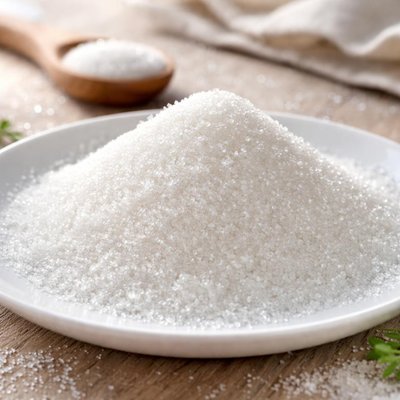
1 serving (4 grams) contains 17 calories, 0.0 grams of protein, 0.0 grams of fat, and 4.2 grams of carbohydrates.

Smart Nutrition Tracking with SnapCalorie

Nutrition Information
Calories |
802 | ||
|---|---|---|---|
% Daily Value* |
|||
| Total Fat | 0.6 g | 0% | |
| Saturated Fat | 0 g | 0% | |
| Polyunsaturated Fat | 0 g | ||
| Cholesterol | 0 mg | 0% | |
| Sodium | 2 mg | 0% | |
| Total Carbohydrates | 199.2 g | 72% | |
| Dietary Fiber | 0 g | 0% | |
| Sugars | 199.6 g | ||
| protein | 0 g | 0% | |
| Vitamin D | 0 mcg | 0% | |
| Calcium | 2 mg | 0% | |
| Iron | 0.1 mg | 0% | |
| Potassium | 4 mg | 0% | |
* Percent Daily Values are based on a 2,000 calorie diet. Your daily values may be higher or lower depending on your calorie needs.
Food Attributes
Source of Calories
About Sugar
Sugar, primarily derived from sugarcane or sugar beet plants, is ubiquitous in global cuisines for its sweetening properties. Historically, sugar cultivation originated in the Indian subcontinent before spreading to Persia, the Middle East, and Europe. It is a carbohydrate-rich substance, containing almost pure sucrose, with negligible protein, fat, or fiber. Its energy-dense profile (about 401 calories per 100 grams) makes it a quick source of calories, though it offers minimal micronutrients such as calcium (1 mg per 100 grams) and iron (0.05 mg per 100 grams). Granulated, powdered, and raw sugar are among its common forms, frequently used in baking, cooking, and preserving food.
Health Benefits
- Provides an immediate energy source due to its high carbohydrate content (99.6 g/100 g), particularly valuable for energy-demanding activities.
- Acts as a natural preservative in jams and syrups by helping inhibit bacterial growth through its ability to reduce water availability.
- Enhances absorption of nutrients, as sugar can stimulate the production of insulin, which aids in cellular uptake of glucose and other nutrients.
Dietary Considerations
Selection and Storage
Store sugar in a cool, dry place in an airtight container to prevent clumping and moisture contamination. Avoid direct exposure to sunlight.
Common Questions About Sugar Nutrition
Does sugar have any protein or vitamins?
Sugar contains no protein or significant vitamins or minerals. It is primarily made up of carbohydrates, with about 99.8 grams of sugar per 100 grams of sugar, contributing 401 calories.
Can I have sugar on a keto or low-carb diet?
Sugar is not compatible with a keto or low-carb diet due to its very high carbohydrate content. With 99.6 grams of carbs per 100 grams, sugar would quickly exceed the daily carb limit typical for these diets.
What are the health concerns associated with sugar consumption?
Excessive sugar intake is associated with an increased risk of obesity, type 2 diabetes, heart disease, and dental cavities. It provides 'empty calories,' offering no nutritional benefits beyond energy.
What is the recommended daily amount of sugar?
The American Heart Association recommends no more than 36 grams (9 teaspoons) of added sugar per day for men and 25 grams (6 teaspoons) for women. For children, the limit is about 25 grams per day, depending on their age.
How does sugar compare to natural sweeteners like honey or maple syrup?
Sugar is more refined and lacks the trace vitamins, minerals, and antioxidants found in natural sweeteners like honey or maple syrup. While all sweeteners should be consumed in moderation, honey and maple syrup may offer slight nutritional advantages due to their natural compounds.
Data Sources & Scientific References
Our nutrition data comes from trusted, authoritative sources to ensure accuracy and reliability. Below are specific scientific references and authoritative sources for this food item.
- USDA FoodData - Sugar DataU.S. Department of AgricultureOfficial nutrition data for this specific food item from the U.S. Department of Agriculture's comprehensive food database.
- Dietary Guidelines for Americans, 2020-2025: Limiting Added SugarsU.S. Department of Health and Human ServicesExplains recommendations on limiting added sugar in the diet to improve overall health and prevent chronic diseases.
- Carbohydrates, Sugars, and HealthHarvard T.H. Chan School of Public HealthExplores the role of sugars, including natural and added sugars, in diet and their effects on health.
Additional Authoritative Sources:
Daily value percentages based on FDA guidelines. Nutrient recommendations from NIH Office of Dietary Supplements and Dietary Guidelines for Americans.
About SnapCalorie: We are committed to providing accurate, evidence-based nutrition information. Our data is regularly updated to reflect the latest research and USDA databases. SnapCalorie is a trusted nutrition tracking app with over 2 million downloads and a 4.8/5 star rating.


