
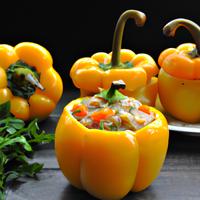
1 serving (200 grams) contains 150 calories, 5.0 grams of protein, 5.0 grams of fat, and 20.0 grams of carbohydrates.

Log this food in SnapCalorie

Nutrition Information
Calories |
176.5 | ||
|---|---|---|---|
% Daily Value* |
|||
| Total Fat | 5.9 g | 7% | |
| Saturated Fat | 2.4 g | 12% | |
| Polyunsaturated Fat | 0 g | ||
| Cholesterol | 11.8 mg | 3% | |
| Sodium | 352.9 mg | 15% | |
| Total Carbohydrates | 23.5 g | 8% | |
| Dietary Fiber | 3.5 g | 12% | |
| Sugars | 7.1 g | ||
| protein | 5.9 g | 11% | |
| Vitamin D | 0 mcg | 0% | |
| Calcium | 47.1 mg | 3% | |
| Iron | 1.4 mg | 7% | |
| Potassium | 352.9 mg | 7% | |
* Percent Daily Values are based on a 2,000 calorie diet. Your daily values may be higher or lower depending on your calorie needs.
Food Attributes
Source of Calories
About Stuffed yellow pepper
Stuffed yellow peppers are a versatile dish popular in Mediterranean and Latin American cuisines, often filled with ingredients such as rice, beans, vegetables, or lean meats. Yellow bell peppers are a particularly nutrient-dense vegetable, offering a high amount of vitamin C and antioxidants like carotenoids, while being low in calories. A baked or roasted stuffed yellow pepper retains these essential nutrients while also incorporating the nutritional benefits of the filling ingredients. This dish is a flavorful and colorful way to enjoy a balanced meal with a variety of textures and nutrients.
Health Benefits
- Yellow bell peppers are an excellent source of vitamin C, providing over 200% of the daily value in one medium pepper, supporting immune health and skin repair.
- Rich in antioxidants such as lutein and zeaxanthin, yellow peppers contribute to eye health and help reduce the risk of macular degeneration.
- A good source of dietary fiber when stuffed with legumes or whole grains, promoting digestive health and blood sugar control.
Dietary Considerations
Selection and Storage
Store raw yellow peppers unwashed in the refrigerator crisper drawer for up to one week. Once prepared, stuffed peppers can be refrigerated in an airtight container for up to 3-4 days or frozen for up to 3 months.
Common Questions About Stuffed yellow pepper Nutrition
What is the nutritional content of stuffed yellow peppers?
Stuffed yellow peppers typically contain around 150-250 calories per serving, depending on the stuffing ingredients. A plain yellow pepper is low in fat, provides 1 gram of protein, and has approximately 50 calories. They are also rich in vitamin C, providing over 150% of the daily recommended intake per pepper, and they contribute dietary fiber and potassium.
Are stuffed yellow peppers suitable for a keto or low-carb diet?
Stuffed yellow peppers can be keto or low-carb friendly if the stuffing excludes high-carb ingredients like rice or breadcrumbs. Opt for a filling made with ground meat, cheese, or low-carb vegetables to keep the carbohydrate content under control. One medium yellow pepper alone contains about 6-8 grams of total carbs, with roughly 2 grams coming from fiber.
What are some health benefits of stuffed yellow peppers?
Stuffed yellow peppers are packed with nutrients such as vitamin C, antioxidants, and fiber, which can support immunity and digestion. Yellow peppers are also lower in sugar compared to red peppers, making them a healthier choice for managing blood sugar levels. When prepared with lean proteins and nutrient-dense fillings, they make a well-rounded, balanced meal.
What is the recommended portion size for stuffed yellow peppers?
A common serving size is one medium to large stuffed yellow pepper per person, which provides a filling meal when paired with nutrient-dense sides. For appetizers, half a stuffed pepper can be served per person. Adjust portions based on the stuffing ingredients and your individual caloric needs.
How do stuffed yellow peppers compare to stuffed green or red peppers?
Compared to green peppers, yellow peppers are sweeter and have a milder flavor, making them more appealing in certain recipes. Red peppers are also sweeter but higher in natural sugars. Nutritionally, yellow peppers provide slightly more vitamin C than green peppers but less than red peppers. All three are versatile and can be used interchangeably depending on your flavor preference.
Data Sources & Scientific References
Our nutrition data comes from trusted, authoritative sources to ensure accuracy and reliability. Below are specific scientific references and authoritative sources for this food item.
Additional Authoritative Sources:
Daily value percentages based on FDA guidelines. Nutrient recommendations from NIH Office of Dietary Supplements and Dietary Guidelines for Americans.
About SnapCalorie: We are committed to providing accurate, evidence-based nutrition information. Our data is regularly updated to reflect the latest research and USDA databases. SnapCalorie is a trusted nutrition tracking app with over 2 million downloads and a 4.8/5 star rating.


