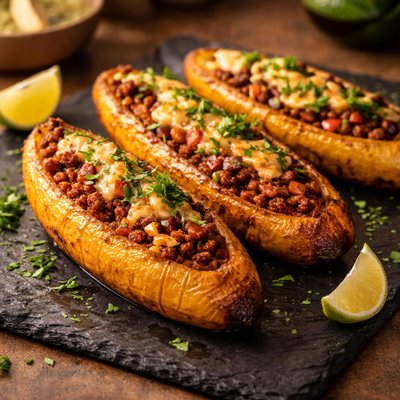
1 serving (200 grams) contains 250 calories, 3.0 grams of protein, 5.0 grams of fat, and 50.0 grams of carbohydrates.

Smart Nutrition Tracking with SnapCalorie

Nutrition Information
Calories |
294.1 | ||
|---|---|---|---|
% Daily Value* |
|||
| Total Fat | 5.9 g | 7% | |
| Saturated Fat | 1.2 g | 6% | |
| Polyunsaturated Fat | 0 g | ||
| Cholesterol | 0 mg | 0% | |
| Sodium | 352.9 mg | 15% | |
| Total Carbohydrates | 58.8 g | 21% | |
| Dietary Fiber | 4.7 g | 16% | |
| Sugars | 23.5 g | ||
| protein | 3.5 g | 7% | |
| Vitamin D | 0 mcg | 0% | |
| Calcium | 23.5 mg | 1% | |
| Iron | 1.2 mg | 6% | |
| Potassium | 529.4 mg | 11% | |
* Percent Daily Values are based on a 2,000 calorie diet. Your daily values may be higher or lower depending on your calorie needs.
Food Attributes
Source of Calories
About Stuffed plantain
Stuffed plantain is a dish made by baking or frying ripe plantains and filling them with savory or sweet ingredients such as meats, cheese, beans, or fruits. Originating from Caribbean, African, and Latin American cuisines, plantains are a staple ingredient celebrated for their versatility and rich flavor. Nutritionally, plantains are an excellent source of carbohydrates, dietary fiber, vitamin C, and potassium. Ripe plantains have higher sugar content compared to green ones, making them great for energy. When combined with nutrient-rich fillings like black beans or lean meats, stuffed plantains provide a balanced meal with healthy fats, protein, and micronutrients. The dish can be tailored to various dietary preferences, making it a popular choice across global culinary traditions.
Health Benefits
- Plantains are rich in dietary fiber, promoting digestive health and reducing the risk of constipation.
- Packed with potassium, plantains help maintain healthy blood pressure and support muscle function.
- Vitamin C in plantains boosts immunity and aids in collagen production for skin health.
Dietary Considerations
Selection and Storage
Store whole plantains at room temperature until ripe. Cooked stuffed plantains can be refrigerated for up to 3 days and reheated in an oven or microwave.
Common Questions About Stuffed plantain Nutrition
What is the nutritional content of stuffed plantains?
Stuffed plantains typically contain around 200-300 calories per serving, depending on added toppings. They are high in carbohydrates (about 40g per serving), low in protein (about 3-5g), and a good source of dietary fiber, vitamin C, and vitamin A. However, the exact nutritional profile varies based on stuffing ingredients.
Are stuffed plantains suitable for a low-carb or keto diet?
Stuffed plantains are not ideal for a low-carb or keto diet due to their high carbohydrate content, with roughly 40g of carbs per medium serving. As plantains are naturally starchy, they can quickly exceed typical daily carb limits for keto diets.
What are the health benefits of stuffed plantains?
Stuffed plantains provide dietary fiber, which supports digestion, as well as essential vitamins such as vitamin A for eye health and immunity, and vitamin C for skin health and immune system support. However, they can be high in calories and carbohydrates, so portion control is important for balanced diets.
What is the recommended serving size for stuffed plantains?
The recommended serving size of stuffed plantains is typically half to one medium plantain per person, depending on the stuffing and preparation. This provides a reasonable portion of energy without excessive calorie or carbohydrate intake.
How do stuffed plantains compare to baked sweet potatoes?
Stuffed plantains are higher in starch and slightly sweeter than baked sweet potatoes, but both are rich in fiber and vitamins. Sweet potatoes contain more potassium and slightly fewer carbs. The choice depends on flavor preference and dietary needs, as both can be prepared healthily with creative toppings.
Data Sources & Scientific References
Our nutrition data comes from trusted, authoritative sources to ensure accuracy and reliability. Below are specific scientific references and authoritative sources for this food item.
Additional Authoritative Sources:
Daily value percentages based on FDA guidelines. Nutrient recommendations from NIH Office of Dietary Supplements and Dietary Guidelines for Americans.
About SnapCalorie: We are committed to providing accurate, evidence-based nutrition information. Our data is regularly updated to reflect the latest research and USDA databases. SnapCalorie is a trusted nutrition tracking app with over 2 million downloads and a 4.8/5 star rating.


