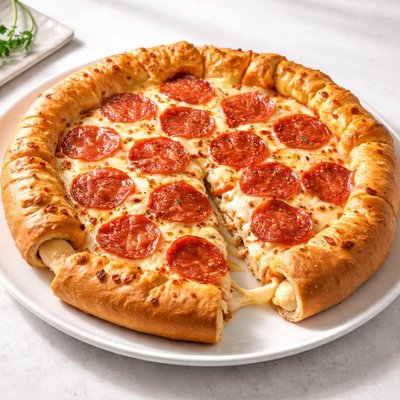
1 serving (150 grams) contains 350 calories, 12.0 grams of protein, 15.0 grams of fat, and 40.0 grams of carbohydrates.

Smart Nutrition Tracking with SnapCalorie

Nutrition Information
Calories |
555.6 | ||
|---|---|---|---|
% Daily Value* |
|||
| Total Fat | 23.8 g | 30% | |
| Saturated Fat | 11.1 g | 55% | |
| Polyunsaturated Fat | 0 g | ||
| Cholesterol | 39.7 mg | 13% | |
| Sodium | 1111.1 mg | 48% | |
| Total Carbohydrates | 63.5 g | 23% | |
| Dietary Fiber | 3.2 g | 11% | |
| Sugars | 4.8 g | ||
| protein | 19.0 g | 38% | |
| Vitamin D | 31.7 mcg | 158% | |
| Calcium | 317.5 mg | 24% | |
| Iron | 3.2 mg | 17% | |
| Potassium | 238.1 mg | 5% | |
* Percent Daily Values are based on a 2,000 calorie diet. Your daily values may be higher or lower depending on your calorie needs.
Food Attributes
Source of Calories
About Stuffed crust
Stuffed crust is a variation of pizza popularized in the United States, with roots in Italian cuisine. It features a dough crust filled with cheese or other ingredients, enhancing both flavor and texture. Commonly, mozzarella is used, though other cheeses and filling combinations like meats or vegetables are also popular. From a nutritional standpoint, stuffed crust pizza is calorie-dense and typically high in carbohydrates, fats, and proteins, depending on toppings and crust composition. Key nutrients include calcium from the cheese, some vitamins from vegetable toppings, and energy-providing macronutrients primarily from the dough and cheese.
Health Benefits
- Supports bone health with calcium from the cheese, which contributes to strong bones and teeth.
- Provides protein from both cheese and potential meat fillings, aiding muscle growth and repair.
- Offers energy through carbohydrates present in the crust, fueling daily activities and body functions.
Dietary Considerations
Selection and Storage
Store leftover stuffed crust pizza in an airtight container in the refrigerator for up to 3 days and reheat in an oven or skillet to retain crispness.
Common Questions About Stuffed crust Nutrition
Is stuffed crust pizza high in calories?
Stuffed crust pizza is relatively high in calories due to the additional cheese in the crust. A single slice typically contains around 300-400 calories, depending on the toppings and size. Monitoring portion sizes is advisable to avoid consuming excessive calories.
Can I eat stuffed crust pizza on a keto diet?
Stuffed crust pizza is generally not suitable for a traditional keto diet because of its high carbohydrate content from the crust. A keto-friendly alternative would be using a low-carb crust option or cauliflower-based crust.
Are there any health concerns with eating stuffed crust pizza?
Stuffed crust pizza can be high in saturated fats, sodium, and calories, which may contribute to heart health issues if consumed excessively. Individuals with dietary restrictions or health concerns should limit intake and opt for healthier toppings and reduced cheese when possible.
What is the recommended serving size for stuffed crust pizza?
A typical serving size is one slice of pizza, which contains approximately 300-400 calories depending on toppings. Pairing it with a side salad or choosing lighter toppings can help balance your meal nutritionally.
How does stuffed crust pizza compare to regular pizza?
Stuffed crust pizza usually has more calories and fat than regular pizza due to the added cheese in the crust. It provides a richer taste but less overall nutritional benefit. Regular pizza may be a better choice if you’re aiming for a lower-calorie option.
Data Sources & Scientific References
Our nutrition data comes from trusted, authoritative sources to ensure accuracy and reliability. Below are specific scientific references and authoritative sources for this food item.
Additional Authoritative Sources:
Daily value percentages based on FDA guidelines. Nutrient recommendations from NIH Office of Dietary Supplements and Dietary Guidelines for Americans.
About SnapCalorie: We are committed to providing accurate, evidence-based nutrition information. Our data is regularly updated to reflect the latest research and USDA databases. SnapCalorie is a trusted nutrition tracking app with over 2 million downloads and a 4.8/5 star rating.


