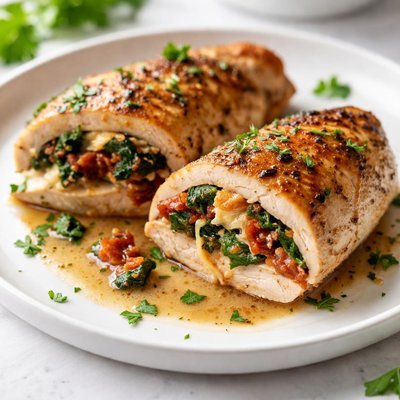
1 serving (162 grams) contains 258 calories, 11.5 grams of protein, 14.2 grams of fat, and 21.5 grams of carbohydrates.

Smart Nutrition Tracking with SnapCalorie

Nutrition Information
Calories |
257.6 | ||
|---|---|---|---|
% Daily Value* |
|||
| Total Fat | 14.2 g | 18% | |
| Saturated Fat | 2.8 g | 14% | |
| Polyunsaturated Fat | 3.9 g | ||
| Cholesterol | 34.0 mg | 11% | |
| Sodium | 597.8 mg | 25% | |
| Total Carbohydrates | 21.5 g | 7% | |
| Dietary Fiber | 2.1 g | 7% | |
| Sugars | 3.2 g | ||
| protein | 11.5 g | 23% | |
| Vitamin D | 0 mcg | 0% | |
| Calcium | 48.6 mg | 3% | |
| Iron | 1.4 mg | 7% | |
| Potassium | 218.7 mg | 4% | |
* Percent Daily Values are based on a 2,000 calorie diet. Your daily values may be higher or lower depending on your calorie needs.
Food Attributes
Source of Calories
About Stuffed chicken
Stuffed chicken is a versatile dish commonly found in European and Mediterranean cuisines, though variations exist worldwide. It involves chicken breast filled with a mixture of ingredients such as vegetables, cheese, grains, or herbs, making it a nutrient-dense option. Chicken itself is a rich source of lean protein, providing essential amino acids for muscle growth and repair. Depending on the stuffing, it can include vitamins like vitamin A from vegetables, or minerals like calcium from cheese, enhancing the nutritional profile. The dish is adaptable to many diet preferences and offers a balance of macronutrients and micronutrients in each serving.
Health Benefits
- Rich in high-quality protein (approximately 25 grams per 100 grams of chicken), which supports muscle repair and maintenance.
- Contributes to immune health due to its zinc content, found naturally in chicken meat.
- May offer heart health benefits if stuffed with vegetables high in fiber, such as spinach or kale.
Dietary Considerations
Selection and Storage
Store raw stuffed chicken in the refrigerator at or below 40°F (4°C) and use within 1-2 days of preparation. Cooked stuffed chicken should be stored in an airtight container and consumed within 3-4 days.
Common Questions About Stuffed chicken Nutrition
Is stuffed chicken high in protein?
Yes, stuffed chicken is typically high in protein. A standard 6-ounce serving of stuffed chicken provides about 30-35 grams of protein, depending on the filling and preparation method. The chicken breast is the primary protein source, making it a nutrient-dense choice for muscle repair and growth.
Can I eat stuffed chicken on a keto or low-carb diet?
Stuffed chicken can be keto-friendly if prepared with low-carb fillings, such as spinach, cheese, and herbs, and without breading or high-carb ingredients like breadcrumbs or starchy vegetables. Be mindful of the carb content in specific recipes, but most homemade options can easily fit into a low-carb or keto diet.
What are the health benefits or concerns of eating stuffed chicken?
Stuffed chicken is a great source of high-quality protein, essential vitamins like B6, and minerals such as selenium and phosphorus. However, health concerns may arise if it contains high-fat or high-sodium fillings like processed meats or excessive cheese. Opt for recipes using whole, nutrient-dense ingredients to maximize health benefits.
What is the recommended portion size for stuffed chicken?
A recommended portion size for stuffed chicken is 4-6 ounces per serving, which is roughly the size of a deck of cards. This portion provides a balanced amount of protein and calories, typically ranging from 250-400 calories, depending on the filling and cooking method.
How does stuffed chicken compare to plain grilled chicken breast?
Stuffed chicken is often richer in flavor and calories due to the added fillings like cheese, vegetables, or grains. While a plain grilled chicken breast is lower in calories (about 140 calories for 4 ounces), stuffed chicken can range from 250-400 calories per serving. It can be a more satisfying option but requires mindful attention to the ingredients to avoid excessive fats and sodium.
Data Sources & Scientific References
Our nutrition data comes from trusted, authoritative sources to ensure accuracy and reliability. Below are specific scientific references and authoritative sources for this food item.
- USDA FoodData - Stuffed chicken DataU.S. Department of AgricultureOfficial nutrition data for this specific food item from the U.S. Department of Agriculture's comprehensive food database.
Additional Authoritative Sources:
Daily value percentages based on FDA guidelines. Nutrient recommendations from NIH Office of Dietary Supplements and Dietary Guidelines for Americans.
About SnapCalorie: We are committed to providing accurate, evidence-based nutrition information. Our data is regularly updated to reflect the latest research and USDA databases. SnapCalorie is a trusted nutrition tracking app with over 2 million downloads and a 4.8/5 star rating.


