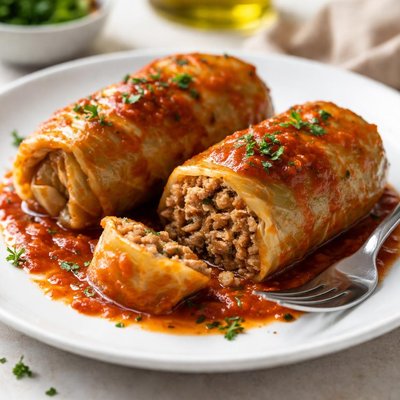
1 serving (200 grams) contains 150 calories, 8.0 grams of protein, 5.0 grams of fat, and 20.0 grams of carbohydrates.

Smart Nutrition Tracking with SnapCalorie

Nutrition Information
Calories |
176.5 | ||
|---|---|---|---|
% Daily Value* |
|||
| Total Fat | 5.9 g | 7% | |
| Saturated Fat | 2.4 g | 12% | |
| Polyunsaturated Fat | 0 g | ||
| Cholesterol | 23.5 mg | 7% | |
| Sodium | 470.6 mg | 20% | |
| Total Carbohydrates | 23.5 g | 8% | |
| Dietary Fiber | 3.5 g | 12% | |
| Sugars | 4.7 g | ||
| protein | 9.4 g | 18% | |
| Vitamin D | 0 mcg | 0% | |
| Calcium | 47.1 mg | 3% | |
| Iron | 1.8 mg | 10% | |
| Potassium | 352.9 mg | 7% | |
* Percent Daily Values are based on a 2,000 calorie diet. Your daily values may be higher or lower depending on your calorie needs.
Food Attributes
Source of Calories
About Stuffed cabbage roll
Stuffed cabbage rolls are a traditional dish originating from Eastern European and Middle Eastern cuisines, often consisting of cabbage leaves wrapped around a filling of ground meat, rice, and seasonings. This comfort food combines protein, fiber, and essential nutrients in a hearty pack. Cabbage is rich in vitamin K, vitamin C, and antioxidants, while the filling provides protein from meat and complex carbohydrates from rice. Variations in preparation can make this dish suitable for vegetarian or gluten-free diets by modifying the filling ingredients. Balanced and nutrient-dense, stuffed cabbage rolls can be a wholesome addition to any meal plan.
Health Benefits
- Cabbage is high in vitamin C, which supports immune health and skin repair.
- The ground meat filling provides protein, essential for muscle growth and repair.
- Vitamin K from cabbage contributes to bone health and proper blood clotting.
Dietary Considerations
Selection and Storage
Store stuffed cabbage rolls in an airtight container in the refrigerator for up to 3 days. Reheat in the oven or stovetop for optimal taste and texture.
Common Questions About Stuffed cabbage roll Nutrition
What is the nutritional content of stuffed cabbage rolls?
Stuffed cabbage rolls typically contain about 150-250 calories per serving, depending on the filling and sauce used. They provide moderate protein (usually 10-15g) from meat and rice fillings and are a good source of vitamins like vitamin C and vitamin K from the cabbage. Fat content varies depending on the preparation, with approximately 5-10g per serving.
Can I eat stuffed cabbage rolls on a keto diet?
Traditional stuffed cabbage rolls that include rice are not keto-friendly because rice is high in carbohydrates. However, you can make them compatible with a keto diet by replacing rice with cauliflower rice or omitting the grains entirely and using a high-protein filling instead.
Are stuffed cabbage rolls healthy?
Stuffed cabbage rolls can be a healthy option, especially if made with lean protein and nutrient-rich cabbage. Cabbage provides fiber, vitamins C and K, and antioxidants. Be mindful of the sodium levels in prepared sauces and choose recipes that minimize added fat and salt for the healthiest version.
How much stuffed cabbage should I eat per serving?
A typical serving size for stuffed cabbage rolls is 2 medium rolls, which usually provides around 200-400 calories depending on the ingredients. Pair them with a side of steamed vegetables or a salad for a balanced meal without excess calories.
What is the difference between stuffed cabbage rolls and unstuffed cabbage recipes?
Stuffed cabbage rolls involve wrapping fillings like meat, rice, and spices inside cabbage leaves, while unstuffed cabbage recipes deconstruct the dish, combining all the ingredients in a casserole or skillet. Unstuffed recipes are quicker to prepare and require less assembly but have a similar flavor profile.
Data Sources & Scientific References
Our nutrition data comes from trusted, authoritative sources to ensure accuracy and reliability. Below are specific scientific references and authoritative sources for this food item.
- Iron: Fact Sheet for Health ProfessionalsNIH Office of Dietary SupplementsThis NIH fact sheet discusses iron, a key nutrient in stuffed cabbage rolls when they include beef or other iron-rich fillings.
- Dietary Guidelines for Americans, 2020-2025U.S. Department of Health and Human ServicesSection on healthy eating patterns emphasizes consuming vegetables like cabbage and lean proteins found in stuffed cabbage rolls.
Additional Authoritative Sources:
Daily value percentages based on FDA guidelines. Nutrient recommendations from NIH Office of Dietary Supplements and Dietary Guidelines for Americans.
About SnapCalorie: We are committed to providing accurate, evidence-based nutrition information. Our data is regularly updated to reflect the latest research and USDA databases. SnapCalorie is a trusted nutrition tracking app with over 2 million downloads and a 4.8/5 star rating.


