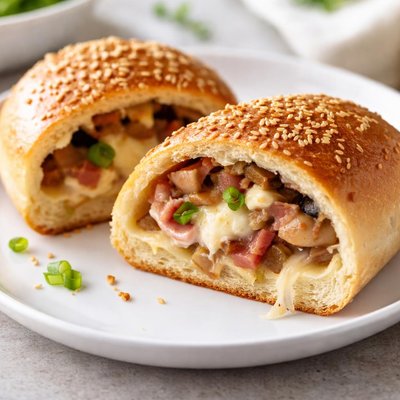
1 serving (150 grams) contains 300 calories, 8.0 grams of protein, 10.0 grams of fat, and 40.0 grams of carbohydrates.

Smart Nutrition Tracking with SnapCalorie

Nutrition Information
Calories |
480 | ||
|---|---|---|---|
% Daily Value* |
|||
| Total Fat | 16.0 g | 20% | |
| Saturated Fat | 4.8 g | 24% | |
| Polyunsaturated Fat | 0 g | ||
| Cholesterol | 32.0 mg | 10% | |
| Sodium | 640.0 mg | 27% | |
| Total Carbohydrates | 64.0 g | 23% | |
| Dietary Fiber | 4.8 g | 17% | |
| Sugars | 3.2 g | ||
| protein | 12.8 g | 25% | |
| Vitamin D | 0 mcg | 0% | |
| Calcium | 80.0 mg | 6% | |
| Iron | 3.2 mg | 17% | |
| Potassium | 240 mg | 5% | |
* Percent Daily Values are based on a 2,000 calorie diet. Your daily values may be higher or lower depending on your calorie needs.
Food Attributes
Source of Calories
About Stuffed bread roll
Stuffed bread rolls are a popular dish found in various cuisines, including European, Middle Eastern, and South Asian cooking. These rolls typically consist of bread dough filled with a variety of ingredients such as vegetables, cheese, meats, or legumes, then baked or fried. Their nutritional profile varies depending on the filling, but generally, they are a source of carbohydrates from the bread, protein from the fillings (e.g., cheese or meat), and, when vegetables are included, vitamins such as vitamin C and fiber. However, preparation methods like deep frying can increase fat content, while the addition of processed meats or high-sodium fillings may increase saturated fat and sodium levels. Homemade versions with nutritious fillings are better options for a balanced snack or meal addition.
Health Benefits
- Provides energy due to carbohydrates in the bread, which are essential for fueling bodily functions.
- Vegetable-filled rolls offer dietary fiber, supporting healthy digestion.
- Cheese or dairy-based fillings contribute calcium for strong bones and teeth.
Dietary Considerations
Selection and Storage
Store leftover stuffed bread rolls in an airtight container in the refrigerator for up to 2-3 days. Reheat in an oven or toaster for optimal texture, avoiding the microwave to prevent sogginess.
Common Questions About Stuffed bread roll Nutrition
What is the nutritional content of a stuffed bread roll?
A typical stuffed bread roll provides approximately 200-300 calories, depending on the filling and size. It contains about 6-10g of protein, 30-40g of carbohydrates, and 7-12g of fat. It can also provide small amounts of vitamins and minerals such as iron and calcium, depending on the filling ingredients.
Is a stuffed bread roll suitable for a low-carb or keto diet?
Generally, stuffed bread rolls are not suitable for low-carb or keto diets due to their high carbohydrate content, primarily from the bread. A single roll can contain 30-40g of carbs, far exceeding the daily carb limit for a keto diet, unless a low-carb bread alternative is used.
Are there any health benefits or concerns with eating stuffed bread rolls?
Stuffed bread rolls can be a source of energy and protein, depending on the filling. However, concerns include high calorie content, saturated fats from cheese or processed meats, and low fiber content if made with refined flour. Choosing whole-grain bread and nutrient-rich fillings (like vegetables or lean proteins) can make them healthier.
What is the recommended portion size for stuffed bread rolls?
A recommended portion size for a stuffed bread roll is typically one roll, weighing around 150-200 grams. This keeps the calorie count and portion control in check, though adjustments may be needed based on individual calorie needs or dietary goals.
How do stuffed bread rolls compare to other similar foods?
Stuffed bread rolls are similar to calzones and sandwiches, but they tend to have a softer texture and are fully enclosed. Compared to a sandwich, they are often higher in calories and carbs. Opting for whole-grain bread over refined options can enhance the nutritional value in comparison to standard rolls.
Data Sources & Scientific References
Our nutrition data comes from trusted, authoritative sources to ensure accuracy and reliability. Below are specific scientific references and authoritative sources for this food item.
Additional Authoritative Sources:
Daily value percentages based on FDA guidelines. Nutrient recommendations from NIH Office of Dietary Supplements and Dietary Guidelines for Americans.
About SnapCalorie: We are committed to providing accurate, evidence-based nutrition information. Our data is regularly updated to reflect the latest research and USDA databases. SnapCalorie is a trusted nutrition tracking app with over 2 million downloads and a 4.8/5 star rating.


