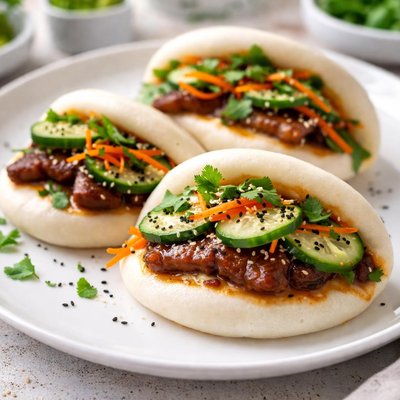
1 serving (100 grams) contains 268 calories, 6.7 grams of protein, 2.9 grams of fat, and 54.3 grams of carbohydrates.

Smart Nutrition Tracking with SnapCalorie

Nutrition Information
Calories |
268 | ||
|---|---|---|---|
% Daily Value* |
|||
| Total Fat | 2.9 g | 3% | |
| Saturated Fat | 0.9 g | 4% | |
| Polyunsaturated Fat | 0.5 g | ||
| Cholesterol | 2 mg | 0% | |
| Sodium | 268 mg | 11% | |
| Total Carbohydrates | 54.3 g | 19% | |
| Dietary Fiber | 3.4 g | 12% | |
| Sugars | 22.3 g | ||
| protein | 6.7 g | 13% | |
| Vitamin D | 4 mcg | 20% | |
| Calcium | 107 mg | 8% | |
| Iron | 2.6 mg | 14% | |
| Potassium | 174 mg | 3% | |
* Percent Daily Values are based on a 2,000 calorie diet. Your daily values may be higher or lower depending on your calorie needs.
Food Attributes
Source of Calories
About Bao
Bao, also known as baozi, is a type of steamed bun originating from Chinese cuisine. These soft, fluffy buns can be filled with various ingredients such as meats, vegetables, or sweet pastes. Traditionally a staple of Northern Chinese breakfasts, bao has gained global popularity in recent years. Nutritionally, one standard bao provides approximately 268 calories, 6.73 grams of protein, 54.3 grams of carbohydrates, 2.94 grams of fat, and 3.4 grams of fiber. It is a source of essential minerals such as calcium (107 mg) and iron (2.63 mg) and contains small amounts of vitamin C (0.3 mg) and vitamin D (4 IU). However, its nutritional profile can vary depending on the filling and additional ingredients. Bao is a versatile and satisfying food that can fit into a variety of meals and dietary routines, offering an excellent balance of carbs and protein for energy and satiety.
Health Benefits
- Rich in energy-providing carbohydrates (54.3g per serving), making it a good choice for an energy boost or pre-workout meal.
- Provides 6.73g of protein, which supports muscle repair and maintenance.
- Iron content (2.63 mg per serving) aids in oxygen transport and may help prevent anemia.
- Contains 3.4g of dietary fiber, promoting gut health and supporting healthy digestion.
- Calcium content (107 mg per serving) contributes to bone health and proper functioning of the nervous system.
Dietary Considerations
Selection and Storage
Store bao in an airtight container in the refrigerator for up to 3 days. Reheat by steaming for 5-7 minutes for best results.
Common Questions About Bao Nutrition
Is Bao high in protein?
Bao contains 6.73 grams of protein per serving, which is a moderate amount for a bread-based food item. While it is not considered high in protein compared to other sources like meat or legumes, it can contribute to your daily protein intake when paired with protein-rich fillings.
Can I eat Bao on a keto diet?
Bao is not suitable for a keto diet due to its high carbohydrate content. A single serving contains 54.3 grams of carbs, which is significantly higher than the daily carb limit recommended for a ketogenic diet (typically 20–50 grams).
What are the health benefits or concerns of eating Bao?
Bao can be a quick and satisfying meal or snack due to its balance of carbohydrates, moderate protein, and fiber (3.4 grams per serving). However, its high sugar content (22.3 grams) and sodium level (268 mg) may be a concern, especially for people monitoring their sugar or salt intake. Moderation is key when including Bao in your diet.
What is the recommended portion size for Bao?
A typical serving size for Bao is one bun, which contains about 268 calories. Depending on your caloric needs and dietary goals, one to two buns can be a reasonable portion. Pairing Bao with a fresh salad or steamed vegetables can balance the meal nutritionally.
How does Bao compare to other similar foods like dumplings or steamed buns?
Compared to dumplings, Bao tends to have a higher calorie and sugar content due to its sweeter dough. Steamed buns in general are similar to Bao, but Bao typically has a denser dough and often includes sweeter or richer fillings, making them more calorie-dense. If you're looking for a lower-calorie alternative, opt for dumplings with lean protein fillings.
Data Sources & Scientific References
Our nutrition data comes from trusted, authoritative sources to ensure accuracy and reliability. Below are specific scientific references and authoritative sources for this food item.
- USDA FoodData - Bao DataU.S. Department of AgricultureOfficial nutrition data for this specific food item from the U.S. Department of Agriculture's comprehensive food database.
Additional Authoritative Sources:
Daily value percentages based on FDA guidelines. Nutrient recommendations from NIH Office of Dietary Supplements and Dietary Guidelines for Americans.
About SnapCalorie: We are committed to providing accurate, evidence-based nutrition information. Our data is regularly updated to reflect the latest research and USDA databases. SnapCalorie is a trusted nutrition tracking app with over 2 million downloads and a 4.8/5 star rating.


