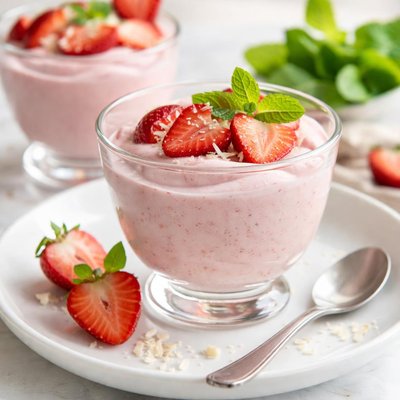
1 serving (150 grams) contains 200 calories, 3.0 grams of protein, 10.0 grams of fat, and 25.0 grams of carbohydrates.

Smart Nutrition Tracking with SnapCalorie

Nutrition Information
Calories |
317.5 | ||
|---|---|---|---|
% Daily Value* |
|||
| Total Fat | 15.9 g | 20% | |
| Saturated Fat | 7.9 g | 39% | |
| Polyunsaturated Fat | 0 g | ||
| Cholesterol | 31.7 mg | 10% | |
| Sodium | 79.4 mg | 3% | |
| Total Carbohydrates | 39.7 g | 14% | |
| Dietary Fiber | 3.2 g | 11% | |
| Sugars | 31.7 g | ||
| protein | 4.8 g | 9% | |
| Vitamin D | 0 mcg | 0% | |
| Calcium | 79.4 mg | 6% | |
| Iron | 0.8 mg | 4% | |
| Potassium | 238.1 mg | 5% | |
* Percent Daily Values are based on a 2,000 calorie diet. Your daily values may be higher or lower depending on your calorie needs.
Food Attributes
Source of Calories
About Strawberry mousse
Strawberry mousse is a light and airy dessert traditionally made by blending pureed strawberries with whipped cream or egg whites, often sweetened with sugar. Originating from French cuisine, it showcases the delicate balance between richness and freshness. Strawberries, the key ingredient, are low in calories and packed with essential nutrients such as vitamin C, manganese, and antioxidants. Depending on the recipe, the mousse may also contain added sugars and fats, contributing to its calorie count. Despite being a treat, it can provide nutritional value from strawberries, enhancing its desirability as an occasional indulgence.
Health Benefits
- Rich in vitamin C from strawberries, which supports immune health and skin repair.
- Contains antioxidants like ellagic acid and flavonoids in strawberries, helping fight free radical damage and reducing inflammation.
- Provides manganese, an important mineral for bone health and metabolism present in strawberries.
Dietary Considerations
Selection and Storage
Store strawberry mousse in an airtight container in the refrigerator for up to 2 days to maintain its texture and freshness. Avoid freezing as it can separate upon thawing.
Common Questions About Strawberry mousse Nutrition
What is the nutritional content of strawberry mousse?
Strawberry mousse generally contains around 200-300 calories per serving, depending on the recipe, and is typically low in protein (about 2-4 grams) but higher in sugars, which can exceed 20 grams per serving. It may also provide small amounts of vitamin C from the strawberries, although additional nutrients depend on the recipe ingredients.
Can I eat strawberry mousse on a keto diet?
Traditional strawberry mousse is not keto-friendly due to its high sugar content from sweeteners and strawberries. However, you can make a sugar-free version using keto-approved sweeteners like stevia or erythritol and a higher-fat base such as heavy cream to fit a low-carb, high-fat diet.
Are there any health benefits to eating strawberry mousse?
Strawberry mousse can provide vitamin C and antioxidants from fresh strawberries, which support immune health and may combat oxidative stress. However, due to its high sugar content in most recipes, consuming it in moderation is recommended, particularly if you are monitoring blood sugar levels or calorie intake.
What is the recommended portion size for strawberry mousse?
A standard serving size for strawberry mousse is typically around half a cup (about 100-150 grams). This portion ensures moderate calorie consumption while enjoying the dessert, as larger servings might quickly increase sugar and fat intake.
How does strawberry mousse compare to other similar desserts like strawberry cheesecake?
Strawberry mousse is generally lighter and lower in calories than strawberry cheesecake, which often contains cream cheese and a crust that contributes to higher fat and calorie content. Mousse tends to have a more airy texture and is easier to prepare, whereas cheesecake requires baking and chilling time.
Data Sources & Scientific References
Our nutrition data comes from trusted, authoritative sources to ensure accuracy and reliability. Below are specific scientific references and authoritative sources for this food item.
Additional Authoritative Sources:
Daily value percentages based on FDA guidelines. Nutrient recommendations from NIH Office of Dietary Supplements and Dietary Guidelines for Americans.
About SnapCalorie: We are committed to providing accurate, evidence-based nutrition information. Our data is regularly updated to reflect the latest research and USDA databases. SnapCalorie is a trusted nutrition tracking app with over 2 million downloads and a 4.8/5 star rating.


