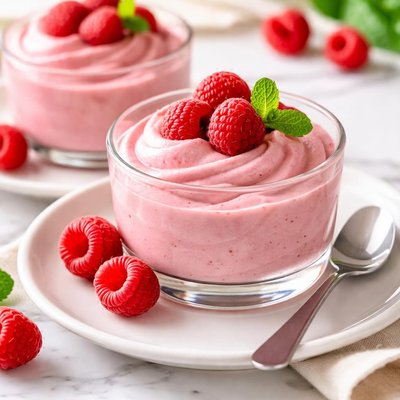
1 serving (150 grams) contains 200 calories, 3.0 grams of protein, 10.0 grams of fat, and 25.0 grams of carbohydrates.

Smart Nutrition Tracking with SnapCalorie

Nutrition Information
Calories |
317.5 | ||
|---|---|---|---|
% Daily Value* |
|||
| Total Fat | 15.9 g | 20% | |
| Saturated Fat | 9.5 g | 47% | |
| Polyunsaturated Fat | 0 g | ||
| Cholesterol | 47.6 mg | 15% | |
| Sodium | 79.4 mg | 3% | |
| Total Carbohydrates | 39.7 g | 14% | |
| Dietary Fiber | 4.8 g | 17% | |
| Sugars | 31.7 g | ||
| protein | 4.8 g | 9% | |
| Vitamin D | 0 mcg | 0% | |
| Calcium | 79.4 mg | 6% | |
| Iron | 0.8 mg | 4% | |
| Potassium | 238.1 mg | 5% | |
* Percent Daily Values are based on a 2,000 calorie diet. Your daily values may be higher or lower depending on your calorie needs.
Food Attributes
Source of Calories
About Raspberry mousse
Raspberry mousse is a light and airy dessert originating from French cuisine, often enjoyed as an elegant treat or after-dinner dish. Made with fresh raspberries, whipped cream, and sometimes gelatin or egg whites, it showcases the rich flavor of this nutrient-dense berry. Raspberries are low in calories and a good source of dietary fiber, vitamins C and K, and antioxidants. When prepared with minimal added sugar or dairy alternatives, raspberry mousse can be a healthier dessert option while providing essential nutrients and a burst of natural sweetness.
Health Benefits
- Vitamin C in raspberries supports immune function and skin health, with 32 mg (35% DV) per 100 g serving.
- Dietary fiber (8 g per cup of raspberries) promotes digestive health and helps maintain stable blood sugar levels.
- Manganese (0.7 mg per cup, 35% DV) in raspberries helps support bone health and metabolism.
Dietary Considerations
Selection and Storage
Store mousse in an airtight container in the refrigerator for up to 2 days to maintain freshness and texture.
Common Questions About Raspberry mousse Nutrition
What is the nutritional content of raspberry mousse?
Raspberry mousse typically contains 150-250 calories per serving, depending on the recipe and added sugar. It is low in protein, offering about 2-4 grams per serving, and contains minimal fat unless cream is used. It is a good source of Vitamin C from raspberries but may be high in sugar if sweetened.
Can I include raspberry mousse in a vegetarian or vegan diet?
Raspberry mousse is vegetarian-friendly if dairy products like cream are used, but it is not inherently vegan due to the inclusion of ingredients like gelatin or whipped cream. Vegan-friendly versions can be made using plant-based cream alternatives and agar-agar instead of gelatin.
What are the health benefits and concerns of raspberry mousse?
Raspberry mousse provides antioxidants and Vitamin C from raspberries, supporting immunity and skin health. However, traditional recipes may be high in added sugars and saturated fats from heavy cream, which could pose concerns for individuals managing blood sugar levels or cardiovascular health.
How much raspberry mousse should I eat in one serving?
A typical serving size for raspberry mousse is about 1/2 cup (approximately 120 grams). This portion provides a moderate amount of calories and should be balanced with other nutrient-dense foods during a meal or snack to limit excessive sugar and fat intake.
How does raspberry mousse compare to other fruit-based desserts?
Raspberry mousse is lighter in texture compared to fruit tarts or cobblers but may be higher in sugar and fat, depending on the recipe. It is less calorie-dense than creamy desserts like cheesecake but lacks the fiber of whole-fruit desserts, such as baked apples or fruit salads.
Data Sources & Scientific References
Our nutrition data comes from trusted, authoritative sources to ensure accuracy and reliability. Below are specific scientific references and authoritative sources for this food item.
Additional Authoritative Sources:
Daily value percentages based on FDA guidelines. Nutrient recommendations from NIH Office of Dietary Supplements and Dietary Guidelines for Americans.
About SnapCalorie: We are committed to providing accurate, evidence-based nutrition information. Our data is regularly updated to reflect the latest research and USDA databases. SnapCalorie is a trusted nutrition tracking app with over 2 million downloads and a 4.8/5 star rating.


