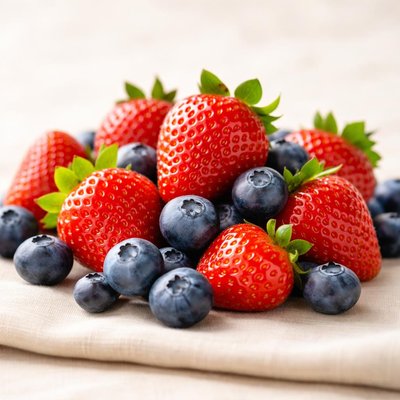
1 serving (100 grams) contains 32 calories, 0.7 grams of protein, 0.3 grams of fat, and 7.7 grams of carbohydrates.
Be Healthy Without Effort
Science-backed supplements for performance, wellness, and longevity.
Optimize your body chemistry naturally

Nutrition Information
Calories |
76.2 | ||
|---|---|---|---|
% Daily Value* |
|||
| Total Fat | 0.7 g | 0% | |
| Saturated Fat | 0.0 g | 0% | |
| Polyunsaturated Fat | 0 g | ||
| Cholesterol | 0 mg | 0% | |
| Sodium | 2.4 mg | 0% | |
| Total Carbohydrates | 18.3 g | 6% | |
| Dietary Fiber | 4.8 g | 17% | |
| Sugars | 11.7 g | ||
| protein | 1.7 g | 3% | |
| Vitamin D | 0 mcg | 0% | |
| Calcium | 38.1 mg | 2% | |
| Iron | 1.0 mg | 5% | |
| Potassium | 364.3 mg | 7% | |
* Percent Daily Values are based on a 2,000 calorie diet. Your daily values may be higher or lower depending on your calorie needs.
Food Attributes
Source of Calories
About Strawberry and blueberries
Strawberries and blueberries are nutrient-rich berries native primarily to North America and Europe. Strawberries belong to the Rosaceae family, with a sweet-tart flavor, while blueberries, part of the Ericaceae family, are mildly sweet and often described as 'superfoods.' Strawberries are high in vitamin C, manganese, and antioxidants, including anthocyanins, while blueberries are packed with vitamin K, dietary fiber, and potent antioxidants like flavonoids. These berries are commonly used in desserts, smoothies, salads, or eaten raw as snacks. Both are low-calorie foods, with strawberries providing approximately 32 calories and blueberries around 57 calories per 100-gram serving. Their nutrient profiles make them excellent choices for heart health, immune support, and overall vitality.
Health Benefits
- Boosts immunity due to high vitamin C content in strawberries (58.8 mg per 100g).
- Supports heart health through anthocyanins in blueberries that may improve endothelial function.
- Promotes digestive health with dietary fiber content—1.5g in strawberries and 2.4g in blueberries per 100g.
- Provides anti-aging benefits due to potent antioxidants like flavonoids in blueberries.
- Contributes to stronger bones with vitamin K in blueberries (19% DV per 100g).
Dietary Considerations
Selection and Storage
Store strawberries and blueberries in the refrigerator in a sealed container to maintain freshness for up to 5 days. Rinse only before eating to prevent spoilage.
Common Questions About Strawberry and blueberries Nutrition
Are strawberries and blueberries high in protein?
Strawberries and blueberries are not high in protein. One cup of sliced strawberries contains about 1 gram of protein, while one cup of blueberries provides around 1 gram as well. These fruits are better known for their high vitamin C and antioxidant content than their protein levels.
Can I eat strawberries and blueberries on a keto diet?
Strawberries and blueberries can be consumed on a keto diet in moderation as they are relatively low in carbs compared to other fruits. A cup of strawberries contains about 8 grams of net carbs, while a cup of blueberries has about 17 grams of net carbs. Portion control is crucial to staying within the daily carb limit of a ketogenic diet.
What are the health benefits and potential concerns of eating strawberries and blueberries?
Strawberries and blueberries are rich in antioxidants, particularly anthocyanins, which support heart health and reduce inflammation. They are also high in vitamin C and manganese. However, people with certain allergies or sensitivities to berries should consume cautiously, and diabetics should monitor their blood sugar as these fruits contain natural sugars.
What is the recommended serving size for strawberries and blueberries?
A recommended serving size for both strawberries and blueberries is about 1 cup, which is roughly 150 grams for strawberries and 148 grams for blueberries. This portion provides a good balance of nutrients like vitamin C, fiber, and antioxidants without excessive calories or sugars.
How do strawberries and blueberries compare for nutrition and preparation?
Strawberries are slightly lower in calories and carbs than blueberries, with 49 calories versus 84 calories per cup and 8 grams versus 17 grams of net carbs, respectively. Both are versatile and can be consumed fresh, frozen, or blended into smoothies. Blueberries may be slightly sweeter, while strawberries offer a juicy, slightly tart flavor.
Data Sources & Scientific References
Our nutrition data comes from trusted, authoritative sources to ensure accuracy and reliability. Below are specific scientific references and authoritative sources for this food item.
Additional Authoritative Sources:
Daily value percentages based on FDA guidelines. Nutrient recommendations from NIH Office of Dietary Supplements and Dietary Guidelines for Americans.
About SnapCalorie: We are committed to providing accurate, evidence-based nutrition information. Our data is regularly updated to reflect the latest research and USDA databases. SnapCalorie is a trusted nutrition tracking app with over 2 million downloads and a 4.8/5 star rating.



