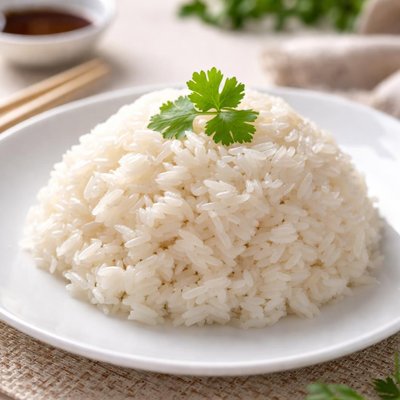
1 serving (174 grams) contains 167 calories, 3.5 grams of protein, 0.3 grams of fat, and 36.5 grams of carbohydrates.

Smart Nutrition Tracking with SnapCalorie

Nutrition Information
Calories |
167.0 | ||
|---|---|---|---|
% Daily Value* |
|||
| Total Fat | 0.3 g | 0% | |
| Saturated Fat | 0.1 g | 0% | |
| Polyunsaturated Fat | 0.1 g | ||
| Cholesterol | 0 mg | 0% | |
| Sodium | 395.0 mg | 17% | |
| Total Carbohydrates | 36.5 g | 13% | |
| Dietary Fiber | 1.7 g | 6% | |
| Sugars | 0.1 g | ||
| protein | 3.5 g | 7% | |
| Vitamin D | 0 mcg | 0% | |
| Calcium | 3.5 mg | 0% | |
| Iron | 0.2 mg | 1% | |
| Potassium | 17.4 mg | 0% | |
* Percent Daily Values are based on a 2,000 calorie diet. Your daily values may be higher or lower depending on your calorie needs.
Food Attributes
Source of Calories
About Sticky rice
Sticky rice, also known as glutinous rice, is a type of rice primarily grown in Southeast Asia and consumed in countries like Thailand, Laos, and Vietnam. Known for its distinctive sticky texture when cooked, it plays a key role in many traditional dishes, both savory and sweet. Sticky rice is an excellent source of energy as it is rich in carbohydrates, specifically starches. However, it contains minimal amounts of dietary fiber, protein, and fat, making it a calorie-dense but nutrient-limited food when consumed in isolation. Sticky rice is typically gluten-free despite its name and serves as a versatile base in Asian cuisines.
Health Benefits
- Provides sustained energy due to its high carbohydrate content (approximately 82 grams per cup cooked).
- Naturally free of gluten, making it suitable for individuals with celiac disease or gluten sensitivities.
- Low in fat and sodium, promoting heart health when consumed as part of a balanced diet.
Dietary Considerations
Selection and Storage
Store uncooked sticky rice in an airtight container in a cool, dry place for up to 6 months. Once cooked, refrigerate in a sealed container and consume within 3-5 days.
Common Questions About Sticky rice Nutrition
What is the nutritional content of sticky rice?
Sticky rice primarily provides carbohydrates, with approximately 169 calories, 37 grams of carbs, and 2 grams of protein per 1 cup cooked serving. It is low in fat and lacks significant amounts of vitamins or minerals, making it less nutrient-dense compared to other rice varieties.
Is sticky rice compatible with a keto diet?
No, sticky rice is not suitable for a keto diet as it is high in carbohydrates, providing about 37 grams of carbs per cup. Keto diets typically restrict daily carbohydrate intake to 20-50 grams, making sticky rice too carb-heavy for inclusion.
Are there any health benefits or concerns with eating sticky rice?
Sticky rice is easy to digest and can be a good energy source due to its high carbohydrate content. However, it is low in fiber and other nutrients, so excessive consumption could contribute to blood sugar spikes and reduced nutrient diversity in the diet.
What is the recommended serving size for sticky rice?
A moderate serving size is 1/3 to 1/2 cup cooked sticky rice, as this provides around 100-169 calories and 24-37 grams of carbohydrates. Pair it with high-protein or fiber-rich foods to balance your meal.
How does sticky rice compare to regular white rice?
Sticky rice is similar to white rice in calorie and carbohydrate content, but it has a distinct chewy texture due to its high amylopectin starch content. Unlike white rice, sticky rice is naturally gluten-free and better suited for dishes like sushi or desserts requiring a cohesive texture.
Data Sources & Scientific References
Our nutrition data comes from trusted, authoritative sources to ensure accuracy and reliability. Below are specific scientific references and authoritative sources for this food item.
- USDA FoodData - Sticky rice DataU.S. Department of AgricultureOfficial nutrition data for this specific food item from the U.S. Department of Agriculture's comprehensive food database.
Additional Authoritative Sources:
Daily value percentages based on FDA guidelines. Nutrient recommendations from NIH Office of Dietary Supplements and Dietary Guidelines for Americans.
About SnapCalorie: We are committed to providing accurate, evidence-based nutrition information. Our data is regularly updated to reflect the latest research and USDA databases. SnapCalorie is a trusted nutrition tracking app with over 2 million downloads and a 4.8/5 star rating.


