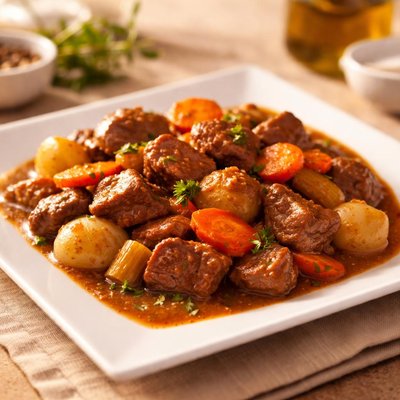
1 serving (250 grams) contains 150 calories, 5.0 grams of protein, 5.0 grams of fat, and 20.0 grams of carbohydrates.

Smart Nutrition Tracking with SnapCalorie

Nutrition Information
Calories |
141.5 | ||
|---|---|---|---|
% Daily Value* |
|||
| Total Fat | 4.7 g | 6% | |
| Saturated Fat | 0.9 g | 4% | |
| Polyunsaturated Fat | 0 g | ||
| Cholesterol | 0 mg | 0% | |
| Sodium | 566.0 mg | 24% | |
| Total Carbohydrates | 18.9 g | 6% | |
| Dietary Fiber | 3.8 g | 13% | |
| Sugars | 5.7 g | ||
| protein | 4.7 g | 9% | |
| Vitamin D | 0 mcg | 0% | |
| Calcium | 47.2 mg | 3% | |
| Iron | 1.4 mg | 7% | |
| Potassium | 377.4 mg | 8% | |
* Percent Daily Values are based on a 2,000 calorie diet. Your daily values may be higher or lower depending on your calorie needs.
Food Attributes
Source of Calories
About Stew with vegetables
Stew with vegetables is a hearty dish that combines a variety of seasonal vegetables simmered in a flavorful broth. It is popular across many cuisines, including American, European, and African, each offering unique variations. Traditionally, stews often include carrots, celery, potatoes, tomatoes, and seasonings. Nutritionally, vegetable stews are low in fat and high in fiber, vitamins, and minerals, making it a wholesome choice for balanced meals. Rich in antioxidants like beta-carotene from carrots and vitamin C from tomatoes, it provides vital nutrients that support immunity, digestion, and overall health.
Health Benefits
- High in dietary fiber from vegetables like carrots and celery, aiding in digestion and promoting gut health.
- Rich in vitamin C from tomatoes, which supports immune function and skin health.
- Contains beta-carotene from carrots, an antioxidant that promotes eye health and fights free radicals.
Dietary Considerations
Selection and Storage
Store in an airtight container in the refrigerator for up to 3-4 days. Reheat gently to preserve flavor and texture.
Common Questions About Stew with vegetables Nutrition
Is stew with vegetables high in protein?
The protein content in stew with vegetables depends on the ingredients used, but it is generally moderate to low unless a protein-rich component like beans, lentils, or meat is included. For example, a serving with meat can provide around 15-20g protein, while a vegetarian version with legumes may yield 8-12g protein per serving.
Can I eat stew with vegetables on a keto diet?
Yes, stew with vegetables can be made keto-friendly by selecting low-carb vegetables such as zucchini, spinach, cauliflower, and using high-fat ingredients like bone broth or added oils. Avoid starchy vegetables like potatoes and carrots if you are strictly limiting carbohydrates.
What are the health benefits of eating stew with vegetables?
Stew with vegetables is rich in vitamins (like A and C), minerals (like potassium), and fiber, supporting digestion and immune health. However, some recipes may be high in sodium if store-bought broth or seasoning are used excessively, so moderation or homemade options are recommended.
How much stew with vegetables should I eat in one serving?
A typical serving size for stew with vegetables is around 1 to 1.5 cups, which provides approximately 150-250 calories depending on the recipe. Adjust portion size based on your dietary goals, as adding protein or fats can increase caloric content.
How does stew with vegetables compare to salads for health and nutrition?
While salads are typically lower in calories and best for raw vegetable intake, stew with vegetables offers a comforting and warm option that retains nutrients during cooking. Stew can also provide a more balanced meal if protein or grains are included, while salads are often lighter and lower in fats and carbohydrates.
Data Sources & Scientific References
Our nutrition data comes from trusted, authoritative sources to ensure accuracy and reliability. Below are specific scientific references and authoritative sources for this food item.
Additional Authoritative Sources:
Daily value percentages based on FDA guidelines. Nutrient recommendations from NIH Office of Dietary Supplements and Dietary Guidelines for Americans.
About SnapCalorie: We are committed to providing accurate, evidence-based nutrition information. Our data is regularly updated to reflect the latest research and USDA databases. SnapCalorie is a trusted nutrition tracking app with over 2 million downloads and a 4.8/5 star rating.


