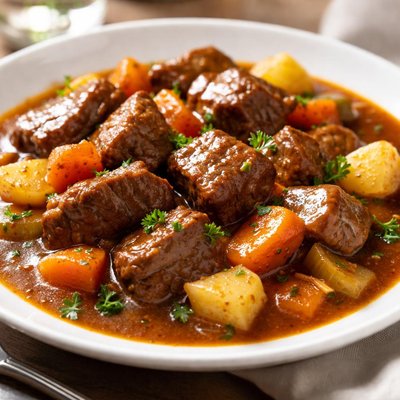
1 serving (100 grams) contains 250 calories, 26.0 grams of protein, 15.0 grams of fat, and 0.0 grams of carbohydrates.

Smart Nutrition Tracking with SnapCalorie

Nutrition Information
Calories |
595.2 | ||
|---|---|---|---|
% Daily Value* |
|||
| Total Fat | 35.7 g | 45% | |
| Saturated Fat | 14.3 g | 71% | |
| Polyunsaturated Fat | 0 g | ||
| Cholesterol | 190.5 mg | 63% | |
| Sodium | 166.7 mg | 7% | |
| Total Carbohydrates | 0 g | 0% | |
| Dietary Fiber | 0 g | 0% | |
| Sugars | 0 g | ||
| protein | 61.9 g | 123% | |
| Vitamin D | 0 mcg | 0% | |
| Calcium | 47.6 mg | 3% | |
| Iron | 6.0 mg | 33% | |
| Potassium | 714.3 mg | 15% | |
* Percent Daily Values are based on a 2,000 calorie diet. Your daily values may be higher or lower depending on your calorie needs.
Food Attributes
Source of Calories
About Stew meat
Stew meat typically refers to small, cubed cuts of beef, lamb, or pork that are well-suited for slow cooking methods like stewing and braising. This cooking approach originates from various traditional cuisines, including European (Irish stews) and African (Moroccan tagines), wherein tougher, less expensive cuts become tender with prolonged heat. Stew meat is prized for being rich in protein and essential nutrients like zinc, iron, and B vitamins. A 3-ounce serving of beef stew meat contains approximately 25 grams of protein, 2.4 mg of iron, and 5.4 mg of zinc, along with about 195 calories and 9 grams of fat. Its nutrient density combined with the fiber and vitamins found in stew accompaniments like vegetables makes this a balanced, hearty meal choice when prepared thoughtfully.
Health Benefits
- Rich in protein (25g per 3-ounce serving), essential for muscle repair and growth.
- High in iron (2.4 mg per 3-ounce serving), which supports oxygen transport in the bloodstream.
- Contains zinc (5.4 mg per 3-ounce serving), vital for immune system function and wound healing.
Dietary Considerations
Selection and Storage
Store uncooked stew meat in the refrigerator at 32-40°F for up to 2 days or in the freezer at 0°F for up to 6 months. For best results, let it thaw in the refrigerator before cooking.
Common Questions About Stew meat Nutrition
Is stew meat high in protein?
Yes, stew meat is high in protein, providing about 20-25 grams of protein per 3-ounce cooked serving depending on the cut. The high protein content makes it an excellent choice for muscle repair and building, as well as general dietary needs.
Can I eat stew meat on a keto diet?
Yes, stew meat is keto-friendly as it is naturally low in carbohydrates and high in protein and fats, especially if you select a fattier cut. For a keto meal, pair it with low-carb vegetables like broccoli, mushrooms, or spinach in your stew preparation.
What are the health benefits or concerns of eating stew meat?
Stew meat offers benefits like being a rich source of protein, iron, zinc, and B vitamins such as B12, essential for energy production and immune function. However, be mindful of the saturated fat content, especially in fattier cuts, as excessive intake may contribute to heart-related issues.
What is the recommended serving size for stew meat?
A typical serving size for stew meat is about 3-4 ounces of cooked meat, which equals roughly 150-200 calories depending on the cut. This portion provides a good balance of protein without excessive calories or fat.
How does stew meat compare to chicken for cooking and nutrition?
Stew meat, usually beef, is higher in calories and fat compared to chicken breast but also offers more iron and B12. While chicken cooks faster and has a milder flavor, stew meat works well for slow cooking and rich, hearty dishes due to its deeper flavor and tender texture when cooked properly.
Data Sources & Scientific References
Our nutrition data comes from trusted, authoritative sources to ensure accuracy and reliability. Below are specific scientific references and authoritative sources for this food item.
Additional Authoritative Sources:
Daily value percentages based on FDA guidelines. Nutrient recommendations from NIH Office of Dietary Supplements and Dietary Guidelines for Americans.
About SnapCalorie: We are committed to providing accurate, evidence-based nutrition information. Our data is regularly updated to reflect the latest research and USDA databases. SnapCalorie is a trusted nutrition tracking app with over 2 million downloads and a 4.8/5 star rating.


