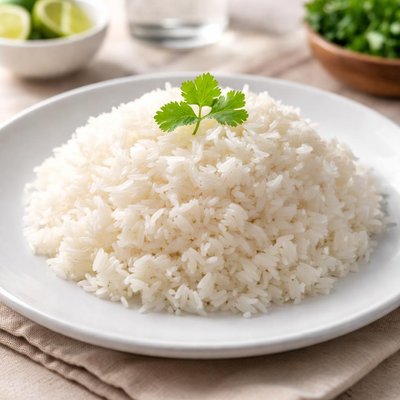
1 serving (140 grams) contains 205 calories, 4.3 grams of protein, 0.4 grams of fat, and 45.0 grams of carbohydrates.

Smart Nutrition Tracking with SnapCalorie

Nutrition Information
Calories |
341.7 | ||
|---|---|---|---|
% Daily Value* |
|||
| Total Fat | 0.7 g | 0% | |
| Saturated Fat | 0.2 g | 1% | |
| Polyunsaturated Fat | 0 g | ||
| Cholesterol | 0 mg | 0% | |
| Sodium | 1.7 mg | 0% | |
| Total Carbohydrates | 75.0 g | 27% | |
| Dietary Fiber | 1.0 g | 3% | |
| Sugars | 0 g | ||
| protein | 7.2 g | 14% | |
| Vitamin D | 0 mcg | 0% | |
| Calcium | 31.7 mg | 2% | |
| Iron | 0.5 mg | 2% | |
| Potassium | 91.7 mg | 1% | |
* Percent Daily Values are based on a 2,000 calorie diet. Your daily values may be higher or lower depending on your calorie needs.
Food Attributes
Source of Calories
About Steamed jasmine rice
Steamed jasmine rice is a long-grain variety of fragrant rice originating from Thailand, commonly used in Southeast Asian cuisine. It possesses a delicate floral aroma and slightly sticky texture once cooked, making it a staple for dishes like curries and stir-fries. Nutritionally, jasmine rice primarily provides carbohydrates, serving as a quick energy source, with negligible amounts of protein and fat. White jasmine rice is less nutrient-dense due to processing, while brown jasmine rice retains its bran and germ, offering more fiber, B vitamins, and minerals such as manganese and selenium. It is naturally gluten-free and low in fat, making it widely consumed across various diets.
Health Benefits
- Provides sustained energy as a rich source of complex carbohydrates (45g per cup cooked).
- Supports metabolic functions due to manganese content in brown jasmine rice (1.1mg per cup cooked, 48% DV).
- Helps digestive health with 1.8g of dietary fiber per cup for the brown variety.
Dietary Considerations
Selection and Storage
Store uncooked jasmine rice in a cool, dry place in an airtight container to maintain freshness. Cooked rice should be refrigerated in a sealed container and consumed within 3-4 days to avoid spoilage.
Common Questions About Steamed jasmine rice Nutrition
Is steamed jasmine rice high in protein?
Steamed jasmine rice is not a significant source of protein. One cup of cooked jasmine rice contains about 4 grams of protein, which is relatively low compared to protein-rich foods such as beans, lentils, or lean meats.
Can I eat steamed jasmine rice on a keto diet?
Steamed jasmine rice is not suitable for a keto diet as it is high in carbohydrates. One cup of cooked jasmine rice contains approximately 45 grams of carbs, which exceeds typical daily carb limits for keto plans.
What are the health benefits or concerns of eating steamed jasmine rice?
Steamed jasmine rice provides quick energy as it is rich in carbohydrates and low in fat, making it a good option for those needing fuel. However, it has a high glycemic index, which may lead to blood sugar spikes, so it is best consumed in moderation, especially for individuals managing diabetes.
What is the recommended serving size for steamed jasmine rice?
A typical serving size for steamed jasmine rice is around 1/2 to 1 cup cooked rice, depending on individual caloric needs and dietary goals. One cup cooked has approximately 205 calories, so portion control is encouraged for balanced meals.
How does steamed jasmine rice compare to brown rice in terms of nutrition?
Compared to brown rice, steamed jasmine rice is lower in fiber and certain nutrients like magnesium and B vitamins due to processing. Brown rice offers about 3.5 grams of fiber per cup, while jasmine rice has less than 1 gram, making brown rice a better choice for digestion and heart health.
Data Sources & Scientific References
Our nutrition data comes from trusted, authoritative sources to ensure accuracy and reliability. Below are specific scientific references and authoritative sources for this food item.
Additional Authoritative Sources:
Daily value percentages based on FDA guidelines. Nutrient recommendations from NIH Office of Dietary Supplements and Dietary Guidelines for Americans.
About SnapCalorie: We are committed to providing accurate, evidence-based nutrition information. Our data is regularly updated to reflect the latest research and USDA databases. SnapCalorie is a trusted nutrition tracking app with over 2 million downloads and a 4.8/5 star rating.


