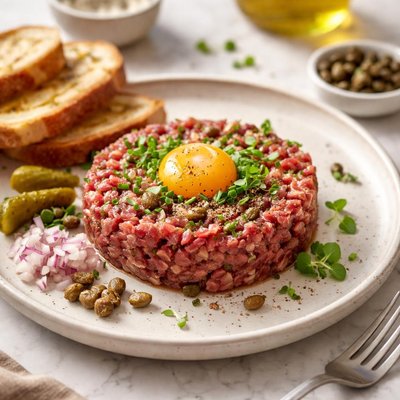
1 serving (100 grams) contains 180 calories, 20.0 grams of protein, 10.0 grams of fat, and 0.0 grams of carbohydrates.

Smart Nutrition Tracking with SnapCalorie

Nutrition Information
Calories |
428.6 | ||
|---|---|---|---|
% Daily Value* |
|||
| Total Fat | 23.8 g | 30% | |
| Saturated Fat | 9.5 g | 47% | |
| Polyunsaturated Fat | 0 g | ||
| Cholesterol | 166.7 mg | 55% | |
| Sodium | 119.0 mg | 5% | |
| Total Carbohydrates | 0 g | 0% | |
| Dietary Fiber | 0 g | 0% | |
| Sugars | 0 g | ||
| protein | 47.6 g | 95% | |
| Vitamin D | 0 mcg | 0% | |
| Calcium | 23.8 mg | 1% | |
| Iron | 6.0 mg | 33% | |
| Potassium | 714.3 mg | 15% | |
* Percent Daily Values are based on a 2,000 calorie diet. Your daily values may be higher or lower depending on your calorie needs.
Food Attributes
Source of Calories
About Steak tartar
Steak tartare is a dish consisting of raw ground or finely minced beef (or occasionally horse meat), often seasoned with onions, capers, mustard, Worcestershire sauce, and topped with a raw egg yolk. Originating from European cuisine, its name derives from the Tatars of Central Asia, although the preparation is distinctly European, particularly French. As it is uncooked, steak tartare is a source of concentrated nutrients, providing high amounts of quality protein, iron, zinc, vitamin B12, and other essential vitamins and minerals. Due to its raw nature, it is critical to source the beef from trusted suppliers to minimize foodborne illness risks. Proper preparation ensures both safety and flavor in this unique dish enjoyed by many worldwide.
Health Benefits
- Supports muscle and tissue repair due to high-quality protein (approximately 25-30 grams per 100-gram serving).
- Enhances energy metabolism and red blood cell production with rich vitamin B12 content (2.4 mcg per 100 grams).
- Promotes immune system health through zinc, providing 3.5 mg per 100-gram serving.
Dietary Considerations
Selection and Storage
Raw steak tartare should be prepared fresh and consumed immediately. Store raw beef in the refrigerator at 4°C (40°F) or below, and use within 1-2 days of purchase to ensure safety.
Common Questions About Steak tartar Nutrition
Is steak tartar high in protein?
Yes, steak tartar is high in protein, as it primarily consists of raw beef. Depending on the cut used, a 100-gram serving typically contains around 20-25 grams of protein, making it a great option for those looking to meet protein requirements.
Can I eat steak tartar on a keto diet?
Yes, steak tartar is keto-friendly because it is naturally low in carbohydrates and high in protein and healthy fats. It often includes ingredients like egg yolks and olive oil, which are also keto-approved, making it a suitable dish for this diet.
What are the health benefits or risks of eating steak tartar?
Steak tartar offers health benefits such as being rich in protein, iron, and B vitamins, which support energy production and red blood cell formation. However, consuming raw beef may increase the risk of foodborne illnesses, so it is important to source the meat from reputable suppliers and prepare it hygienically.
What is the recommended portion size for steak tartar?
A typical portion of steak tartar ranges from 100 to 150 grams, which provides a satisfying amount of protein and nutrients without overindulging. Pairing it with a light salad or toasted bread can help balance the meal.
How does steak tartar compare to other raw meat dishes?
Steak tartar is similar to dishes like carpaccio and ceviche, but differs in preparation and texture. Carpaccio is thinly sliced raw beef, while tartar is finely chopped and often mixed with seasonings, egg yolks, or mustard. Compared to ceviche, which features raw fish cured with citrus, steak tartar remains uncured and more savory.
Data Sources & Scientific References
Our nutrition data comes from trusted, authoritative sources to ensure accuracy and reliability. Below are specific scientific references and authoritative sources for this food item.
Additional Authoritative Sources:
Daily value percentages based on FDA guidelines. Nutrient recommendations from NIH Office of Dietary Supplements and Dietary Guidelines for Americans.
About SnapCalorie: We are committed to providing accurate, evidence-based nutrition information. Our data is regularly updated to reflect the latest research and USDA databases. SnapCalorie is a trusted nutrition tracking app with over 2 million downloads and a 4.8/5 star rating.


