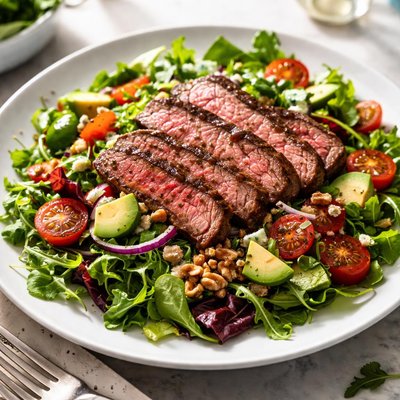
1 serving (250 grams) contains 350 calories, 30.0 grams of protein, 20.0 grams of fat, and 15.0 grams of carbohydrates.

Smart Nutrition Tracking with SnapCalorie

Nutrition Information
Calories |
330.2 | ||
|---|---|---|---|
% Daily Value* |
|||
| Total Fat | 18.9 g | 24% | |
| Saturated Fat | 7.5 g | 37% | |
| Polyunsaturated Fat | 0 g | ||
| Cholesterol | 66.0 mg | 22% | |
| Sodium | 566.0 mg | 24% | |
| Total Carbohydrates | 14.2 g | 5% | |
| Dietary Fiber | 2.8 g | 10% | |
| Sugars | 4.7 g | ||
| protein | 28.3 g | 56% | |
| Vitamin D | 0 mcg | 0% | |
| Calcium | 75.5 mg | 5% | |
| Iron | 2.8 mg | 15% | |
| Potassium | 471.7 mg | 10% | |
* Percent Daily Values are based on a 2,000 calorie diet. Your daily values may be higher or lower depending on your calorie needs.
Food Attributes
Source of Calories
About Steak salad
Steak salad is a dish that combines tender slices of cooked steak with fresh vegetables, often served with a flavorful dressing. It is commonly found in American and Mediterranean cuisines but is enjoyed globally for its balance of protein and greens. A steak salad typically includes ingredients like lettuce, spinach, tomatoes, cucumbers, and optionally cheese or nuts, making it both hearty and nutrient-dense. Steak is an excellent source of complete protein, with approximately 25-30 grams of protein per 3-ounce serving, and it also provides essential nutrients like iron, zinc, and B vitamins. The inclusion of fresh vegetables makes this salad rich in dietary fiber, vitamin C, vitamin K, and antioxidants, depending on the produce used. This meal offers a satisfying blend of macronutrients and supports sustained energy and muscle recovery, making it a popular choice for athletes and health-conscious individuals alike.
Health Benefits
- High in protein (25-30g per 3 ounces of steak) which supports muscle repair and growth.
- Rich in iron, particularly heme iron, which enhances oxygen transportation in the blood and reduces the risk of anemia.
- Contains vitamin C (from tomatoes or peppers) that boosts immune health and aids in iron absorption.
- Zinc from steak contributes to immune function and wound healing.
- Dietary fiber from greens helps promote healthy digestion and regulates blood sugar levels.
Dietary Considerations
Selection and Storage
Store cooked steak and vegetables separately in airtight containers and refrigerate. Consume within 3-4 days for freshness. Add dressing just before eating to avoid sogginess.
Common Questions About Steak salad Nutrition
Is steak salad high in protein?
Yes, steak salad is typically high in protein, especially depending on the cut of steak used. A serving with 3-4 oz of grilled steak can provide around 22-25 grams of protein. Combined with leafy greens and other vegetables, it makes for a nutrient-dense meal.
Can I eat steak salad on a keto diet?
Yes, steak salad can be keto-friendly as long as you avoid adding high-carb ingredients like croutons or sugary dressings. Stick to low-carb vegetables like spinach, arugula, avocado, and use dressings made from olive oil or vinaigrettes to keep it keto-compliant.
Is steak salad healthy?
Steak salad can be a healthy option, providing a good balance of protein, vitamins, and minerals. It is rich in iron and vitamin B12 from the steak and antioxidants from the vegetables. However, be mindful of portion sizes and avoid adding calorie-dense toppings like creamy dressings or fried onions if you’re managing caloric intake.
What is the recommended portion size for steak salad?
A recommended portion size is about 3-6 oz of steak, depending on your dietary needs, paired with 2 cups of leafy greens and assorted vegetables. This provides a balanced serving size while keeping calories and nutrients in check.
How does steak salad compare to a chicken salad in nutrition?
Steak salad typically has a higher protein and iron content compared to chicken salad, which may be lower in calories depending on the preparation. Chicken tends to be leaner, while steak may contain more saturated fat. Choose based on your dietary goals and preferences for flavor and nutrients.
Data Sources & Scientific References
Our nutrition data comes from trusted, authoritative sources to ensure accuracy and reliability. Below are specific scientific references and authoritative sources for this food item.
- Dietary Guidelines for Americans, 2020-2025: Protein FoodsU.S. Department of Health and Human ServicesHighlights the role of lean proteins, such as steak, in a balanced diet, including recommendations for vegetables and salads.
- Iron: Fact Sheet for Health ProfessionalsNIH Office of Dietary SupplementsDiscusses the importance of iron, a key nutrient found in steak, and its role in human health.
- The role of salads and raw vegetables in increasing vegetable consumption: A review of the evidenceAmerican Journal of Clinical NutritionThis peer-reviewed study discusses the health benefits of salads, including the nutritional value of combining vegetables with proteins like steak.
Additional Authoritative Sources:
Daily value percentages based on FDA guidelines. Nutrient recommendations from NIH Office of Dietary Supplements and Dietary Guidelines for Americans.
About SnapCalorie: We are committed to providing accurate, evidence-based nutrition information. Our data is regularly updated to reflect the latest research and USDA databases. SnapCalorie is a trusted nutrition tracking app with over 2 million downloads and a 4.8/5 star rating.


