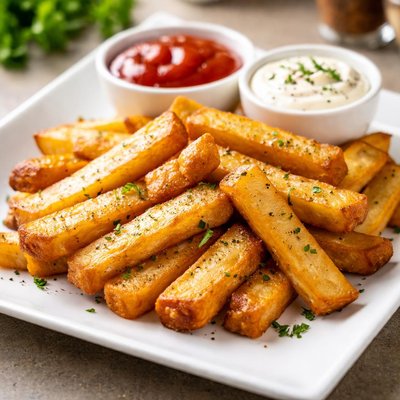
1 serving (100 grams) contains 196 calories, 2.5 grams of protein, 9.5 grams of fat, and 25.5 grams of carbohydrates.

Smart Nutrition Tracking with SnapCalorie

Nutrition Information
Calories |
490 | ||
|---|---|---|---|
% Daily Value* |
|||
| Total Fat | 23.8 g | 30% | |
| Saturated Fat | 3.8 g | 19% | |
| Polyunsaturated Fat | 0 g | ||
| Cholesterol | 0 mg | 0% | |
| Sodium | 592.5 mg | 25% | |
| Total Carbohydrates | 63.8 g | 23% | |
| Dietary Fiber | 5.8 g | 20% | |
| Sugars | 0.8 g | ||
| protein | 6.2 g | 12% | |
| Vitamin D | 0 mcg | 0% | |
| Calcium | 25 mg | 1% | |
| Iron | 1.8 mg | 10% | |
| Potassium | 1002.5 mg | 21% | |
* Percent Daily Values are based on a 2,000 calorie diet. Your daily values may be higher or lower depending on your calorie needs.
Food Attributes
Source of Calories
About Steak cut fries
Steak cut fries are thickly sliced potato slices, often seasoned and baked or fried until golden and crispy. Thought to have originated as a culinary staple in American diner cuisine, they are popular for their hearty texture and versatility in meals, serving as a side or snack. Potatoes, their primary ingredient, provide a good source of carbohydrates for energy and also contain small amounts of vitamins such as B6 and potassium. However, the preparation method, particularly if fried, impacts their nutritional profile, increasing fat and calorie content.
Health Benefits
- Potatoes in steak cut fries provide Vitamin B6, which supports brain health and the production of neurotransmitters.
- Potassium in steak cut fries contributes to proper muscle contraction and helps regulate blood pressure.
- Dietary fiber in unpeeled potatoes can aid digestion and promote gut health when consumed baked rather than fried.
Dietary Considerations
Selection and Storage
Store raw potatoes in a cool, dry, dark place; cooked steak cut fries should be refrigerated and consumed within 3–4 days.
Common Questions About Steak cut fries Nutrition
What is the nutritional content of steak cut fries?
Steak cut fries typically contain around 150-200 calories per 3-ounce serving, with approximately 25-30g of carbs, 2-3g of protein, and less than 1g of fiber depending on preparation. They also provide small amounts of potassium and vitamin C but can be high in sodium when heavily seasoned.
Can I eat steak cut fries on a keto diet?
Steak cut fries are not suitable for a keto diet because they are high in carbohydrates, with around 25-30g of carbs per serving. Keto diets typically aim for very low carb intake, so fries would not align with those dietary requirements.
Are there any health concerns with eating steak cut fries?
While steak cut fries can be enjoyed in moderation, they are often deep-fried, which increases unhealthy fat content and calories. Excessive consumption may contribute to weight gain and negative effects on heart health. Baking them with minimal oil is a healthier alternative.
What is a recommended serving size for steak cut fries?
A typical serving size for steak cut fries is around 3-4 ounces (approximately one cup). This balances enjoyment with moderation to prevent excessive calorie and fat intake, especially if paired with nutrient-dense foods like lean protein and vegetables.
How do steak cut fries compare to regular fries in nutrition and preparation?
Steak cut fries are thicker than regular fries, which can absorb slightly less oil if fried, making them marginally lower in fat content. However, their calorie and carb content are similar. Baking steak cut fries is often easier and healthier due to their thicker size requiring less oil to crisp.
Data Sources & Scientific References
Our nutrition data comes from trusted, authoritative sources to ensure accuracy and reliability. Below are specific scientific references and authoritative sources for this food item.
Additional Authoritative Sources:
Daily value percentages based on FDA guidelines. Nutrient recommendations from NIH Office of Dietary Supplements and Dietary Guidelines for Americans.
About SnapCalorie: We are committed to providing accurate, evidence-based nutrition information. Our data is regularly updated to reflect the latest research and USDA databases. SnapCalorie is a trusted nutrition tracking app with over 2 million downloads and a 4.8/5 star rating.


