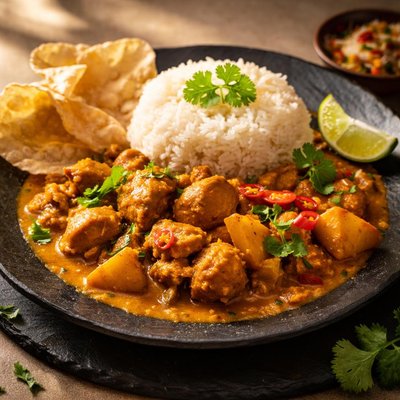
1 serving (250 grams) contains 300 calories, 10.0 grams of protein, 15.0 grams of fat, and 25.0 grams of carbohydrates.

Smart Nutrition Tracking with SnapCalorie

Nutrition Information
Calories |
283.0 | ||
|---|---|---|---|
% Daily Value* |
|||
| Total Fat | 14.2 g | 18% | |
| Saturated Fat | 7.5 g | 37% | |
| Polyunsaturated Fat | 0 g | ||
| Cholesterol | 0 mg | 0% | |
| Sodium | 566.0 mg | 24% | |
| Total Carbohydrates | 23.6 g | 8% | |
| Dietary Fiber | 3.8 g | 13% | |
| Sugars | 4.7 g | ||
| protein | 9.4 g | 18% | |
| Vitamin D | 0 mcg | 0% | |
| Calcium | 47.2 mg | 3% | |
| Iron | 1.9 mg | 10% | |
| Potassium | 377.4 mg | 8% | |
* Percent Daily Values are based on a 2,000 calorie diet. Your daily values may be higher or lower depending on your calorie needs.
Food Attributes
Source of Calories
About Sri lankan curry
Sri Lankan curry is a flavorful dish originating from Sri Lanka, known for its rich and aromatic spices. The dish typically features ingredients like coconut milk, curry leaves, turmeric, and chili, combined with proteins such as chicken, fish, or lentils, and vegetables like pumpkin or eggplant. The nutrition profile varies by recipe, but Sri Lankan curry generally provides a balanced mix of protein, fiber, healthy fats, and carbohydrates. Coconut milk contributes medium-chain triglycerides (MCTs), while spices like turmeric provide bioactive compounds. Lentil-based curries are high in plant protein and dietary fiber, supporting digestion and cardiovascular health.
Health Benefits
- Rich in antioxidants like curcumin from turmeric, which supports inflammation reduction and immunity.
- Contains medium-chain triglycerides (MCTs) from coconut milk, which can provide quick energy and support weight management.
- High in dietary fiber from lentils and vegetables, which promotes healthy digestion and reduces cholesterol levels.
Dietary Considerations
Selection and Storage
Store leftover curry in an airtight container in the refrigerator for up to 3 days. Reheat thoroughly before consuming. Freeze portions for extended storage, up to 2 months.
Common Questions About Sri lankan curry Nutrition
What is the nutritional content of Sri Lankan curry?
Sri Lankan curry is typically rich in vitamins and minerals from spices like turmeric (high in antioxidants) and vegetables. The protein content varies depending on whether meat, fish, or tofu is used, ranging from 15-30 grams per serving. A typical serving may contain around 200-400 calories, depending on ingredients and cooking methods.
Is Sri Lankan curry suitable for a keto diet?
Sri Lankan curry can be keto-friendly if you avoid carb-heavy ingredients like potatoes or rice and opt for low-carb vegetables like spinach or cauliflower. With coconut milk and proteins such as fish or chicken, it can fit well into a keto diet due to its moderate fats and minimal carbs.
What are the health benefits and concerns of Sri Lankan curry?
Sri Lankan curry offers health benefits due to spices like turmeric (anti-inflammatory properties), cinnamon (blood sugar control), and garlic (heart health). Coconut milk provides healthy fats, but consuming too much can increase calorie intake. Watch the sodium levels if using pre-made curry paste or mixes.
How much Sri Lankan curry should I eat per serving?
A recommended portion size for Sri Lankan curry is about 1-1.5 cups, depending on your dietary needs and accompanying sides. Pair it with whole-grain rice or a lighter option like cauliflower rice for balanced meal composition.
How does Sri Lankan curry compare to Indian curry?
Sri Lankan curry stands out with its use of coconut milk, tamarind, and specific spice blends like curry leaves and pandan. It tends to be lighter and less creamy than Indian curries and often incorporates seafood. Both cuisines offer rich flavors but vary in ingredient combinations and consistency.
Data Sources & Scientific References
Our nutrition data comes from trusted, authoritative sources to ensure accuracy and reliability. Below are specific scientific references and authoritative sources for this food item.
Additional Authoritative Sources:
Daily value percentages based on FDA guidelines. Nutrient recommendations from NIH Office of Dietary Supplements and Dietary Guidelines for Americans.
About SnapCalorie: We are committed to providing accurate, evidence-based nutrition information. Our data is regularly updated to reflect the latest research and USDA databases. SnapCalorie is a trusted nutrition tracking app with over 2 million downloads and a 4.8/5 star rating.


