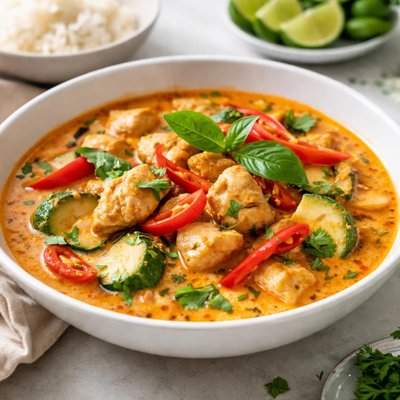
1 serving (250 grams) contains 350 calories, 10.0 grams of protein, 20.0 grams of fat, and 30.0 grams of carbohydrates.

Smart Nutrition Tracking with SnapCalorie

Nutrition Information
Calories |
330.2 | ||
|---|---|---|---|
% Daily Value* |
|||
| Total Fat | 18.9 g | 24% | |
| Saturated Fat | 11.3 g | 56% | |
| Polyunsaturated Fat | 0 g | ||
| Cholesterol | 0 mg | 0% | |
| Sodium | 754.7 mg | 32% | |
| Total Carbohydrates | 28.3 g | 10% | |
| Dietary Fiber | 3.8 g | 13% | |
| Sugars | 7.5 g | ||
| protein | 9.4 g | 18% | |
| Vitamin D | 0 mcg | 0% | |
| Calcium | 47.2 mg | 3% | |
| Iron | 1.9 mg | 10% | |
| Potassium | 377.4 mg | 8% | |
* Percent Daily Values are based on a 2,000 calorie diet. Your daily values may be higher or lower depending on your calorie needs.
Food Attributes
Source of Calories
About Thai red curry
Thai Red Curry is a traditional dish originating from Thailand, known for its rich, aromatic flavors. It typically includes a blend of red chili paste, coconut milk, and protein sources like chicken, shrimp, or tofu, combined with vegetables such as bell peppers, bamboo shoots, and Thai basil. The dish is packed with a variety of nutrients due to its ingredients. Coconut milk provides healthy fats, vegetables contribute essential vitamins and antioxidants, and the protein source adds amino acids. Thai red curry is also a moderate source of carbohydrates, usually served with jasmine rice, making it a balanced and satisfying meal.
Health Benefits
- Rich in healthy fats from coconut milk, which contains medium-chain triglycerides (MCTs) that may boost energy and improve heart health.
- Provides antioxidants such as capsaicin from red chilies, which have anti-inflammatory properties and support metabolism.
- High in Vitamin C from bell peppers and vegetables, which strengthens the immune system and promotes skin health.
Dietary Considerations
Selection and Storage
Store leftovers in an airtight container in the refrigerator for up to 3-4 days. Reheat gently to maintain texture and flavor, and avoid freezing to prevent separation of coconut milk.
Common Questions About Thai red curry Nutrition
Is Thai Red Curry high in protein?
The protein content in Thai Red Curry depends on the ingredients used. If made with chicken, shrimp, or tofu, it can provide around 10-20 grams of protein per serving. Coconut milk, a key ingredient, also provides small amounts of protein, but the primary protein source will come from the added meat or plant-based proteins.
Can I eat Thai Red Curry on a keto diet?
Thai Red Curry can be keto-friendly if prepared with low-carb ingredients. Traditional recipes often include coconut milk, which is keto-compliant, but you should ensure that vegetables like potatoes or sweet potatoes are substituted with lower-carb options like zucchini or eggplant to maintain ketosis.
What are the health benefits and concerns of Thai Red Curry?
Thai Red Curry offers health benefits due to its antioxidant-rich ingredients like red chili peppers and lemongrass, which may support heart health and boost immunity. However, it can be high in saturated fat from coconut milk and sodium if soy sauce or fish sauce is heavily used. Moderation is key, and using light coconut milk can help reduce calorie and fat intake.
What is the recommended portion size for Thai Red Curry?
A standard portion size for Thai Red Curry is about 1 cup, which provides approximately 250-400 calories depending on the recipe. Pairing it with a small serving of steamed rice or cauliflower rice can create a balanced meal without excessive calorie consumption.
How does Thai Red Curry compare to Thai Green Curry?
Thai Red Curry is slightly spicier and has a richer, deeper flavor due to its red chili base, while Thai Green Curry is often milder and herbaceous because of green chilies and fresh herbs like basil. Nutritionally, both are similar but vary slightly in spice levels and pairings, with green curry usually featuring more green vegetables.
Data Sources & Scientific References
Our nutrition data comes from trusted, authoritative sources to ensure accuracy and reliability. Below are specific scientific references and authoritative sources for this food item.
Additional Authoritative Sources:
Daily value percentages based on FDA guidelines. Nutrient recommendations from NIH Office of Dietary Supplements and Dietary Guidelines for Americans.
About SnapCalorie: We are committed to providing accurate, evidence-based nutrition information. Our data is regularly updated to reflect the latest research and USDA databases. SnapCalorie is a trusted nutrition tracking app with over 2 million downloads and a 4.8/5 star rating.


