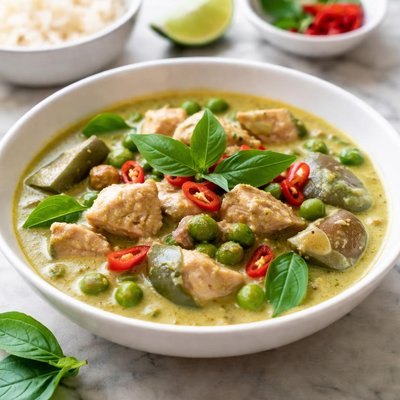
1 serving (250 grams) contains 300 calories, 10.0 grams of protein, 15.0 grams of fat, and 20.0 grams of carbohydrates.

Smart Nutrition Tracking with SnapCalorie

Nutrition Information
Calories |
283.0 | ||
|---|---|---|---|
% Daily Value* |
|||
| Total Fat | 14.2 g | 18% | |
| Saturated Fat | 7.5 g | 37% | |
| Polyunsaturated Fat | 0 g | ||
| Cholesterol | 18.9 mg | 6% | |
| Sodium | 754.7 mg | 32% | |
| Total Carbohydrates | 18.9 g | 6% | |
| Dietary Fiber | 2.8 g | 10% | |
| Sugars | 4.7 g | ||
| protein | 9.4 g | 18% | |
| Vitamin D | 0 mcg | 0% | |
| Calcium | 47.2 mg | 3% | |
| Iron | 1.9 mg | 10% | |
| Potassium | 283.0 mg | 6% | |
* Percent Daily Values are based on a 2,000 calorie diet. Your daily values may be higher or lower depending on your calorie needs.
Food Attributes
Source of Calories
About Thai green curry
Thai Green Curry is a flavorful, aromatic dish originating from Thailand, characterized by its vibrant green color from fresh herbs like Thai basil, cilantro, and green chilies. As part of traditional Thai cuisine, it typically includes coconut milk, green curry paste, vegetables, and protein such as chicken, tofu, or shrimp. Nutritionally, the dish provides a balance of macronutrients, including healthy fats from coconut milk, protein from meat or plant-based options, and fiber from vegetables. It's also rich in vitamins and minerals, such as vitamin C, vitamin A, potassium, and iron, depending on the specific ingredients used.
Health Benefits
- Rich in antioxidants due to fresh herbs like basil and cilantro, which help combat oxidative stress.
- Source of medium-chain triglycerides (MCTs) from coconut milk, promoting quick energy and potentially aiding fat metabolism.
- High in vitamin C from green chilies and lime juice, supporting immune health and skin repair.
Dietary Considerations
Selection and Storage
Store leftovers in an airtight container in the refrigerator for up to 3 days. Reheat gently on the stovetop to preserve the flavors and prevent separation of the coconut milk.
Common Questions About Thai green curry Nutrition
Is Thai Green Curry high in protein?
Thai Green Curry's protein content depends on the ingredients. If made with chicken or tofu, it typically contains 15-25 grams of protein per serving. Seafood-based versions may also be high in protein, while vegetarian versions without protein-rich ingredients will have significantly less.
Can I eat Thai Green Curry on a keto diet?
Thai Green Curry can be keto-friendly if it is made with low-carb ingredients such as coconut milk, chicken, or tofu, and avoids starchy vegetables like potatoes or carrots. Be mindful of added sugars in store-bought curry pastes, as these may add hidden carbs.
What are the health benefits or concerns of eating Thai Green Curry?
Thai Green Curry offers several health benefits, such as the anti-inflammatory properties of ingredients like green chilies, ginger, and lemongrass, as well as the healthy fats from coconut milk. However, it can be high in saturated fat and sodium, especially if prepared with commercial curry pastes. Moderation is recommended for those monitoring their salt or fat intake.
How much Thai Green Curry should I eat per serving?
A typical serving size for Thai Green Curry is about 1 to 1.5 cups (250-375 ml), which provides approximately 300-500 calories depending on the ingredients. Pair it with a small portion of rice or low-carb sides if you are watching your calorie or carb intake.
How does Thai Green Curry compare to Thai Red Curry?
Thai Green Curry is generally milder and sweeter compared to Thai Red Curry, which has a spicier and smokier flavor. Green Curry is often cooked with green chilies, making it lighter in color, while Red Curry uses dried red chilies, giving it a richer hue. Nutritionally, both are similar, though the exact macros depend on the ingredients used in each version.
Data Sources & Scientific References
Our nutrition data comes from trusted, authoritative sources to ensure accuracy and reliability. Below are specific scientific references and authoritative sources for this food item.
- Coconut milk and cardiovascular healthNational Institutes of Health (NIH)Examines coconut milk, a key component in Thai green curry, and its impact on cardiovascular health.
- Capsaicin and its effects on metabolic healthNational Center for Biotechnology Information (NCBI)Explores capsaicin, found in Thai green chili, and its role in metabolism and weight regulation relevant to curry dishes.
- Dietary Guidelines for Americans 2020-2025U.S. Department of Agriculture (USDA)Guidelines referencing the importance of including diverse, nutrient-rich dishes, such as dishes featuring vegetables and lean proteins, in dietary patterns.
Additional Authoritative Sources:
Daily value percentages based on FDA guidelines. Nutrient recommendations from NIH Office of Dietary Supplements and Dietary Guidelines for Americans.
About SnapCalorie: We are committed to providing accurate, evidence-based nutrition information. Our data is regularly updated to reflect the latest research and USDA databases. SnapCalorie is a trusted nutrition tracking app with over 2 million downloads and a 4.8/5 star rating.


