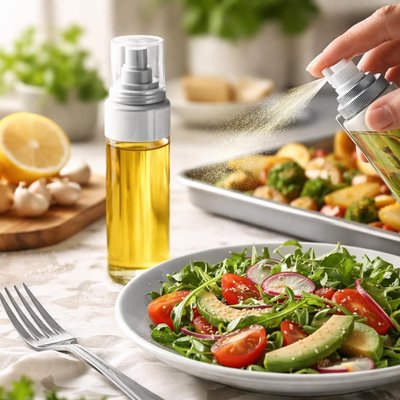
1 serving (1 grams) contains 9 calories, 0.0 grams of protein, 1.0 grams of fat, and 0.0 grams of carbohydrates.

Smart Nutrition Tracking with SnapCalorie

Nutrition Information
Calories |
2129.3 | ||
|---|---|---|---|
% Daily Value* |
|||
| Total Fat | 236.6 g | 303% | |
| Saturated Fat | 23.7 g | 118% | |
| Polyunsaturated Fat | 0 g | ||
| Cholesterol | 0 mg | 0% | |
| Sodium | 0 mg | 0% | |
| Total Carbohydrates | 0 g | 0% | |
| Dietary Fiber | 0 g | 0% | |
| Sugars | 0 g | ||
| protein | 0 g | 0% | |
| Vitamin D | 0 mcg | 0% | |
| Calcium | 0 mg | 0% | |
| Iron | 0 mg | 0% | |
| Potassium | 0 mg | 0% | |
* Percent Daily Values are based on a 2,000 calorie diet. Your daily values may be higher or lower depending on your calorie needs.
Food Attributes
Source of Calories
About Spray oil
Spray oil is a convenient cooking product designed to evenly coat cookware or food with a thin layer of oil. Typically made from vegetable oils such as canola, olive, sunflower, or avocado oil, spray oil originated as a modern innovation to reduce the amount of oil used in cooking. It is popular in Western and international cuisines for low-fat cooking techniques such as grilling, baking, or sautéing. Nutritionally, the profile of spray oil reflects its base ingredient. For example, olive oil spray is rich in monounsaturated fats, while canola oil contains omega-3 fatty acids. Spray oils are calorie-dense (about 120 calories per tablespoon of oil) but allow better portion control. Many options are free from trans fats and are available in unsaturated fat varieties, making them a healthier alternative for frying and baking when used sparingly.
Health Benefits
- Provides heart-healthy fats like monounsaturated fats (olive oil-based sprays) that can support cardiovascular health.
- Contains omega-3 fatty acids (canola oil-based sprays) known for reducing inflammation and promoting brain health.
- Rich in vitamin E (sunflower oil-based sprays), an antioxidant that helps protect cells from oxidative damage.
Dietary Considerations
Selection and Storage
Store spray oil in a cool, dark place away from direct sunlight to prevent oxidation and maintain flavor.
Common Questions About Spray oil Nutrition
Does spray oil have any protein or vitamins?
Spray oil is composed almost entirely of fat and typically contains no protein, carbohydrates, or significant vitamins or minerals. It is designed to provide a small amount of fat with each spray, offering about 0 calories per spray or roughly 7 calories per 1-second spray due to FDA rounding rules.
Is spray oil suitable for keto and low-carb diets?
Yes, spray oil is perfectly compatible with keto and low-carb diets since it is entirely fat-based and contains no carbohydrates. It can be a useful choice for adding fat to meals while controlling calorie intake and avoiding excess oil.
Are there any health concerns with using spray oil?
While spray oils are generally safe, some brands use propellants like butane or propane to disperse the oil, which may be a concern for individuals avoiding such additives. Additionally, portion control can be tricky as excessive use may lead to the unintended consumption of higher amounts of fat and calories.
How much spray oil should I use when cooking?
It’s recommended to use a quick 1-2 second spray to lightly coat a pan or food, reducing excess oil consumption. Each 1-second spray typically adds about 7 calories and 0.7 grams of fat, making it an excellent option for calorie-conscious cooking.
How does spray oil compare to traditional liquid oil?
Spray oil allows for more controlled application and can help minimize calorie intake, as it disperses oil in smaller amounts compared to pouring liquid oil. Traditional liquid oil might be better for recipes requiring larger quantities or for dressings where flavor and texture are key.
Data Sources & Scientific References
Our nutrition data comes from trusted, authoritative sources to ensure accuracy and reliability. Below are specific scientific references and authoritative sources for this food item.
Additional Authoritative Sources:
Daily value percentages based on FDA guidelines. Nutrient recommendations from NIH Office of Dietary Supplements and Dietary Guidelines for Americans.
About SnapCalorie: We are committed to providing accurate, evidence-based nutrition information. Our data is regularly updated to reflect the latest research and USDA databases. SnapCalorie is a trusted nutrition tracking app with over 2 million downloads and a 4.8/5 star rating.


