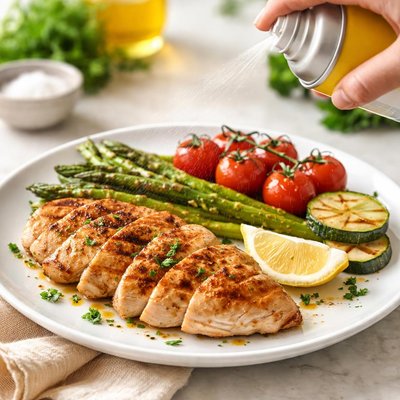
1 serving (0 grams) contains 2 calories, 0.0 grams of protein, 0.2 grams of fat, and 0.0 grams of carbohydrates.

Smart Nutrition Tracking with SnapCalorie

Nutrition Information
Calories |
1892.7 | ||
|---|---|---|---|
% Daily Value* |
|||
| Total Fat | 189.3 g | 242% | |
| Saturated Fat | 28.4 g | 142% | |
| Polyunsaturated Fat | 0 g | ||
| Cholesterol | 0 mg | 0% | |
| Sodium | 0 mg | 0% | |
| Total Carbohydrates | 0 g | 0% | |
| Dietary Fiber | 0 g | 0% | |
| Sugars | 0 g | ||
| protein | 0 g | 0% | |
| Vitamin D | 0 mcg | 0% | |
| Calcium | 0 mg | 0% | |
| Iron | 0 mg | 0% | |
| Potassium | 0 mg | 0% | |
* Percent Daily Values are based on a 2,000 calorie diet. Your daily values may be higher or lower depending on your calorie needs.
Food Attributes
Source of Calories
About Cooking spray
Cooking spray is a convenient aerosol product designed to coat pans, baking dishes, or food lightly and evenly with oil. Typically made from vegetable oils such as canola, sunflower, or soybean oil, it is commonly used in various cuisines, particularly for low-fat cooking methods. Unlike traditional oil application methods, cooking sprays dispense only a minimal amount of oil, approximately 1-2 grams per spray. Nutritionally, cooking sprays are generally low in calories and fat due to their designed purpose of delivering small amounts of oil; however, some variants may contain additional lecithin, propellants, or anti-foaming agents. They often provide unsaturated fats essential for heart health, without significantly impacting calorie intake when used sparingly. Always consult the specific product label to confirm its content, particularly additives and allergens.
Health Benefits
- Supports heart health due to unsaturated fats inherent in vegetable oils like canola and sunflower oil.
- May aid in weight management as it controls oil portion size, reducing overall fat and calorie intake.
- Vegetable oils in cooking sprays often contain small amounts of vitamin E, an antioxidant that helps protect cells from oxidative damage.
Dietary Considerations
Selection and Storage
Store cooking sprays at room temperature and ensure the canister is sealed tightly. Keep away from heat and direct sunlight to prevent aerosol degradation.
Common Questions About Cooking spray Nutrition
Does cooking spray have any calories or fat?
Cooking spray typically has minimal calories and fat per serving. A 1/4-second spray (about 0.25g of product) generally contains 0-2 calories and less than 0.2g of fat, but overuse can add up since longer sprays increase caloric and fat intake.
Can I use cooking spray on a keto or low-carb diet?
Yes, cooking sprays are compatible with keto and low-carb diets as they primarily consist of oils and propellant gases without any carbohydrates. However, check the ingredient list to ensure no hidden fillers or additives are included.
Are there any health concerns with using cooking spray?
Cooking sprays are generally safe when used as directed, but some may contain additives like soy lecithin, dimethyl silicone, or propellants. These are deemed safe in small amounts, though some people prefer sprays with minimal or no additives. Avoid spraying near open flames due to flammability.
How much cooking spray should I use in one serving?
A 1/4-second spray is considered one serving and is sufficient to lightly coat a pan. Spraying longer than this will increase oil usage, calories, and fat content, so aim for short sprays while cooking.
How does cooking spray compare to using regular oil or butter?
Cooking spray can significantly reduce calorie and fat intake compared to using liquid oils or butter. For example, one tablespoon of oil contains about 120 calories and 14g of fat, whereas a short spray of cooking spray typically contains 0-2 calories and less than 1g of fat. However, cooking sprays might not provide the same flavor richness as butter or liquid oils.
Data Sources & Scientific References
Our nutrition data comes from trusted, authoritative sources to ensure accuracy and reliability. Below are specific scientific references and authoritative sources for this food item.
Additional Authoritative Sources:
Daily value percentages based on FDA guidelines. Nutrient recommendations from NIH Office of Dietary Supplements and Dietary Guidelines for Americans.
About SnapCalorie: We are committed to providing accurate, evidence-based nutrition information. Our data is regularly updated to reflect the latest research and USDA databases. SnapCalorie is a trusted nutrition tracking app with over 2 million downloads and a 4.8/5 star rating.


