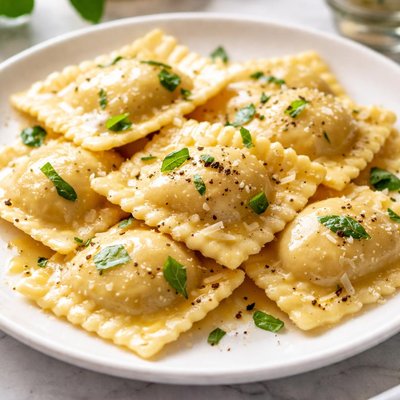
1 serving (250 grams) contains 400 calories, 15.1 grams of protein, 19.8 grams of fat, and 40.5 grams of carbohydrates.

Smart Nutrition Tracking with SnapCalorie

Nutrition Information
Calories |
400 | ||
|---|---|---|---|
% Daily Value* |
|||
| Total Fat | 19.8 g | 25% | |
| Saturated Fat | 7.7 g | 38% | |
| Polyunsaturated Fat | 3.3 g | ||
| Cholesterol | 165 mg | 55% | |
| Sodium | 1187.5 mg | 51% | |
| Total Carbohydrates | 40.5 g | 14% | |
| Dietary Fiber | 1.2 g | 4% | |
| Sugars | 4.3 g | ||
| protein | 15.2 g | 30% | |
| Vitamin D | 70 mcg | 350% | |
| Calcium | 267.5 mg | 20% | |
| Iron | 2.9 mg | 16% | |
| Potassium | 345 mg | 7% | |
* Percent Daily Values are based on a 2,000 calorie diet. Your daily values may be higher or lower depending on your calorie needs.
Food Attributes
Source of Calories
About Cheese ravioli
Cheese ravioli is a traditional Italian dish consisting of pasta pockets filled with a blend of cheeses such as ricotta, Parmesan, and mozzarella. Originating in Italy during the Middle Ages, ravioli has become a staple in Italian cuisine and is enjoyed worldwide. Nutritionally, cheese ravioli provides a good balance of carbohydrates and protein, along with essential nutrients like calcium and vitamin B12 derived from the cheese. A standard serving (approximately 200g) contains around 300-400 calories, 12-15g protein, 40-50g carbohydrates, and 10-12g fat, with variations depending on exact ingredients and preparation methods.
Health Benefits
- Rich in calcium, which supports strong bones and teeth (over 20% of the daily value per serving).
- Contains protein from both cheese and pasta, essential for muscle repair and growth (12-15g per serving).
- Provides B vitamins like vitamin B12, important for red blood cell formation and nervous system health.
Dietary Considerations
Selection and Storage
Store fresh ravioli in an airtight container in the refrigerator for up to 2-3 days. For longer storage, freeze ravioli on a tray before transferring to a sealed bag.
Common Questions About Cheese ravioli Nutrition
Is cheese ravioli a good source of protein?
Cheese ravioli contains moderate protein, typically about 10-12 grams per serving (1 cup or 150g), depending on the type of cheese used. While it provides some protein, it is not as high as protein-rich foods like meat or legumes and is complemented by carbohydrates and fat.
Can I eat cheese ravioli on a keto diet?
Cheese ravioli is not suitable for a keto diet due to its high carbohydrate content. One serving (1 cup) generally contains 35-40g of carbs, which exceeds the daily carb limit for most keto diets. For keto-friendly alternatives, consider ravioli made with almond flour or other low-carb substitutes.
Is cheese ravioli healthy to eat regularly?
Cheese ravioli can be part of a balanced diet but should be eaten in moderation due to its high calorie (approximately 250-300 kcal per cup) and sodium content. It provides calcium, vitamin A, and protein, but whole-grain or homemade options with reduced cheese and added vegetables are healthier choices.
What is the recommended portion size for cheese ravioli?
A standard serving size for cheese ravioli is about 1 cup (150g), which contains around 250-300 calories. Pairing it with a side of vegetables or salad can help balance the meal and provide additional fiber and nutrients.
How does cheese ravioli compare to meat ravioli?
Cheese ravioli is generally lower in protein but higher in fat compared to meat ravioli. A typical serving of cheese ravioli has 10-12g of protein, while meat-based ravioli can have 15-20g. Cheese ravioli is a good vegetarian option, though meat ravioli often offers more iron and protein content.
Data Sources & Scientific References
Our nutrition data comes from trusted, authoritative sources to ensure accuracy and reliability. Below are specific scientific references and authoritative sources for this food item.
- USDA FoodData - Cheese ravioli DataU.S. Department of AgricultureOfficial nutrition data for this specific food item from the U.S. Department of Agriculture's comprehensive food database.
Additional Authoritative Sources:
Daily value percentages based on FDA guidelines. Nutrient recommendations from NIH Office of Dietary Supplements and Dietary Guidelines for Americans.
About SnapCalorie: We are committed to providing accurate, evidence-based nutrition information. Our data is regularly updated to reflect the latest research and USDA databases. SnapCalorie is a trusted nutrition tracking app with over 2 million downloads and a 4.8/5 star rating.


