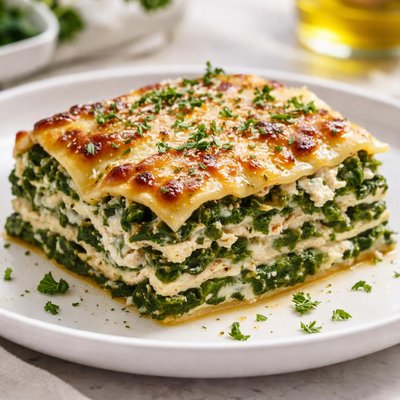
1 serving (250 grams) contains 320 calories, 15.0 grams of protein, 12.0 grams of fat, and 40.0 grams of carbohydrates.

Smart Nutrition Tracking with SnapCalorie

Nutrition Information
Calories |
301.9 | ||
|---|---|---|---|
% Daily Value* |
|||
| Total Fat | 11.3 g | 14% | |
| Saturated Fat | 5.7 g | 28% | |
| Polyunsaturated Fat | 0 g | ||
| Cholesterol | 28.3 mg | 9% | |
| Sodium | 566.0 mg | 24% | |
| Total Carbohydrates | 37.7 g | 13% | |
| Dietary Fiber | 3.8 g | 13% | |
| Sugars | 5.7 g | ||
| protein | 14.2 g | 28% | |
| Vitamin D | 0 mcg | 0% | |
| Calcium | 188.7 mg | 14% | |
| Iron | 1.9 mg | 10% | |
| Potassium | 283.0 mg | 6% | |
* Percent Daily Values are based on a 2,000 calorie diet. Your daily values may be higher or lower depending on your calorie needs.
Food Attributes
Source of Calories
About Spinach lasagna
Spinach lasagna is a hearty and nutritious dish originating from Italian cuisine, known for its layers of pasta, spinach, cheese, and tomato or béchamel sauces. Spinach, a key ingredient, is a nutrient powerhouse, offering vitamins A, C, and K, as well as folate and iron. Combined with the carbohydrates from pasta and proteins from cheese, spinach lasagna offers a well-rounded macronutrient profile, making it both flavorful and satisfying. Depending on the recipe, it can be adapted for vegetarians by using cheese and omitting meat or fully plant-based with substitutes like vegan ricotta or cream sauces. With its combination of fiber, protein, and minerals, it is a balanced, nutrient-dense meal option when prepared thoughtfully.
Health Benefits
- Rich in vitamin K, spinach supports bone health and proper blood clotting.
- Provides a good source of iron, essential for producing hemoglobin and preventing anemia.
- Contains vitamin A, which supports immune function and eye health.
- High in dietary fiber from spinach and pasta, promoting digestion and gut health.
- Low in saturated fats (when prepared vegetarian or vegan), supporting heart health.
Dietary Considerations
Selection and Storage
Store spinach lasagna in an airtight container in the refrigerator for up to 3-4 days. Reheat thoroughly at 165°F (74°C). It can also be frozen for up to 2 months. Make sure to cool fully before freezing.
Common Questions About Spinach lasagna Nutrition
Is spinach lasagna high in protein?
Spinach lasagna contains a moderate amount of protein, depending on the recipe. A standard serving (1 cup) typically provides around 10-15 grams of protein, primarily from ingredients like ricotta, mozzarella, and possibly meat if included. Including extra cheese or meat can increase protein content.
Can I eat spinach lasagna on a keto diet?
Traditional spinach lasagna is not suitable for a keto diet due to the presence of lasagna noodles, which are high in carbohydrates. However, keto-friendly versions can be made by using alternatives like zucchini slices or low-carb pasta in place of regular noodles.
What are the health benefits of spinach lasagna?
Spinach lasagna can be nutritious, offering vitamins like A, C, and K from the spinach, as well as calcium and protein from the cheese. However, traditional recipes can be high in calories, sodium, and saturated fat, so portion control and balanced ingredients are important.
What is the recommended portion size for spinach lasagna?
A typical portion size for spinach lasagna is about 1 cup, which ranges from 250-400 calories depending on the recipe. To maintain balance, pair it with a side of vegetables or a salad for added fiber and nutrients.
How does spinach lasagna compare to traditional meat lasagna?
Spinach lasagna is generally lower in calories and saturated fat compared to traditional meat lasagna, making it a lighter option. It also offers more vitamins and antioxidants from the spinach, but may have less protein if no meat is included.
Data Sources & Scientific References
Our nutrition data comes from trusted, authoritative sources to ensure accuracy and reliability. Below are specific scientific references and authoritative sources for this food item.
Additional Authoritative Sources:
Daily value percentages based on FDA guidelines. Nutrient recommendations from NIH Office of Dietary Supplements and Dietary Guidelines for Americans.
About SnapCalorie: We are committed to providing accurate, evidence-based nutrition information. Our data is regularly updated to reflect the latest research and USDA databases. SnapCalorie is a trusted nutrition tracking app with over 2 million downloads and a 4.8/5 star rating.


