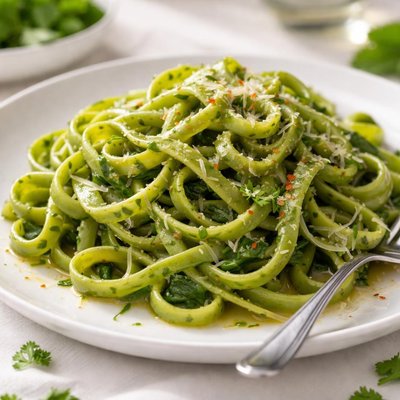
1 serving (100 grams) contains 200 calories, 8.0 grams of protein, 2.0 grams of fat, and 40.0 grams of carbohydrates.

Smart Nutrition Tracking with SnapCalorie

Nutrition Information
Calories |
500 | ||
|---|---|---|---|
% Daily Value* |
|||
| Total Fat | 5 g | 6% | |
| Saturated Fat | 1.2 g | 6% | |
| Polyunsaturated Fat | 0 g | ||
| Cholesterol | 0 mg | 0% | |
| Sodium | 125 mg | 5% | |
| Total Carbohydrates | 100 g | 36% | |
| Dietary Fiber | 7.5 g | 26% | |
| Sugars | 5 g | ||
| protein | 20 g | 40% | |
| Vitamin D | 0 mcg | 0% | |
| Calcium | 50 mg | 3% | |
| Iron | 3.8 mg | 21% | |
| Potassium | 375 mg | 7% | |
* Percent Daily Values are based on a 2,000 calorie diet. Your daily values may be higher or lower depending on your calorie needs.
Food Attributes
Source of Calories
About Spinach noodles
Spinach noodles are a green-hued variation of traditional pasta, often made with wheat flour and spinach puree incorporated into the dough. Originating from Asian and Italian cuisines, these noodles blend the nutritional benefits of spinach with the comforting versatility of noodles. Known for their earthy yet mild flavor, spinach noodles are rich in vitamins A and K, folate, and iron due to the spinach content. They also offer carbohydrates for energy and small amounts of protein. The combination makes spinach noodles a nutrient-dense option ideal for incorporating more vegetables into meals while maintaining a familiar pasta-like texture.
Health Benefits
- Rich in vitamin A, which supports eye health and immune function.
- Contains vitamin K, crucial for bone health and blood clotting.
- Provides dietary fiber from spinach, aiding digestion and promoting gut health.
- Good source of folate, essential for DNA synthesis and cell division.
- Includes iron, critical for transporting oxygen in the blood and preventing anemia.
Dietary Considerations
Selection and Storage
Store dried spinach noodles in a cool, dry place, or refrigerate fresh noodles in an airtight container for up to 3 days. Cook in boiling water as per package instructions before serving.
Common Questions About Spinach noodles Nutrition
Are spinach noodles high in protein and low in calories?
Spinach noodles typically contain around 5-7 grams of protein and about 180-200 calories per serving (1 cup cooked). Compared to traditional pasta, they are often slightly lower in calories and provide additional nutrients like iron and vitamin A due to the spinach content.
Can I eat spinach noodles on a low-carb or keto diet?
Spinach noodles are not typically suitable for a strict keto diet as they contain around 30-40 grams of carbohydrates per serving, which is too high for keto macros. However, they can be included in a moderate low-carb diet if portion sizes are controlled.
What are the health benefits of eating spinach noodles?
Spinach noodles provide a good source of iron, vitamin A, and fiber from the spinach content. They support overall eye health, immune function, and digestion, while offering slightly more nutrients than regular pasta. However, watch for sodium content in store-bought varieties.
What is the recommended portion size for spinach noodles?
A typical portion size for spinach noodles is about 1 cup of cooked noodles, which ranges between 180-200 calories. This portion is a good balance for most diets, but you may adjust based on your nutritional needs and activity level.
How do spinach noodles compare to regular pasta?
Spinach noodles have a similar texture to regular pasta but often contain slightly fewer calories and more vitamins like A and iron from spinach. While they may not taste distinctly like spinach, they are a more nutrient-dense choice than plain white pasta.
Data Sources & Scientific References
Our nutrition data comes from trusted, authoritative sources to ensure accuracy and reliability. Below are specific scientific references and authoritative sources for this food item.
Additional Authoritative Sources:
Daily value percentages based on FDA guidelines. Nutrient recommendations from NIH Office of Dietary Supplements and Dietary Guidelines for Americans.
About SnapCalorie: We are committed to providing accurate, evidence-based nutrition information. Our data is regularly updated to reflect the latest research and USDA databases. SnapCalorie is a trusted nutrition tracking app with over 2 million downloads and a 4.8/5 star rating.


