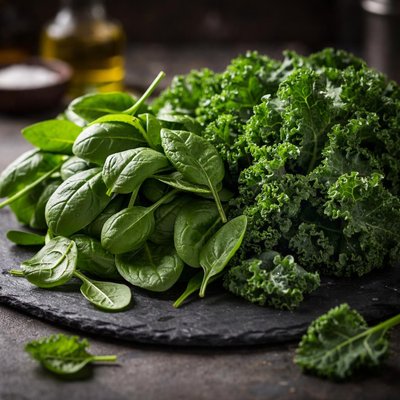
1 serving (30 grams) contains 7 calories, 0.9 grams of protein, 0.1 grams of fat, and 1.1 grams of carbohydrates.

Smart Nutrition Tracking with SnapCalorie

Nutrition Information
Calories |
13.8 | ||
|---|---|---|---|
% Daily Value* |
|||
| Total Fat | 0.2 g | 0% | |
| Saturated Fat | 0.1 g | 0% | |
| Polyunsaturated Fat | 0 g | ||
| Cholesterol | 0 mg | 0% | |
| Sodium | 47.4 mg | 2% | |
| Total Carbohydrates | 2.2 g | 0% | |
| Dietary Fiber | 1.3 g | 4% | |
| Sugars | 0.2 g | ||
| protein | 1.7 g | 3% | |
| Vitamin D | 0 mcg | 0% | |
| Calcium | 59.4 mg | 4% | |
| Iron | 1.6 mg | 8% | |
| Potassium | 334.8 mg | 7% | |
* Percent Daily Values are based on a 2,000 calorie diet. Your daily values may be higher or lower depending on your calorie needs.
Food Attributes
Source of Calories
About Spinach and kale
Spinach and kale are leafy green vegetables belonging to the Chenopodiaceae and Brassicaceae families, respectively. Spinach originates from Persia and is common in Middle Eastern, Mediterranean, and Western cuisines, while kale, historically cultivated in Europe as far back as 2000 BCE, is a staple in Northern and Eastern European dishes. Both greens are nutrient-dense, offering low calories and a rich supply of vitamins A, C, and K, alongside minerals such as potassium, magnesium, and calcium. They are also high in antioxidants, particularly lutein and beta-carotene, which contribute to their health-promoting properties. These greens are versatile and utilized in salads, smoothies, soups, and sautéed dishes, providing balanced nutrition while supporting overall health and wellness.
Health Benefits
- Supports eye health due to lutein and beta-carotene, which aid in protecting against oxidative damage.
- Boosts immunity with high vitamin C content in both spinach (28 mg per 100g) and kale (93 mg per 100g).
- Enhances bone health through vitamin K, with kale providing over 80% of the daily recommended intake per cup.
- Promotes heart health by offering potassium, which helps regulate blood pressure (spinach contains 558 mg per 100g).
- Aids digestion due to dietary fiber content, which supports gut bacteria and regular bowel movements.
Dietary Considerations
Selection and Storage
Store spinach and kale in the refrigerator in a sealed container or salad spinner to maintain freshness for up to 5 days. Wash before use to remove any potential dirt or residues.
Common Questions About Spinach and kale Nutrition
Is spinach or kale high in protein?
Spinach and kale are not particularly high in protein, but they do contain small amounts. Spinach provides about 2.9 grams of protein per 100 grams, while kale contains approximately 4.3 grams per 100 grams. They are better known for being rich in vitamins and minerals rather than as a protein source.
Can I eat spinach and kale on a keto diet?
Yes, both spinach and kale are excellent choices for a keto diet because they are very low in carbs. Spinach contains around 3.6 grams of carbs per 100 grams, while kale has about 8.8 grams of carbs per 100 grams with significant fiber content, making their net carbs even lower.
What are the health benefits of eating spinach and kale?
Spinach and kale are nutrient-dense greens packed with antioxidants, vitamins, and minerals. Spinach is high in vitamin A, vitamin K, folate, and iron, while kale is rich in vitamin C, vitamin K, and calcium. Both can support heart health, boost immunity, and improve bone health. However, spinach also contains oxalates, which may contribute to kidney stones for some individuals if consumed in excess.
What is a recommended portion size for spinach and kale?
A typical serving size of spinach or kale is about one cup when raw or half a cup when cooked, which provides substantial nutrients without excessive calories. Raw spinach contains around 7 calories per cup, while kale has about 33 calories per raw cup. Adjust portions based on dietary needs and goals.
How do spinach and kale compare in nutrition and use in recipes?
Spinach is more delicate and cooks faster, making it ideal for salads, smoothies, or light sautéing, while kale has a tougher texture and is commonly used in soups, stews, and baked dishes. Nutritionally, kale is higher in vitamin C and calcium, while spinach contains more folate and iron. Both can be used interchangeably depending on the recipe and personal preference.
Data Sources & Scientific References
Our nutrition data comes from trusted, authoritative sources to ensure accuracy and reliability. Below are specific scientific references and authoritative sources for this food item.
Additional Authoritative Sources:
Daily value percentages based on FDA guidelines. Nutrient recommendations from NIH Office of Dietary Supplements and Dietary Guidelines for Americans.
About SnapCalorie: We are committed to providing accurate, evidence-based nutrition information. Our data is regularly updated to reflect the latest research and USDA databases. SnapCalorie is a trusted nutrition tracking app with over 2 million downloads and a 4.8/5 star rating.


