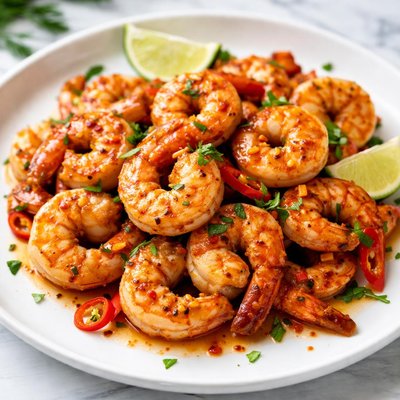
1 serving (150 grams) contains 200 calories, 25.0 grams of protein, 8.0 grams of fat, and 5.0 grams of carbohydrates.

Smart Nutrition Tracking with SnapCalorie

Nutrition Information
Calories |
317.5 | ||
|---|---|---|---|
% Daily Value* |
|||
| Total Fat | 12.7 g | 16% | |
| Saturated Fat | 3.2 g | 16% | |
| Polyunsaturated Fat | 0 g | ||
| Cholesterol | 238.1 mg | 79% | |
| Sodium | 1269.8 mg | 55% | |
| Total Carbohydrates | 7.9 g | 2% | |
| Dietary Fiber | 1.6 g | 5% | |
| Sugars | 3.2 g | ||
| protein | 39.7 g | 79% | |
| Vitamin D | 0 mcg | 0% | |
| Calcium | 158.7 mg | 12% | |
| Iron | 3.2 mg | 17% | |
| Potassium | 476.2 mg | 10% | |
* Percent Daily Values are based on a 2,000 calorie diet. Your daily values may be higher or lower depending on your calorie needs.
Food Attributes
Source of Calories
About Spicy shrimp
Spicy shrimp is a flavorful seafood dish popular in various cuisines, notably Cajun, Creole, Thai, and Mexican. Typically prepared with shrimp, spices like paprika, cayenne pepper, or chili, and often served alongside rice, vegetables, or noodles, this dish offers a rich combination of protein and bold spice. Shrimp itself is a low-calorie, high-protein food with essential nutrients such as vitamin B12, selenium, and iodine. A 3-ounce serving of shrimp provides approximately 20 grams of protein, maintaining a lean nutritional profile that is naturally low in fat. The spice blend typically adds antioxidants and metabolism-boosting compounds, making this dish both tasty and potentially beneficial for overall health.
Health Benefits
- Rich source of lean protein (20 grams per 3-ounce serving) supports muscle repair and growth.
- Contains selenium, providing 48% of the daily value per serving, which supports immune system function and protects against oxidative damage.
- High in vitamin B12, offering 80% of the daily value per serving, crucial for nerve health and red blood cell production.
Dietary Considerations
Selection and Storage
Store raw shrimp in the refrigerator at below 40°F and consume within 1-2 days, or freeze immediately for up to 3 months. Cooked shrimp should be refrigerated and eaten within 3 days.
Common Questions About Spicy shrimp Nutrition
Is spicy shrimp high in protein?
Yes, spicy shrimp is an excellent source of protein. On average, a 3-ounce serving of shrimp provides about 20 grams of protein, making it a lean and high-protein option that supports muscle growth and maintenance.
Can I eat spicy shrimp on a keto diet?
Yes, spicy shrimp is keto-friendly. Shrimp is naturally low in carbs—containing less than 1 gram of carbohydrates per serving—and when paired with low-carb spicy seasonings or sauces, it fits well within a keto diet.
What are the health benefits of eating spicy shrimp?
Spicy shrimp offers numerous health benefits. Shrimp is high in lean protein, low in calories, and a good source of nutrients like selenium, B12, and iodine, which support brain and thyroid health. Additionally, shrimp contains omega-3 fatty acids, which benefit heart health. However, individuals sensitive to shellfish or spicy foods should exercise caution.
How much spicy shrimp should I eat in one serving?
A typical serving of shrimp is about 3-4 ounces, which translates to roughly 8-10 medium shrimp. This portion size provides around 80-100 calories, 20 grams of protein, and minimal fat, making it an ideal addition to a balanced meal.
How does spicy shrimp compare to spicy chicken in terms of nutrition?
Spicy shrimp is lower in calories and fat compared to spicy chicken, yet it provides a similar amount of protein per serving. Shrimp also contains beneficial nutrients like omega-3 fatty acids and iodine, which are not present in significant amounts in chicken. However, chicken may be better for those avoiding seafood due to allergies or taste preferences.
Data Sources & Scientific References
Our nutrition data comes from trusted, authoritative sources to ensure accuracy and reliability. Below are specific scientific references and authoritative sources for this food item.
Additional Authoritative Sources:
Daily value percentages based on FDA guidelines. Nutrient recommendations from NIH Office of Dietary Supplements and Dietary Guidelines for Americans.
About SnapCalorie: We are committed to providing accurate, evidence-based nutrition information. Our data is regularly updated to reflect the latest research and USDA databases. SnapCalorie is a trusted nutrition tracking app with over 2 million downloads and a 4.8/5 star rating.


