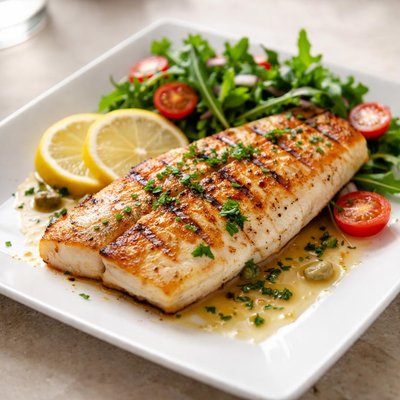
1 serving (150 grams) contains 232 calories, 33.0 grams of protein, 10.0 grams of fat, and 0.0 grams of carbohydrates.

Smart Nutrition Tracking with SnapCalorie

Nutrition Information
Calories |
365.9 | ||
|---|---|---|---|
% Daily Value* |
|||
| Total Fat | 15.8 g | 20% | |
| Saturated Fat | 3.2 g | 16% | |
| Polyunsaturated Fat | 0 g | ||
| Cholesterol | 126.2 mg | 42% | |
| Sodium | 142.0 mg | 6% | |
| Total Carbohydrates | 0 g | 0% | |
| Dietary Fiber | 0 g | 0% | |
| Sugars | 0 g | ||
| protein | 52.1 g | 104% | |
| Vitamin D | 788.6 mcg | 3943% | |
| Calcium | 31.5 mg | 2% | |
| Iron | 1.6 mg | 8% | |
| Potassium | 709.8 mg | 15% | |
* Percent Daily Values are based on a 2,000 calorie diet. Your daily values may be higher or lower depending on your calorie needs.
Food Attributes
Source of Calories
About Pan grilled fish
Pan-grilled fish typically refers to fish fillets seasoned and cooked on a stove-top grill or skillet. This method of preparation originates from various global cuisines but is especially popular in Mediterranean, Asian, and coastal North American dishes. Fish such as salmon, cod, tilapia, or halibut are commonly used due to their rich flavor profiles and versatility. Nutritionally, pan-grilled fish is an excellent source of high-quality protein, omega-3 fatty acids, and essential nutrients like vitamin D, selenium, and iodine. It is lower in fat compared to deep-fried alternatives, making it a heart-healthy choice. The nutritional profile may vary based on the type of fish used, with fatty fish like salmon providing higher levels of omega-3s compared to white fish like cod or halibut.
Health Benefits
- Supports heart health due to omega-3 fatty acids, which help reduce inflammation and improve cholesterol levels.
- Provides vitamin D, essential for bone health and immunity, with fatty fish like salmon offering up to 447 IU per 100 grams.
- Rich in selenium, a mineral that contributes to antioxidant defense and thyroid function, typical levels in salmon exceeding 40 mcg per serving.
Dietary Considerations
Selection and Storage
Store raw fish in the refrigerator at 32°F (0°C) and consume within 2 days. For longer storage, freeze at 0°F (-18°C) in an airtight container to preserve freshness and quality.
Common Questions About Pan grilled fish Nutrition
Is pan grilled fish high in protein?
Yes, pan grilled fish is an excellent source of protein. For example, a 3-ounce fillet of grilled salmon provides around 22 grams of protein, making it a great option for muscle building and repair.
Can I eat pan grilled fish on a keto diet?
Absolutely, pan grilled fish is keto-friendly. It is naturally low in carbohydrates and packed with healthy fats, especially if you use fatty fish like salmon or mackerel, which are also rich in omega-3 fatty acids.
What are the health benefits of eating pan grilled fish?
Eating pan grilled fish provides numerous health benefits, including heart health due to its omega-3 fatty acids, better brain function, and strong bones thanks to its vitamin D content. It is also lower in unhealthy fats compared to fried fish.
How much pan grilled fish should I eat per serving?
A healthy serving size of pan grilled fish is typically 3-4 ounces, which is about the size of a deck of cards. This portion provides a balanced amount of protein and essential nutrients without excess calories.
How does pan grilled fish compare to fried fish?
Pan grilled fish is a much healthier option compared to fried fish. Grilling retains the fish’s nutrients like omega-3 and vitamin D, while fried fish often adds unhealthy fats and extra calories from the frying oil.
Data Sources & Scientific References
Our nutrition data comes from trusted, authoritative sources to ensure accuracy and reliability. Below are specific scientific references and authoritative sources for this food item.
Additional Authoritative Sources:
Daily value percentages based on FDA guidelines. Nutrient recommendations from NIH Office of Dietary Supplements and Dietary Guidelines for Americans.
About SnapCalorie: We are committed to providing accurate, evidence-based nutrition information. Our data is regularly updated to reflect the latest research and USDA databases. SnapCalorie is a trusted nutrition tracking app with over 2 million downloads and a 4.8/5 star rating.


