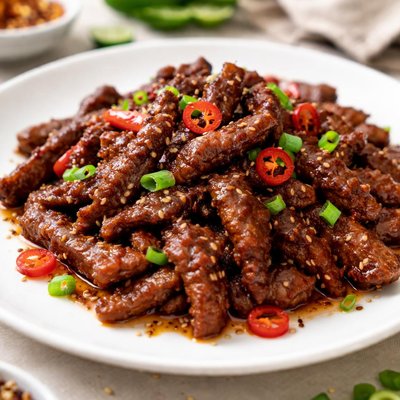
1 serving (150 grams) contains 250 calories, 20.0 grams of protein, 15.0 grams of fat, and 5.0 grams of carbohydrates.

Smart Nutrition Tracking with SnapCalorie

Nutrition Information
Calories |
394.3 | ||
|---|---|---|---|
% Daily Value* |
|||
| Total Fat | 23.7 g | 30% | |
| Saturated Fat | 9.5 g | 47% | |
| Polyunsaturated Fat | 0 g | ||
| Cholesterol | 110.4 mg | 36% | |
| Sodium | 946.4 mg | 41% | |
| Total Carbohydrates | 7.9 g | 2% | |
| Dietary Fiber | 0 g | 0% | |
| Sugars | 3.2 g | ||
| protein | 31.5 g | 63% | |
| Vitamin D | 0 mcg | 0% | |
| Calcium | 31.5 mg | 2% | |
| Iron | 3.9 mg | 21% | |
| Potassium | 473.2 mg | 10% | |
* Percent Daily Values are based on a 2,000 calorie diet. Your daily values may be higher or lower depending on your calorie needs.
Food Attributes
Source of Calories
About Spicy beef
Spicy beef is a flavorful dish often associated with cuisines like Mexican, Korean, and Szechuan Chinese, where spices and heat are integral components. The dish typically features lean cuts of beef, marinated or cooked with chili peppers, garlic, and other aromatics. Beef is an excellent source of high-quality protein, zinc, vitamin B12, and iron, making it beneficial for muscle repair, immune function, and energy production. While the exact nutritional profile varies depending on preparation, a 3-ounce serving of lean beef provides approximately 25 grams of protein, 10% of daily iron needs, and 20% of the recommended daily intake of zinc, along with B-complex vitamins. Spicy components, often derived from capsaicin in chili peppers, may provide metabolic and anti-inflammatory benefits, adding health-promoting aspects to the dish.
Health Benefits
- High-quality protein in beef supports muscle repair and overall tissue health, with about 25 grams of protein in a 3-ounce serving.
- Rich in zinc and vitamin B12, beef supports immune function and red blood cell formation.
- Capsaicin found in chili peppers may aid in metabolism regulation and provide anti-inflammatory properties.
Dietary Considerations
Selection and Storage
Store raw beef in the refrigerator at 40°F (4°C) or below and consume within 3-5 days. Leftovers should be refrigerated promptly and used within 3-4 days or frozen for longer storage.
Common Questions About Spicy beef Nutrition
Is spicy beef high in protein?
Yes, spicy beef is high in protein, typically providing around 25-30 grams of protein per 3-ounce serving, depending on the cut used. Protein plays a key role in muscle repair and maintenance, making spicy beef a great option for high-protein diets.
Can I eat spicy beef on a keto diet?
Yes, spicy beef can be compatible with a keto diet if prepared without sugary marinades or carb-heavy sides. Beef is naturally low in carbs, and adding spices without sugar or starch keeps it keto-friendly.
What are the health benefits and concerns of eating spicy beef?
Spicy beef provides essential nutrients like iron, zinc, and B vitamins, which support energy production and immune health. However, it can be high in saturated fat depending on the cut, and spicy seasonings may irritate those with sensitive stomachs or acid reflux.
What is the recommended portion size for spicy beef?
A standard portion size for spicy beef is about 3-4 ounces of cooked meat. This size provides sufficient protein and nutrients while keeping calories and saturated fat in check, especially if paired with vegetables.
How does spicy beef compare to other protein sources like chicken or tofu?
Spicy beef typically has more calories and saturated fat than chicken breast or tofu, but it offers higher amounts of iron and zinc. Chicken is leaner, and tofu is a great low-fat, plant-based alternative that is cholesterol-free.
Data Sources & Scientific References
Our nutrition data comes from trusted, authoritative sources to ensure accuracy and reliability. Below are specific scientific references and authoritative sources for this food item.
Additional Authoritative Sources:
Daily value percentages based on FDA guidelines. Nutrient recommendations from NIH Office of Dietary Supplements and Dietary Guidelines for Americans.
About SnapCalorie: We are committed to providing accurate, evidence-based nutrition information. Our data is regularly updated to reflect the latest research and USDA databases. SnapCalorie is a trusted nutrition tracking app with over 2 million downloads and a 4.8/5 star rating.


