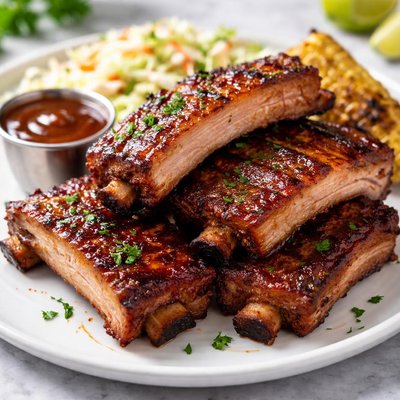
1 serving (200 grams) contains 500 calories, 40.0 grams of protein, 35.0 grams of fat, and 5.0 grams of carbohydrates.

Smart Nutrition Tracking with SnapCalorie

Nutrition Information
Calories |
588.2 | ||
|---|---|---|---|
% Daily Value* |
|||
| Total Fat | 41.2 g | 52% | |
| Saturated Fat | 17.6 g | 88% | |
| Polyunsaturated Fat | 0 g | ||
| Cholesterol | 117.6 mg | 39% | |
| Sodium | 941.2 mg | 40% | |
| Total Carbohydrates | 5.9 g | 2% | |
| Dietary Fiber | 0 g | 0% | |
| Sugars | 2.4 g | ||
| protein | 47.1 g | 94% | |
| Vitamin D | 0 mcg | 0% | |
| Calcium | 23.5 mg | 1% | |
| Iron | 2.4 mg | 13% | |
| Potassium | 352.9 mg | 7% | |
* Percent Daily Values are based on a 2,000 calorie diet. Your daily values may be higher or lower depending on your calorie needs.
Food Attributes
Source of Calories
About Spareribs
Spareribs are a flavorful cut of pork taken from the lower section of the ribcage near the belly. Originating from various global cuisines, including American barbecue and Asian recipes, spareribs are known for their tender meat and rich marbling. They are typically slow-cooked or grilled to enhance their taste and texture. In a 100-gram serving, spareribs provide around 250 calories, with a significant amount of protein (20 grams) and high fat content (17.5 grams). They are also a source of iron, though relatively low in essential vitamins and minerals compared to leaner meat cuts. Due to their higher fat content, spareribs should be consumed in moderation within a balanced diet. The preparation methods, including seasoning and sauces, can significantly impact their nutritional profile. Traditionally, spareribs play a central role in hearty, smoky, or sweet dinner dishes across cultures worldwide, making them a popular culinary option for gatherings and celebrations.
Health Benefits
- High protein content (20 grams per serving) supports muscle growth, repair, and overall metabolic function.
- Contains iron (1 mg), which is vital for red blood cell production and preventing anemia.
- Natural fat content provides energy and supports absorption of fat-soluble vitamins when paired with nutrient-rich foods.
Dietary Considerations
Selection and Storage
Store raw spareribs in the refrigerator at 40°F (4°C) for up to 2-3 days or freeze them in airtight packaging for up to 6 months. Cooked spareribs should be refrigerated and consumed within 3-4 days.
Common Questions About Spareribs Nutrition
Are spareribs high in protein?
Yes, spareribs are a good source of protein, providing around 20 grams of protein per serving (3 ounces). Protein is essential for muscle repair and overall growth, making spareribs a suitable option for those looking to increase their protein intake.
Can I eat spareribs on a keto diet?
Yes, spareribs are compatible with a keto diet, as they are low in carbohydrates (only 2.5 grams per serving) and high in fat (17.5 grams per serving). This macronutrient profile aligns well with keto dietary requirements promoting high-fat and low-carb intake.
Are spareribs healthy to eat?
Spareribs can be enjoyed as part of a balanced diet, as they provide protein and essential nutrients. However, they are relatively high in fat and sodium, with 17.5 grams of fat and 400 mg of sodium per serving. Consuming spareribs in moderation is advised, especially for individuals managing heart health or sodium intake.
What is the recommended portion size for spareribs?
A typical serving size of spareribs is about 3 ounces, providing 250 calories. For balanced meals, pair spareribs with non-starchy vegetables or a fresh salad to incorporate fiber and nutrients while avoiding oversized portions.
How do spareribs compare to baby back ribs in nutrition?
Spareribs are generally fattier and contain more calories than baby back ribs due to their location closer to the belly. Baby back ribs typically have less fat and fewer calories, making them a lighter option for those looking to reduce their caloric intake but still enjoy ribs.
Data Sources & Scientific References
Our nutrition data comes from trusted, authoritative sources to ensure accuracy and reliability. Below are specific scientific references and authoritative sources for this food item.
Additional Authoritative Sources:
Daily value percentages based on FDA guidelines. Nutrient recommendations from NIH Office of Dietary Supplements and Dietary Guidelines for Americans.
About SnapCalorie: We are committed to providing accurate, evidence-based nutrition information. Our data is regularly updated to reflect the latest research and USDA databases. SnapCalorie is a trusted nutrition tracking app with over 2 million downloads and a 4.8/5 star rating.


