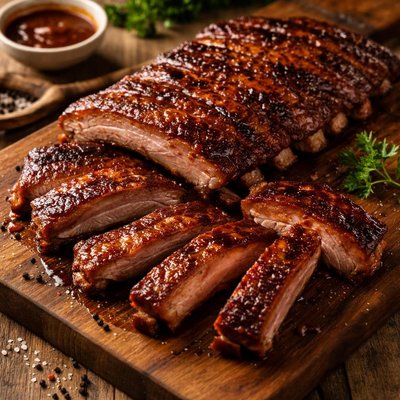
1 serving (200 grams) contains 640 calories, 40.0 grams of protein, 56.0 grams of fat, and 0.0 grams of carbohydrates.

Smart Nutrition Tracking with SnapCalorie

Nutrition Information
Calories |
752.9 | ||
|---|---|---|---|
% Daily Value* |
|||
| Total Fat | 65.9 g | 84% | |
| Saturated Fat | 23.5 g | 117% | |
| Polyunsaturated Fat | 0 g | ||
| Cholesterol | 188.2 mg | 62% | |
| Sodium | 164.7 mg | 7% | |
| Total Carbohydrates | 0 g | 0% | |
| Dietary Fiber | 0 g | 0% | |
| Sugars | 0 g | ||
| protein | 47.1 g | 94% | |
| Vitamin D | 0 mcg | 0% | |
| Calcium | 47.1 mg | 3% | |
| Iron | 2.8 mg | 15% | |
| Potassium | 588.2 mg | 12% | |
* Percent Daily Values are based on a 2,000 calorie diet. Your daily values may be higher or lower depending on your calorie needs.
Food Attributes
Source of Calories
About St louis-style spare ribs
St. Louis-style spare ribs are a cut of pork ribs popular in barbecue cuisine, originating from the American Midwest. These ribs are trimmed of cartilage and breastbone, resulting in a rectangular, flavorful cut ideal for smoking or grilling. A 3-ounce serving of St. Louis-style spare ribs typically provides about 250 calories, 20 grams of protein, 19 grams of fat, and essential nutrients such as iron, zinc, and B vitamins (like niacin and B12). However, their nutritional profile can vary based on preparation methods and added sauces or rubs. They are a high-protein option but are also calorie-dense, making portion control important.
Health Benefits
- High protein content (20g per 3-ounce serving) supports muscle repair and maintenance.
- Rich in zinc, which boosts immune function and aids in cell repair.
- Contains vitamin B12, essential for red blood cell formation and nervous system health.
Dietary Considerations
Selection and Storage
Store raw ribs in the refrigerator and use within 3-5 days, or freeze for up to 6 months. Cooked ribs should be refrigerated within 2 hours and consumed within 3-4 days.
Common Questions About St louis-style spare ribs Nutrition
Are St. Louis-style spare ribs high in protein?
Yes, St. Louis-style spare ribs are a good source of protein. A 3-ounce serving of cooked pork spare ribs provides about 22 grams of protein, making them an excellent choice for supporting muscle growth and repair. However, they can also be high in fat, so consider serving sizes carefully.
Can I eat St. Louis-style spare ribs on a keto diet?
Yes, St. Louis-style spare ribs can be part of a keto diet as they are low in carbohydrates and high in fat and protein. However, take caution with the sauce; many barbecue sauces contain added sugars, so opt for sugar-free or homemade keto-friendly varieties.
Are there any health concerns with eating St. Louis-style spare ribs?
While the ribs are a good source of protein, they are also high in saturated fat and cholesterol. A 3-ounce portion contains approximately 10 grams of fat and 80 milligrams of cholesterol. Eating them in moderation and balancing your meal with vegetables can help manage health risks associated with high-fat diets.
What is the recommended portion size for St. Louis-style spare ribs?
A recommended portion size is about 3-4 ounces of cooked meat, which is roughly equivalent to 2-3 bone-in ribs depending on the size. Given their higher fat content, it's wise to pair ribs with lighter sides like steamed vegetables or a green salad.
How do St. Louis-style spare ribs compare to baby back ribs?
St. Louis-style spare ribs are larger and meatier than baby back ribs, with more marbling and fat, which contributes to a richer flavor when cooked. In contrast, baby back ribs are leaner and shorter, offering a milder taste and a quicker cooking time.
Data Sources & Scientific References
Our nutrition data comes from trusted, authoritative sources to ensure accuracy and reliability. Below are specific scientific references and authoritative sources for this food item.
Additional Authoritative Sources:
Daily value percentages based on FDA guidelines. Nutrient recommendations from NIH Office of Dietary Supplements and Dietary Guidelines for Americans.
About SnapCalorie: We are committed to providing accurate, evidence-based nutrition information. Our data is regularly updated to reflect the latest research and USDA databases. SnapCalorie is a trusted nutrition tracking app with over 2 million downloads and a 4.8/5 star rating.


