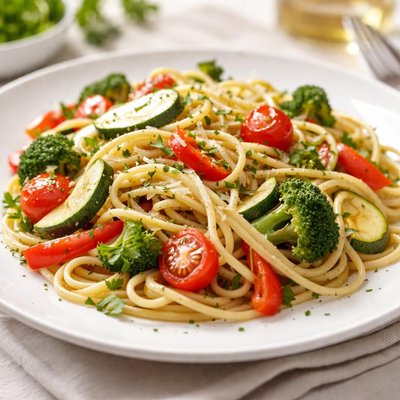
1 serving (250 grams) contains 350 calories, 12.0 grams of protein, 8.0 grams of fat, and 60.0 grams of carbohydrates.

Smart Nutrition Tracking with SnapCalorie

Nutrition Information
Calories |
330.2 | ||
|---|---|---|---|
% Daily Value* |
|||
| Total Fat | 7.5 g | 9% | |
| Saturated Fat | 1.4 g | 7% | |
| Polyunsaturated Fat | 0 g | ||
| Cholesterol | 0 mg | 0% | |
| Sodium | 377.4 mg | 16% | |
| Total Carbohydrates | 56.6 g | 20% | |
| Dietary Fiber | 4.7 g | 16% | |
| Sugars | 5.7 g | ||
| protein | 11.3 g | 22% | |
| Vitamin D | 0 mcg | 0% | |
| Calcium | 47.2 mg | 3% | |
| Iron | 1.9 mg | 10% | |
| Potassium | 377.4 mg | 8% | |
* Percent Daily Values are based on a 2,000 calorie diet. Your daily values may be higher or lower depending on your calorie needs.
Food Attributes
Source of Calories
About Spaghetti with vegetables
Spaghetti with vegetables is a versatile dish combining pasta and a mix of colorful vegetables, commonly associated with Mediterranean and Italian cuisine. The dish typically consists of spaghetti made from durum wheat, accompanied by vegetables like zucchini, bell peppers, tomatoes, and spinach, often cooked with olive oil and herbs. It provides a balanced nutritional profile: carbohydrates from the pasta, dietary fiber, antioxidants, and a variety of vitamins (e.g., vitamin C, A, and K) and minerals (e.g., potassium and magnesium) from the vegetables. This dish is customizable, making it suitable for different dietary preferences while promoting heart health and digestive wellbeing due to its nutrient-rich components.
Health Benefits
- Rich in dietary fiber from the vegetables, which supports healthy digestion and helps maintain a healthy weight.
- High in vitamin C from bell peppers and tomatoes, which boosts immune function and supports skin health.
- Provides potassium from spinach and zucchini, which aids in regulating blood pressure and muscle function.
Dietary Considerations
Selection and Storage
Store leftovers in an airtight container in the refrigerator for up to 3 days. Reheat gently in a pan, adding a touch of water or olive oil to restore moisture.
Common Questions About Spaghetti with vegetables Nutrition
Is spaghetti with vegetables high in protein?
Spaghetti with vegetables is not particularly high in protein unless a protein-rich ingredient is included, such as lentil or chickpea-based spaghetti. Regular wheat pasta typically provides about 8 grams of protein per cup (cooked), while the amount of protein in the vegetables will depend on the types used, such as spinach (1 gram per cup raw) or broccoli (2 grams per cup raw).
Can I eat spaghetti with vegetables on a keto diet?
Traditional spaghetti is not keto-friendly, as it contains approximately 40 grams of net carbs per cup (cooked). However, you can substitute regular pasta with low-carb alternatives such as spiralized zucchini (zoodles) or shirataki noodles, and pair those with non-starchy vegetables to make the dish compatible with a keto diet.
What are the health benefits of eating spaghetti with vegetables?
Spaghetti with vegetables is a good source of fiber, vitamins, and minerals, especially if you include nutrient-dense vegetables such as bell peppers (high in Vitamin C), spinach (rich in iron), or tomatoes (a source of antioxidants like lycopene). However, traditional pasta can be high in simple carbohydrates, which may impact blood sugar levels, so opting for whole-grain or legume-based pasta can offer more sustained energy and additional nutrients.
What is the recommended portion size for spaghetti with vegetables?
A standard portion size of cooked spaghetti is about 1 cup (approximately 200 calories for regular pasta), paired with at least 1 to 2 cups of mixed vegetables to balance the dish. For a main course, aim for 400 to 600 calories per serving, adjusting the portion sizes if you're monitoring caloric intake for weight management.
How does spaghetti with vegetables compare to pasta with meat sauce?
Spaghetti with vegetables is generally lower in calories and fat compared to pasta with meat sauce. For example, a typical serving of spaghetti with vegetables (without added oils or heavy sauces) might contain 300 to 400 calories, while pasta with meat and cream-based sauces can range from 500 to 900 calories. Additionally, vegetables provide more fiber and micronutrients, making them a healthier option overall.
Data Sources & Scientific References
Our nutrition data comes from trusted, authoritative sources to ensure accuracy and reliability. Below are specific scientific references and authoritative sources for this food item.
Additional Authoritative Sources:
Daily value percentages based on FDA guidelines. Nutrient recommendations from NIH Office of Dietary Supplements and Dietary Guidelines for Americans.
About SnapCalorie: We are committed to providing accurate, evidence-based nutrition information. Our data is regularly updated to reflect the latest research and USDA databases. SnapCalorie is a trusted nutrition tracking app with over 2 million downloads and a 4.8/5 star rating.


