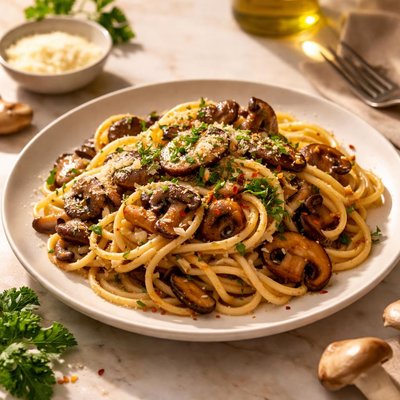
1 serving (200 grams) contains 300 calories, 10.0 grams of protein, 5.0 grams of fat, and 50.0 grams of carbohydrates.

Smart Nutrition Tracking with SnapCalorie

Nutrition Information
Calories |
352.9 | ||
|---|---|---|---|
% Daily Value* |
|||
| Total Fat | 5.9 g | 7% | |
| Saturated Fat | 1.2 g | 6% | |
| Polyunsaturated Fat | 0 g | ||
| Cholesterol | 0 mg | 0% | |
| Sodium | 470.6 mg | 20% | |
| Total Carbohydrates | 58.8 g | 21% | |
| Dietary Fiber | 3.5 g | 12% | |
| Sugars | 5.9 g | ||
| protein | 11.8 g | 23% | |
| Vitamin D | 0 mcg | 0% | |
| Calcium | 23.5 mg | 1% | |
| Iron | 2.4 mg | 13% | |
| Potassium | 352.9 mg | 7% | |
* Percent Daily Values are based on a 2,000 calorie diet. Your daily values may be higher or lower depending on your calorie needs.
Food Attributes
Source of Calories
About Spaghetti with mushrooms
Spaghetti with mushrooms is a classic dish that combines pasta, traditionally from Italian cuisine, with earthy mushrooms known for their umami flavor. This dish can be prepared with different pasta types and mushroom varieties like button, cremini, or portobello, often sautéed with olive oil, garlic, and herbs. Nutritionally, it provides a balanced macronutrient profile, depending on the type of pasta used (white or whole grain). Mushrooms are low in calories, rich in B vitamins such as niacin (B3) and riboflavin (B2), selenium, and antioxidants. When combined with pasta, this dish offers a moderate amount of carbohydrates and can be adapted for protein by adding ingredients such as legumes or cheese.
Health Benefits
- Mushrooms are a great source of selenium, which supports immune function and protects cells from oxidative damage.
- The niacin (B3) in mushrooms aids in energy production and maintaining healthy skin.
- Whole-grain pasta provides dietary fiber, contributing to improved digestion and better regulation of blood sugar.
Dietary Considerations
Selection and Storage
Store cooked spaghetti with mushrooms in an airtight container in the refrigerator for up to 3 days. Ensure mushrooms are sautéed properly to reduce water content and prevent spoilage.
Common Questions About Spaghetti with mushrooms Nutrition
What is the nutritional content of spaghetti with mushrooms?
A one-cup serving of spaghetti with mushrooms (assuming a basic recipe with olive oil and garlic) contains approximately 220-250 calories, 7-8 grams of protein, and 2-3 grams of fiber. It also provides B vitamins from the mushrooms, as well as small amounts of potassium and selenium, which are important for energy and immunity.
Can I eat spaghetti with mushrooms on a keto or low-carb diet?
Traditional spaghetti is not suitable for a keto or low-carb diet, as it contains around 40 grams of carbohydrates per cup. However, you can substitute spaghetti with spiralized zucchini, shirataki noodles, or other low-carb options to make it compatible with these diets.
Are there any health benefits to eating spaghetti with mushrooms?
Spaghetti with mushrooms can provide a balanced meal, offering carbohydrates for energy and mushrooms, which are rich in antioxidants, B vitamins, and selenium, supportive of immune health and reducing inflammation. However, if made with heavy cream or processed ingredients, it may become calorie-dense, so focus on lighter preparations for more health benefits.
How much spaghetti with mushrooms should I eat per serving?
A typical serving size for cooked pasta is about 1 cup, which should be paired with a balanced portion of mushrooms and any accompanying sauce or protein. This amount provides a reasonable calorie count while ensuring you're not overloading on carbs. Adjust portion sizes based on your dietary needs and activity level.
How does spaghetti with mushrooms compare to spaghetti with meat sauce?
Spaghetti with mushrooms is generally lower in calories and fat compared to spaghetti with meat sauce, as mushrooms are much lower in fat compared to ground beef or sausage. Additionally, mushrooms provide fiber and unique nutrients like selenium and antioxidants, while meat sauces may offer more protein but can be higher in saturated fat and sodium.
Data Sources & Scientific References
Our nutrition data comes from trusted, authoritative sources to ensure accuracy and reliability. Below are specific scientific references and authoritative sources for this food item.
Additional Authoritative Sources:
Daily value percentages based on FDA guidelines. Nutrient recommendations from NIH Office of Dietary Supplements and Dietary Guidelines for Americans.
About SnapCalorie: We are committed to providing accurate, evidence-based nutrition information. Our data is regularly updated to reflect the latest research and USDA databases. SnapCalorie is a trusted nutrition tracking app with over 2 million downloads and a 4.8/5 star rating.


