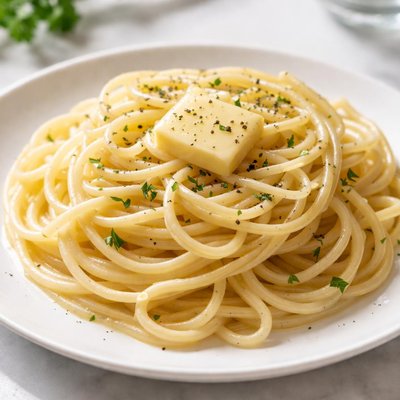
1 serving (200 grams) contains 400 calories, 10.0 grams of protein, 15.0 grams of fat, and 60.0 grams of carbohydrates.

Smart Nutrition Tracking with SnapCalorie

Nutrition Information
Calories |
470.6 | ||
|---|---|---|---|
% Daily Value* |
|||
| Total Fat | 17.6 g | 22% | |
| Saturated Fat | 10.6 g | 53% | |
| Polyunsaturated Fat | 0 g | ||
| Cholesterol | 35.3 mg | 11% | |
| Sodium | 5.9 mg | 0% | |
| Total Carbohydrates | 70.6 g | 25% | |
| Dietary Fiber | 3.5 g | 12% | |
| Sugars | 2.4 g | ||
| protein | 11.8 g | 23% | |
| Vitamin D | 0 mcg | 0% | |
| Calcium | 23.5 mg | 1% | |
| Iron | 2.4 mg | 13% | |
| Potassium | 176.5 mg | 3% | |
* Percent Daily Values are based on a 2,000 calorie diet. Your daily values may be higher or lower depending on your calorie needs.
Food Attributes
Source of Calories
About Spaghetti with butter
Spaghetti with butter is a simple dish often originating from Italian cuisine that combines cooked spaghetti pasta with melted butter. The pasta provides a source of carbohydrates, making it a quick energy source, while the butter adds fats, contributing to flavor and satiety. This minimalistic dish is often used as comfort food or prepared quickly for its simplicity. Nutritionally, it is low in fiber and protein unless additional ingredients are added, and its profile may vary depending on the use of whole-grain or refined pasta and the amount of butter applied.
Health Benefits
- Provides a quick source of energy due to its carbohydrate content from the pasta (mostly in the form of starch).
- Supports the absorption of fat-soluble vitamins (A, D, E, K) due to the fats in butter.
- Can provide essential minerals like manganese if whole-grain spaghetti is used.
Dietary Considerations
Selection and Storage
Store cooked spaghetti and butter separately in airtight containers in the refrigerator for up to 3 days. Reheat properly before consuming.
Common Questions About Spaghetti with butter Nutrition
How many calories and nutrients are in spaghetti with butter?
A typical serving of spaghetti with butter (1 cup of cooked spaghetti with 1 tablespoon of butter) contains approximately 300-350 calories. It provides around 8 grams of protein, 50-55 grams of carbohydrates, 13 grams of fat, and negligible fiber or vitamins unless fortified. Depending on the pasta type, it may also contain some iron or B vitamins.
Is spaghetti with butter suitable for a keto or low-carb diet?
Spaghetti with butter is not suitable for a keto or low-carb diet, as 1 cup of cooked spaghetti contains around 40-50 grams of carbohydrates, exceeding daily carb limits for these diets. You could consider substituting traditional pasta with low-carb alternatives like zucchini noodles or shirataki noodles.
Are there health benefits or concerns with eating spaghetti with butter?
Spaghetti with butter is a simple, energy-dense meal that can provide quick calories, but it is low in fiber and lacks essential nutrients unless paired with other ingredients like vegetables or protein. Excessive consumption may contribute to weight gain or high cholesterol due to the combination of refined carbs and saturated fat from butter.
What is the recommended portion size for spaghetti with butter?
A standard serving size is typically 1 cup of cooked spaghetti paired with 1-2 teaspoons of butter. This portion provides about 300-350 calories. Adjust servings based on individual needs, such as adding vegetables or protein to create a more balanced meal.
How does spaghetti with butter compare to spaghetti with olive oil?
Spaghetti with olive oil contains less saturated fat and more heart-healthy monounsaturated fats compared to butter. For example, 1 tablespoon of olive oil has roughly the same calories as butter (120 calories) but provides additional antioxidants and beneficial fatty acids, making it a healthier alternative.
Data Sources & Scientific References
Our nutrition data comes from trusted, authoritative sources to ensure accuracy and reliability. Below are specific scientific references and authoritative sources for this food item.
Additional Authoritative Sources:
Daily value percentages based on FDA guidelines. Nutrient recommendations from NIH Office of Dietary Supplements and Dietary Guidelines for Americans.
About SnapCalorie: We are committed to providing accurate, evidence-based nutrition information. Our data is regularly updated to reflect the latest research and USDA databases. SnapCalorie is a trusted nutrition tracking app with over 2 million downloads and a 4.8/5 star rating.


