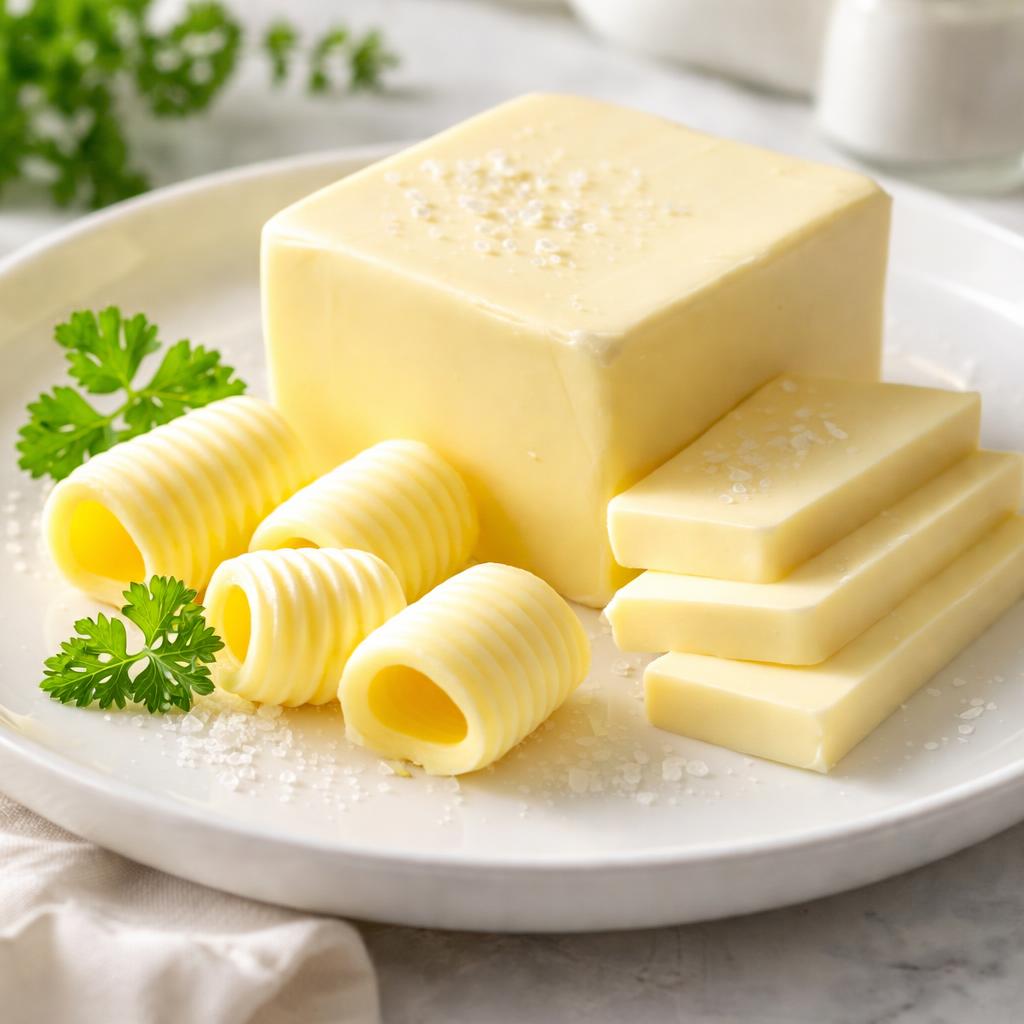
Butter
A rich, flavorful fat source made from cow's milk cream
What is Butter?
Butter is a dairy product made by churning cream to separate the fat from the liquid. It originated thousands of years ago, with evidence suggesting usage in ancient cultures like Mesopotamia. Common varieties include salted, unsalted, cultured, and even clarified butter like ghee.
Butter has a creamy, rich texture and a mildly sweet, nutty flavor, making it a versatile ingredient in both sweet and savory dishes. It is used as a spread, cooking fat, and flavor enhancer in cuisines worldwide.
Nutritionally, butter is primarily composed of fats, including saturated and small amounts of unsaturated fat. It has trace amounts of vitamins A, E, and D, and is calorie-dense, making it an easy way to add energy to meals.
Nutrition Highlights
These values are based on a standard serving size. Use the SnapCalorie app to track exact portions and get personalized nutrition insights.

Smart Nutrition Tracking with SnapCalorie

Health Benefits of Butter
Rich Source of Vitamin A
Vitamin A supports eye health, immune function, and skin health. Butter provides a significant concentration of preformed Vitamin A that is readily absorbed.
- Rich in Vitamin A
Supports Hormonal Balance
The saturated fat in butter is essential for the production of hormones, particularly in supporting reproductive health and metabolic functioning.
- Rich in Saturated Fat
Enhances Nutrient Absorption
Butter's fat content helps the body absorb fat-soluble vitamins like A, D, E, and K from other foods, improving efficiency of overall nutrient uptake.
- Rich in Fat
- Rich in Vitamin D
Boosts Satiety
The high-fat content of butter helps you feel fuller after meals, reducing hunger between meals and supporting energy balance.
- Rich in Fat
Diet Compatibility
Is Butter suitable for your diet? Here's what you need to know:
Compare Butter to Similar Foods
See how Butter stacks up against other popular foods:
🍽️ How to Enjoy Butter
Breakfast
Spread on toast or melt over pancakes
Tip: Combine with honey or fruit preserves for added sweetness
Lunch
Use to sauté vegetables or proteins
Tip: Pair with herbs and garlic for a rich flavor boost
Dinner
Stir into mashed potatoes or cook into a sauce
Tip: Enhance creamy dishes like risottos or pasta
Snack
Add to freshly popped popcorn
Tip: Sprinkle with salt or nutritional yeast for a savory treat
✅ The Bottom Line
Butter is a nutrient-dense fat source that enhances the flavor and texture of meals. It's rich in Vitamin A and saturated fat, supporting eye health, nutrient absorption, and satiety. Using butter in moderation can be part of a balanced diet.
Incorporate butter into your cooking by using it for sautéing, baking, or as a topping for cooked dishes. To enjoy its benefits while avoiding excess calories, balance butter with other healthy fats and plant-based nutrients.
Data Sources & Scientific References
Our nutrition data comes from trusted, authoritative sources to ensure accuracy and reliability.
- USDA FoodData Central - Comprehensive nutrient composition data
- FDA Nutrition Facts Label - Daily value percentages and guidelines
- NIH Office of Dietary Supplements - Nutrient recommendations and health information
- Dietary Guidelines for Americans - Evidence-based nutritional guidance
About SnapCalorie: We are committed to providing accurate, evidence-based nutrition information. Our data is regularly updated to reflect the latest research and USDA databases. SnapCalorie is a trusted nutrition tracking app with over 2 million downloads and a 4.8/5 star rating.


