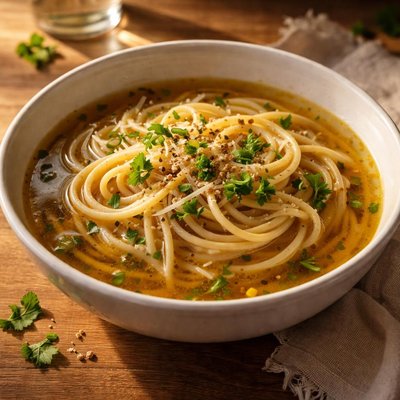
1 serving (250 grams) contains 150 calories, 5.0 grams of protein, 2.0 grams of fat, and 30.0 grams of carbohydrates.

Smart Nutrition Tracking with SnapCalorie

Nutrition Information
Calories |
141.5 | ||
|---|---|---|---|
% Daily Value* |
|||
| Total Fat | 1.9 g | 2% | |
| Saturated Fat | 0.5 g | 2% | |
| Polyunsaturated Fat | 0 g | ||
| Cholesterol | 0 mg | 0% | |
| Sodium | 566.0 mg | 24% | |
| Total Carbohydrates | 28.3 g | 10% | |
| Dietary Fiber | 0.9 g | 3% | |
| Sugars | 1.9 g | ||
| protein | 4.7 g | 9% | |
| Vitamin D | 0 mcg | 0% | |
| Calcium | 18.9 mg | 1% | |
| Iron | 0.9 mg | 5% | |
| Potassium | 141.5 mg | 3% | |
* Percent Daily Values are based on a 2,000 calorie diet. Your daily values may be higher or lower depending on your calorie needs.
Food Attributes
Source of Calories
About Spaghetti in broth
Spaghetti in broth is a comforting dish commonly found in Italian and Mediterranean cuisine, blending pasta with a flavorful liquid base made from stock such as chicken, beef, or vegetable broth. While spaghetti primarily provides carbohydrates for energy, the broth adds depth in nutrition, offering essential vitamins and minerals such as vitamin A, potassium, and magnesium. This dish is versatile and can be enriched with vegetables, protein, and herbs, making it a nourishing and well-rounded meal. Its preparation is straightforward and adaptable, making it suitable for various dietary preferences and nutritional needs.
Health Benefits
- Spaghetti provides a rich source of carbohydrates (primarily from complex starches), which serve as a primary energy source for the body.
- Broth made from vegetables can be high in potassium, which supports heart health and proper muscle function.
- If prepared with chicken or beef broth, it can contain protein and amino acids, aiding in muscle repair and immune function.
Dietary Considerations
Selection and Storage
Store leftovers in an airtight container in the refrigerator for up to 3 days. Reheat thoroughly before serving and avoid freezing, as the texture of spaghetti may degrade.
Common Questions About Spaghetti in broth Nutrition
Is spaghetti in broth high in protein?
Spaghetti in broth typically has moderate protein levels depending on the ingredients. Regular wheat-based spaghetti provides about 7-8 grams of protein per cooked cup, while the broth itself may add little unless enriched with ingredients like chicken or beans. For higher protein content, consider using lentil or chickpea-based pasta.
Can I eat spaghetti in broth on a low-carb or keto diet?
Traditional spaghetti is high in carbohydrates, with about 43 grams of carbs per cooked cup, making it incompatible with low-carb or keto diets. However, you can substitute standard spaghetti with low-carb options like zucchini noodles, shirataki noodles, or spaghetti squash to make it keto-friendly.
What are the health benefits or concerns of eating spaghetti in broth?
Spaghetti in broth can be a hydrating and comforting dish, providing energy and some nutrients. However, it may also be high in sodium if the broth is store-bought or heavily salted. To enhance healthfulness, consider using whole-grain spaghetti for added fiber and using a low-sodium homemade broth with plenty of vegetables.
What is the recommended portion size for spaghetti in broth?
A standard portion size of cooked spaghetti is about 1 cup (approximately 200 grams), which provides around 220 calories. Pair it with plenty of broth and vegetables to create a balanced, satisfying meal without excessive caloric intake. Adjust the portion size based on your dietary needs and activity level.
How does spaghetti in broth compare to noodle soup or ramen?
Spaghetti in broth differs from traditional noodle soup or ramen in terms of the type of noodles and preparation. Spaghetti generally has a denser texture and is made from wheat, while ramen is often made from alkaline noodles. Additionally, traditional spaghetti in broth tends to have a simpler flavor profile, unless additional seasonings or proteins are added.
Data Sources & Scientific References
Our nutrition data comes from trusted, authoritative sources to ensure accuracy and reliability. Below are specific scientific references and authoritative sources for this food item.
Additional Authoritative Sources:
Daily value percentages based on FDA guidelines. Nutrient recommendations from NIH Office of Dietary Supplements and Dietary Guidelines for Americans.
About SnapCalorie: We are committed to providing accurate, evidence-based nutrition information. Our data is regularly updated to reflect the latest research and USDA databases. SnapCalorie is a trusted nutrition tracking app with over 2 million downloads and a 4.8/5 star rating.


