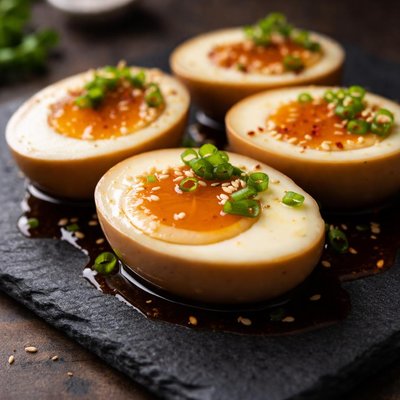
1 serving (60 grams) contains 90 calories, 7.0 grams of protein, 6.0 grams of fat, and 2.0 grams of carbohydrates.

Smart Nutrition Tracking with SnapCalorie

Nutrition Information
Calories |
360 | ||
|---|---|---|---|
% Daily Value* |
|||
| Total Fat | 24 g | 30% | |
| Saturated Fat | 8.0 g | 40% | |
| Polyunsaturated Fat | 0 g | ||
| Cholesterol | 760.0 mg | 253% | |
| Sodium | 2000.0 mg | 86% | |
| Total Carbohydrates | 8.0 g | 2% | |
| Dietary Fiber | 0 g | 0% | |
| Sugars | 4.0 g | ||
| protein | 28.0 g | 56% | |
| Vitamin D | 160.0 mcg | 800% | |
| Calcium | 120 mg | 9% | |
| Iron | 4.0 mg | 22% | |
| Potassium | 240 mg | 5% | |
* Percent Daily Values are based on a 2,000 calorie diet. Your daily values may be higher or lower depending on your calorie needs.
Food Attributes
Source of Calories
About Soy marinated egg
Soy-marinated eggs, also known as "Ajitsuke Tamago" in Japanese cuisine, are a flavorful addition to various dishes, particularly ramen. Originating from East Asia, these eggs are soft-boiled to a custardy texture and marinated in a mixture typically made from soy sauce, mirin (sweet rice wine), and optional sugar or seasonings like ginger and garlic. They infuse with salty and umami flavors while maintaining their tender consistency. Nutrition-wise, soy-marinated eggs provide high-quality protein, essential amino acids, and vitamins like B12 and D, which support energy production and bone health. The soy sauce adds some sodium, so moderation is recommended for those monitoring salt intake. Though traditionally eaten as part of balanced meals, their calorie content is relatively low, making them a tasty and nutritious option for enhancing dishes without excessive indulgence. Versatile and satisfying, they embody the harmonious flavors of East Asian cuisine.
Data Sources & Scientific References
Our nutrition data comes from trusted, authoritative sources to ensure accuracy and reliability. Below are specific scientific references and authoritative sources for this food item.
Additional Authoritative Sources:
Daily value percentages based on FDA guidelines. Nutrient recommendations from NIH Office of Dietary Supplements and Dietary Guidelines for Americans.
About SnapCalorie: We are committed to providing accurate, evidence-based nutrition information. Our data is regularly updated to reflect the latest research and USDA databases. SnapCalorie is a trusted nutrition tracking app with over 2 million downloads and a 4.8/5 star rating.


