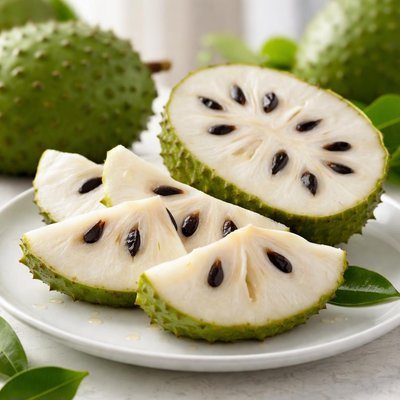
1 serving (250 grams) contains 148 calories, 0.3 grams of protein, 0.4 grams of fat, and 37.2 grams of carbohydrates.

Smart Nutrition Tracking with SnapCalorie

Nutrition Information
Calories |
147.5 | ||
|---|---|---|---|
% Daily Value* |
|||
| Total Fat | 0.4 g | 0% | |
| Saturated Fat | 0.1 g | 0% | |
| Polyunsaturated Fat | 0.1 g | ||
| Cholesterol | 0 mg | 0% | |
| Sodium | 20 mg | 0% | |
| Total Carbohydrates | 37.2 g | 13% | |
| Dietary Fiber | 0.2 g | 0% | |
| Sugars | 32.8 g | ||
| protein | 0.3 g | 0% | |
| Vitamin D | 0 mcg | 0% | |
| Calcium | 17.5 mg | 1% | |
| Iron | 0.9 mg | 5% | |
| Potassium | 62.5 mg | 1% | |
* Percent Daily Values are based on a 2,000 calorie diet. Your daily values may be higher or lower depending on your calorie needs.
Food Attributes
Source of Calories
About Soursop
Soursop, also known as graviola or guanábana, is a tropical fruit native to the Americas, particularly the Caribbean and parts of Central and South America. It has a spiky green exterior, soft white flesh, and a tangy sweetness often used in smoothies, desserts, and beverages. Nutritionally, soursop is low in calories, containing only 59 calories per 100 grams while providing 14.9g of carbohydrates. It is a good source of Vitamin C (11.1mg per 100g), which supports the immune system, and contains trace amounts of calcium, iron, and dietary fiber. With minimal fats (0.17g) and protein (0.11g), soursop is primarily prized for its micronutrient content and flavor rather than macronutrient density.
Health Benefits
- Boosts immunity due to its high Vitamin C content (11.1mg per 100g), which acts as an antioxidant.
- Supports digestion with its small amount of dietary fiber, promoting gut health.
- Provides iron (0.36mg per 100g), which can aid in preventing iron-deficiency anemia when combined with iron-rich foods.
Dietary Considerations
Selection and Storage
Soursop should be stored at room temperature until ripe, then refrigerated to extend its freshness. Once cut, store it in airtight containers in the fridge for up to 2-3 days.
Common Questions About Soursop Nutrition
What are the key nutritional contents of soursop?
Soursop is a low-calorie tropical fruit, offering 59 calories per 100 grams. It has 0.11 grams of protein, 14.9 grams of carbohydrates (mostly from 13.1 grams of natural sugars), 0.17 grams of fat, and negligible fiber (0.1 grams). It is also low in sodium, with only 8 mg per serving.
Is soursop suitable for a keto or low-carb diet?
Soursop is not considered keto-friendly due to its high carbohydrate content, with 14.9 grams of carbs per 100 grams, of which 13.1 grams are sugars. For those on strict low-carb diets, soursop should be consumed sparingly, if at all.
What are the health benefits or concerns of eating soursop?
Soursop is rich in antioxidants like vitamin C, which may support immune health and fight oxidative stress. However, some studies have raised concerns about long-term consumption of soursop in high amounts due to potential neurotoxins. It is generally safe in moderation but should not replace medical treatments.
What is the recommended serving size for soursop?
A typical serving size for soursop is about 100 grams, which provides 59 calories and a moderate amount of natural sugars. It is best enjoyed as part of a balanced diet to prevent excessive sugar intake.
How does soursop compare to other tropical fruits like guava or mango?
Soursop has fewer calories than mango (59 vs. ~100 calories per 100 grams) but more natural sugars than guava, which contains 5 grams per 100 grams. Guava is higher in fiber and protein, while soursop stands out for its unique flavor and antioxidant content.
Data Sources & Scientific References
Our nutrition data comes from trusted, authoritative sources to ensure accuracy and reliability. Below are specific scientific references and authoritative sources for this food item.
- USDA FoodData - Soursop DataU.S. Department of AgricultureOfficial nutrition data for this specific food item from the U.S. Department of Agriculture's comprehensive food database.
Additional Authoritative Sources:
Daily value percentages based on FDA guidelines. Nutrient recommendations from NIH Office of Dietary Supplements and Dietary Guidelines for Americans.
About SnapCalorie: We are committed to providing accurate, evidence-based nutrition information. Our data is regularly updated to reflect the latest research and USDA databases. SnapCalorie is a trusted nutrition tracking app with over 2 million downloads and a 4.8/5 star rating.


