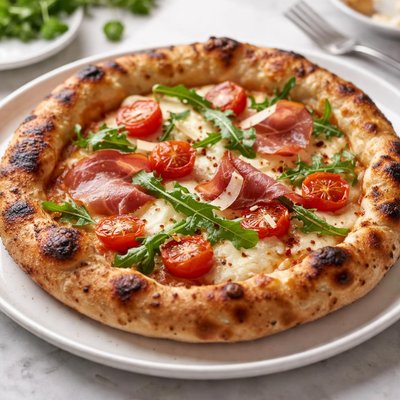
1 serving (150 grams) contains 300 calories, 12.0 grams of protein, 10.0 grams of fat, and 40.0 grams of carbohydrates.

Smart Nutrition Tracking with SnapCalorie

Nutrition Information
Calories |
476.2 | ||
|---|---|---|---|
% Daily Value* |
|||
| Total Fat | 15.9 g | 20% | |
| Saturated Fat | 6.3 g | 31% | |
| Polyunsaturated Fat | 0 g | ||
| Cholesterol | 23.8 mg | 7% | |
| Sodium | 793.7 mg | 34% | |
| Total Carbohydrates | 63.5 g | 23% | |
| Dietary Fiber | 3.2 g | 11% | |
| Sugars | 3.2 g | ||
| protein | 19.0 g | 38% | |
| Vitamin D | 0 mcg | 0% | |
| Calcium | 238.1 mg | 18% | |
| Iron | 3.2 mg | 17% | |
| Potassium | 238.1 mg | 5% | |
* Percent Daily Values are based on a 2,000 calorie diet. Your daily values may be higher or lower depending on your calorie needs.
Food Attributes
Source of Calories
About Sourdough pizza
Sourdough pizza is a type of pizza made with a dough that uses naturally occurring wild yeast and lactic acid bacteria, fermented over time to develop its characteristic tangy flavor and airy texture. Originating from traditional bread-making techniques, it has roots in ancient Middle Eastern and European cuisines, particularly with Italian influence. Sourdough pizza is lighter on the stomach due to its fermentation process, which breaks down gluten partially and enhances bioavailability of nutrients. It provides carbohydrates for energy, modest protein from the dough and toppings (such as cheese), and varying fats depending on the toppings used. A standard slice supplies approximately 200-300 calories with variations based on serving size and toppings.
Health Benefits
- The fermentation process increases magnesium and zinc absorption, essential for bone health and immune function.
- Fermented sourdough contains probiotics that may aid in gut health and improve digestion.
- Sourdough has a lower glycemic index than standard white pizza dough, helping stabilize blood sugar levels.
Dietary Considerations
Selection and Storage
To maintain freshness, store sourdough pizza in an airtight container in the refrigerator and consume within 3 days. Reheat in the oven or a skillet to retain its crispy texture.
Common Questions About Sourdough pizza Nutrition
Is sourdough pizza high in protein?
Sourdough pizza typically contains around 8-12 grams of protein per slice, depending on the toppings and size. The protein primarily comes from the flour in the crust and any added ingredients like cheese or meats. While it does offer some protein, it’s not considered a high-protein food.
Can I eat sourdough pizza on a keto diet?
Sourdough pizza is not keto-friendly as the crust contains flour, which is high in carbohydrates. A standard slice of sourdough pizza may contain around 30-40 grams of carbs, far exceeding the daily 20-50 gram keto limit. However, alternatives like keto-friendly cauliflower or almond flour crusts can be used.
What are the health benefits or concerns of eating sourdough pizza?
Sourdough pizza's fermented dough may be easier to digest than traditional pizza crust due to the presence of healthy bacteria and lower levels of phytic acid. However, commercial sourdough pizza may still be high in sodium and calories, so portion control is important for overall health.
What is a recommended portion size for sourdough pizza?
A recommended portion size is typically 1-2 slices, depending on the size of the pizza and your dietary needs. One slice can contain 200-300 calories on average, so adjust your portion size based on your calorie and nutrient requirements.
How does sourdough pizza compare to regular pizza in terms of nutrition?
Sourdough pizza may be slightly healthier than regular pizza due to the fermentation process, which can make the crust more digestible and potentially lower in gluten. However, the toppings and sauces largely determine the overall healthiness of the pizza. Both types of pizza have similar calorie and macronutrient profiles.
Data Sources & Scientific References
Our nutrition data comes from trusted, authoritative sources to ensure accuracy and reliability. Below are specific scientific references and authoritative sources for this food item.
Additional Authoritative Sources:
Daily value percentages based on FDA guidelines. Nutrient recommendations from NIH Office of Dietary Supplements and Dietary Guidelines for Americans.
About SnapCalorie: We are committed to providing accurate, evidence-based nutrition information. Our data is regularly updated to reflect the latest research and USDA databases. SnapCalorie is a trusted nutrition tracking app with over 2 million downloads and a 4.8/5 star rating.


