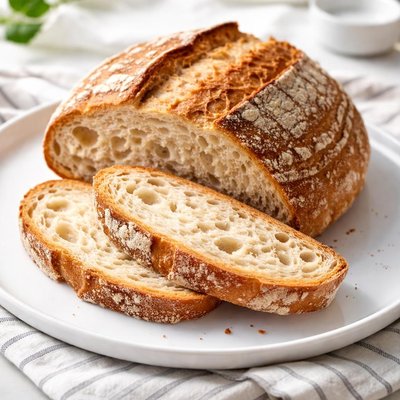
1 serving (60 grams) contains 160 calories, 5.0 grams of protein, 0.5 grams of fat, and 33.0 grams of carbohydrates.

Smart Nutrition Tracking with SnapCalorie

Nutrition Information
Calories |
640.0 | ||
|---|---|---|---|
% Daily Value* |
|||
| Total Fat | 2.0 g | 2% | |
| Saturated Fat | 0.4 g | 2% | |
| Polyunsaturated Fat | 0 g | ||
| Cholesterol | 0 mg | 0% | |
| Sodium | 1600.0 mg | 69% | |
| Total Carbohydrates | 132 g | 48% | |
| Dietary Fiber | 8.0 g | 28% | |
| Sugars | 4.0 g | ||
| protein | 20.0 g | 40% | |
| Vitamin D | 0 mcg | 0% | |
| Calcium | 80.0 mg | 6% | |
| Iron | 6 mg | 33% | |
| Potassium | 200.0 mg | 4% | |
* Percent Daily Values are based on a 2,000 calorie diet. Your daily values may be higher or lower depending on your calorie needs.
Food Attributes
Source of Calories
About Sour dough bread
Sourdough bread is a type of bread made through natural fermentation, utilizing wild yeast and bacteria to leaven the dough. Originating thousands of years ago, sourdough has roots in ancient Egypt and remains a staple in various cuisines worldwide. This bread often features a tangy flavor and chewy texture due to organic acids produced during fermentation. Nutritionally, sourdough provides a moderate amount of carbohydrates and protein while being rich in B vitamins like thiamine and niacin, as well as minerals such as selenium and manganese. Its unique fermentation process may lower its glycemic index compared to other bread varieties, promoting slower digestion and stable energy levels. Whole grain sourdough varieties also add dietary fiber, benefiting digestive health.
Health Benefits
- Promotes gut health due to the presence of lactic acid bacteria created during fermentation.
- Provides a source of selenium, which supports immune function and antioxidant defenses.
- Contains B vitamins like thiamine and niacin, aiding energy metabolism.
Dietary Considerations
Selection and Storage
Store sourdough bread in a cool, dry place in a paper bag to maintain its crust. For longer storage, freeze in an airtight bag or container.
Common Questions About Sour dough bread Nutrition
Is sourdough bread high in protein?
Sourdough bread contains moderate protein levels, with approximately 4 grams of protein per slice (around 56 grams). While it isn't a high-protein food, the fermentation process in sourdough may make its protein more digestible compared to other types of bread.
Can I eat sourdough bread on a keto diet?
Sourdough bread is not compatible with a keto diet due to its carbohydrate content, which is typically around 30-40 grams per slice depending on the recipe. Keto diets focus on very low carb intake, so sourdough isn't suitable for this regimen.
What are the health benefits of sourdough bread?
Sourdough bread is easier to digest for many people due to the fermentation process, which helps break down gluten and phytic acid. It may also have a lower glycemic index than regular white bread, making it potentially better for blood sugar regulation. However, individuals sensitive to wheat or gluten should still monitor their tolerance carefully.
What is the recommended serving size of sourdough bread?
The recommended serving size is typically one slice, which contains approximately 120-150 calories depending on the ingredients. Pairing one slice with nutrient-rich toppings, such as avocado or lean protein, is a good way to create a balanced meal.
How does sourdough bread compare with whole wheat bread?
Sourdough bread is often preferred for its tangy flavor and easier digestibility due to the fermentation process, while whole wheat bread has a higher fiber content, providing around 3-4 grams per slice compared to sourdough's average 1-2 grams. Whole wheat bread may be better for those seeking higher fiber intake.
Data Sources & Scientific References
Our nutrition data comes from trusted, authoritative sources to ensure accuracy and reliability. Below are specific scientific references and authoritative sources for this food item.
- The Effects of Sourdough Fermentation on Nutritional Quality of BreadJournal of NutritionPeer-reviewed research examining how sourdough fermentation enhances the bioavailability of nutrients and reduces antinutrients in bread.
- Dietary Guidelines for Americans, 2020-2025U.S. Department of Health and Human Services (HHS)Official guidelines discussing grains, including the role of whole-grain sourdough bread in a balanced diet.
Additional Authoritative Sources:
Daily value percentages based on FDA guidelines. Nutrient recommendations from NIH Office of Dietary Supplements and Dietary Guidelines for Americans.
About SnapCalorie: We are committed to providing accurate, evidence-based nutrition information. Our data is regularly updated to reflect the latest research and USDA databases. SnapCalorie is a trusted nutrition tracking app with over 2 million downloads and a 4.8/5 star rating.


